




403
Sorry!!
Error! We're sorry, but the page you were looking for doesn't exist.
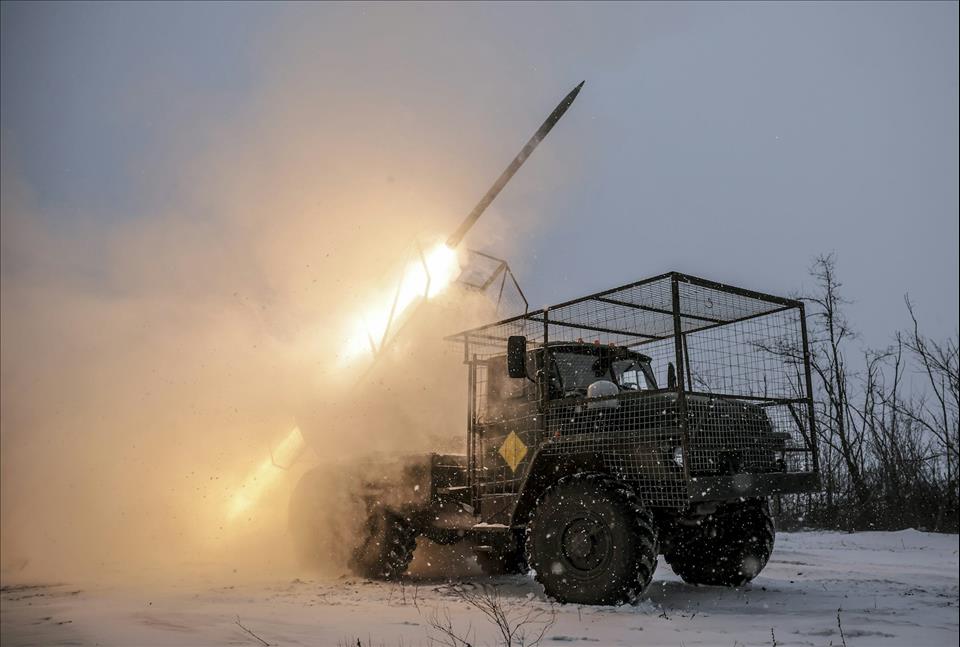
Trump Wants Ukraine To Give Up The Donbas In Return For Security Guarantees. It Could Be Suicide For Kyiv
Author: Rod Thornton
(MENAFN- The Conversation) There is a major sticking point often overlooked in the ceasefire negotiations between Ukraine and Russia currently being held in Abu Dhabi. This relates to the fact that, as part of any agreement, Kyiv is being asked to give up the entire Donbas region in eastern Ukraine.

If it does so, it will also be giving up the strategic positions that have prevented major advances by the Russian military for many months now. This is the significant line of defensive fortifications across the Donbas, known as the “Donbas line”. It's Ukraine's equivalent to the Maginot line of forts which were France's main line of defence against Germany before the second world war.
The “Anchorage formula” agreed by the US president, Donald Trump, and Russia president, Vladimir Putin, in Alaska late last year calls for Ukrainian forces to abandon the areas of western Donbas they currently hold. Washington is now talking up the idea of establishing a “free economic zone” or“de-militarised zone” which would cover the whole of the Donbas, including those portions currently occupied by Russian forces.
This would mean Ukraine abandoning the Donbas line. The system integrates at least seven distinct defensive layers that any attacking force must penetrate sequentially to achieve effect.
These include minefields, anti-tank ditches, anti-tank obstacles (“dragons' teeth”), bunkers, trench lines and anti-drone defences. Such obstacles can either physically halt assaulting Russian forces or “canalise” them into swampy or otherwise impassible ground or into pre-arranged kill zones, wherein fires (mortar and artillery) can be used to destroy Russian formations.
One of the most critical lines runs through the embattled town of Pokrovsk, which has been under constant Russian assault since early 2025. Lose Pokrovsk and the Ukrainians will then more than likely also lose the important city of Donetsk. Thus Pokrovsk has been referred to as the “gateway to Donetsk”.
The Donbas line took years to build and to perfect. It is very sophisticated. It would be a massive strategic blow for the Ukrainians if they were forced to give it up and pull back.
In essence, the Russian demand that Ukrainian forces vacate the western Donbas can also be seen as a demand that they likewise give up, in the shape of this Donbas line, their one true means of protecting not only the western Donbas but also, arguably, the whole of the rest of Ukraine.
Who can be trusted?If Kyiv were to accede to Russian demands and abandon the Donbas line, then this would only help bring about a lasting peace if, of course, trust could be placed in the Russians to keep their side of the bargain. They would need to cease all their assaults across Ukraine and themselves“de-militarise” the area of the eastern Donbas they currently control.
But Putin has a history of reneging on deals. Anything agreed now by Kyiv in Abu Dhabi is likely, as respected Washington-based thinktank the Institute for the Study of War points out, to suffer the same fate. This seems to certainly be the view of many on the Ukrainian side.
As Ukraine's president, Volodymyr Zelenskyy, himself recently put it, “I don't trust Putin”. He has good reason for doubting the Russian president's bona fides. Russia was a signatory to the 1994 Budapest Memorandum alongside the US, UK and France by which those powers provided assurances for Ukraine's sovereignty and territorial integrity in exchange for Kyiv giving up its arsenal of nuclear weapons.
This didn't stop Russia invading. Nor did the two Minsk accords in 2014 and 2015 which aimed to stop the fighting between Russian-backed separatists and the Ukrainian military in the Donbas region.
In the event of any peace deal being struck between Moscow and Kyiv, Ukraine's western allies have offered what they are calling “robust security guarantees”. These would be provided by a “coalition of the willing” made up of more than 30 countries, mainly from within Europe.
What's on the tableIn terms of what these promises might actually mean, there is a proposal for a three-tier mechanism. A Russian breach of the ceasefire would initially trigger a diplomatic warning, as well as allowing Ukraine to respond militarily.
The second tier would be provided by the coalition of the willing, primarily the UK and France, which plan to send troops to Ukraine as part of the deal, but also many EU members plus Norway, Iceland and Turkey.
The third tier would be a military response from the US. But it's been reported that the US has made its participation in any security guarantees contingent on the agreement of a ceasefire deal which gives Russia control of the “entire Donbas region in eastern Ukraine”.
A further issue here is that Moscow is unlikely to agree to the presence of any Nato troops as official security guarantors. Moscow has said as much, insisting that any foreign troops in Ukraine would be a “legitimate target”.
Would western governments forces really commit their troops into a situation where they might become targets – leading perhaps to a wider war?
The whole idea of Ukraine abandoning its Donbas line is fraught with difficulties. For this is not just a question of Ukraine trading land for peace. It is more fundamentally a question of trading land and significant defensive lines for the promise of peace.
The original version of the Maginot line did not save France in 1940. It was bypassed by German forces moving through Belgium to outflank the Maginot fortifications. The danger for Ukraine is that its own Maginot line could itself be bypassed if it accedes to Russian demands at the negotiating table in Abu Dhabi.
Can Zelensky really give up the Donbas line that is protecting his entire country and can he really rely on security guarantees from western states that may yet prove equivocal? As one Ukrainian official told Reuters recently, to give up remaining positions in the Donbas region would be“suicide”.
Institution:King's College London

Legal Disclaimer:
MENAFN provides the
information “as is” without warranty of any kind. We do not accept
any responsibility or liability for the accuracy, content, images,
videos, licenses, completeness, legality, or reliability of the information
contained in this article. If you have any complaints or copyright
issues related to this article, kindly contact the provider above.
Most popular stories
Market Research

More Story

Comments
No comment