




403
Sorry!!
Error! We're sorry, but the page you were looking for doesn't exist.
How Global Turmoil Reached Kashmir's Gold Markets
(MENAFN- Kashmir Observer) Gold prices climbed sharply across the world for months. Fears about inflation, wars, and weak currencies pushed people toward safe options, and gold has long been seen as a place to protect money.
ADVERTISEMENT
Investors rushed in, demand rose quickly, and prices surged.
ADVERTISEMENT
Large funds and professional traders joined the rally. Many used borrowed money to increase their bets in international futures markets.
When prices keep moving in one direction and leverage is high, even a small change can lead to big losses.
That change came sooner than many expected.
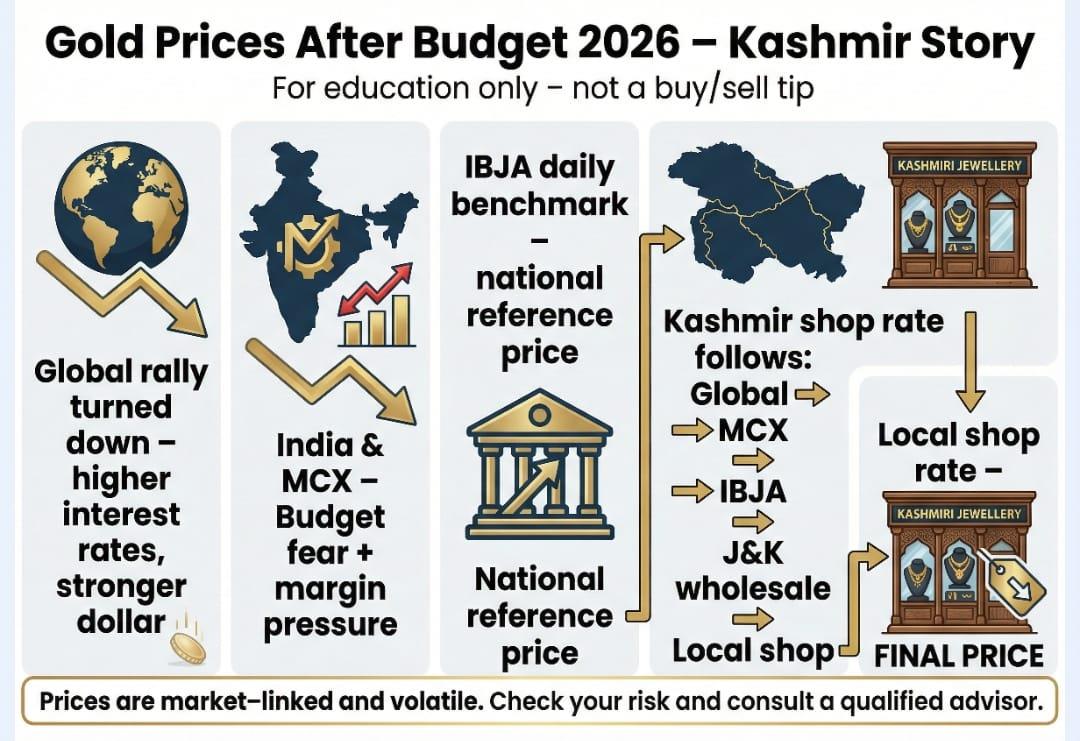
Markets began to believe that interest rates in major economies would stay high for longer. The US dollar strengthened, which usually hurts gold.
Bonds and bank deposits started looking attractive again because they offer consistent returns.
Gold does not pay interest, so when rates and the dollar rise, its appeal drops in the short term.
Large investors responded by booking profits and cutting their positions.
Once prices started falling, futures markets made the move sharper. Margin calls kicked in. Automatic sell orders were triggered. Traders were forced to exit, which led to more selling and faster declines.
ADVERTISEMENTThe very forces that had pushed gold higher now turned against it. Fear faded, easy money dried up, and heavy borrowing became a burden.
India feels these global swings very strongly because it imports most of its gold. International prices and the rupee dollar rate directly affect domestic rates.
On the MCX exchange, gold and silver futures hit highs and then fell sharply. This happened around the Union Budget 2026, a time when traders are usually cautious.
Budgets can bring changes in customs duty or taxes on gold. They also influence views on inflation and government borrowing. Because of this uncertainty, many traders reduce risk. Since many were sitting on profits and using borrowed money, the fall hurt badly.
Exchanges raised margin requirements to control risk. Some traders could not add more funds and were forced to close their positions. That added further pressure and turned the fall into what felt like a brief crash.
One institution connects global prices to Indian retail rates. That is the India Bullion and Jewellers Association based in Mumbai.
Every day, leading bullion dealers from across the country submit buy and sell quotes for standard gold purities like 999 and 995. These are averaged to arrive at benchmark rates for pure gold and common jewellery grades like 22 carat. GST is not included at this stage.
Jewellers then add 3 percent GST, making charges, and their margins. These benchmark rates matter a lot.
Banks and finance companies use them to value gold for loans. Sovereign Gold Bonds depend on price averages drawn from these rates. Large jewellery chains and regional wholesalers also follow them closely.
So when global prices or MCX futures fall, the next day's benchmark usually drops too, and that change moves through the entire market.
Buyers in Kashmir see this through a clear chain.
It begins with global prices quoted in dollars per ounce on markets like London or COMEX. These prices react to global news, interest rate expectations, dollar strength, and trader positions. Importers convert them into rupees using the exchange rate. MCX futures reflect these changes almost instantly.
Top bullion dealers send in their quotes, which are averaged into daily benchmark rates without GST. National wholesalers and jewellery brands adjust these for their costs and margins. Dealers in Jammu and Kashmir then build on that, adding transport, insurance, processing losses, local expenses, and their own margins to arrive at a regional wholesale rate.
Local jewellers in Srinagar, Jammu, or smaller towns start from this rate. They add 3 percent GST, making and design charges, any brand premium, and a modest shop margin.
That final number is what customers see at the counter.
Unlike exchanges, shops do not change prices every minute. Rates are usually updated once or a few times a day. Because of this, price falls in Kashmir appear slower than the sharp moves seen on MCX or television screens.
But when prices keep falling for several days, retailers have to adjust. The price cuts seen after Budget 2026 followed this exact flow. They were not random local decisions.
There are lessons here for savers and investors in Kashmir. Gold still offers a sense of security, especially for households planning long term. But short term prices can swing sharply.
It is better to hold gold alongside bank savings and other assets, rather than putting all your money into it.

Legal Disclaimer:
MENAFN provides the
information “as is” without warranty of any kind. We do not accept
any responsibility or liability for the accuracy, content, images,
videos, licenses, completeness, legality, or reliability of the information
contained in this article. If you have any complaints or copyright
issues related to this article, kindly contact the provider above.
Most popular stories
Market Research

More Story







Comments
No comment