




403
Sorry!!
Error! We're sorry, but the page you were looking for doesn't exist.
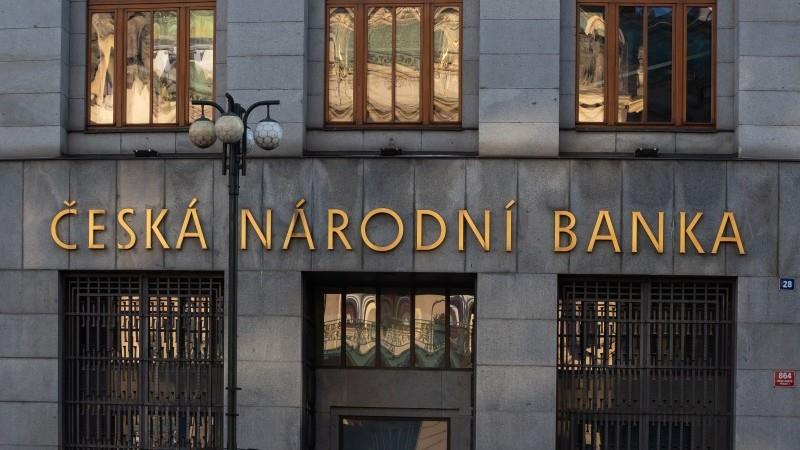
CNB Preview: A Rubicon Moment In March
(MENAFN- ING)
CNB forecast to change substantially
Policymakers are expected to leave the base rate unchanged at 3.5% next Thursday, with the preliminary inflation estimate for January released the same day, early in the morning. With headline inflation likely to come in well below target – and no detailed breakdown available – we believe the Bank Board will avoid an early, attention‐grabbing rate cut unless inflation unexpectedly drops below 1%. That said, January often brings tricky readings due to menu price changes, and this year's 1.1% headline rate is no exception.
The new Czech National Bank projection will likely show a punchier economic performance in the last year, and it may marginally boost this year's growth outlook. We see some room for loftier government spending and fixed investment this year, while net exports could be a more pronounced drag given the elevated import intensity of investment. In contrast, this year's inflation forecast is likely to be slashed, as the CNB will take on board reduced end-prices for electricity and natural gas by distributors, reflecting low global energy prices and a strong koruna, along with government subsidies for electricity. As a result, the forecast for regulated prices will switch from an expected increase to a decline, and the headline inflation outlook will move from above the target to below it. Moreover, the CNB is still factoring in the upward price impact of the new emissions allowances (ETS2) in 2027, even though the launch of the system has been postponed to 2028.
And of course, we are all curious about how the CNB's workhorse model will react, as it treats interest rates as an endogenous variable, with great sensitivity to headline inflation and a propensity to bring it back to the target rather swiftly, whether from above or below. So, we expect a tendency to draw a relaxed interest rate path, which will be corrected by expert judgement. The question is whether there will be another period of a mismatch between the model path for interest rates and the Bank Board's view. We have seen that before, and it was a bit of a tough nut to crack in terms of communication and forward guidance. In any case, a sub-target headline forecast will likely result in signalling a few cuts ahead, despite some upward fine-tuning.
Low headline rate versus elevated coreWe see January's headline inflation coming in at 1.1%, shaped by subdued growth in food prices and pronounced declines in fuel and regulated prices. That said, the core inflation reading will likely remain elevated, driven by ample consumer spending, as households face significantly lower energy bills. Service price dynamics will be a crucial factor for the CNB, while subdued energy prices are likely to trickle down across the whole inflation basket. And here are the twisted forces making the diagnosis of core inflation tricky, as the patient may have more than one condition. For example, restaurants may be less prone to raising prices due to subdued food and energy prices. Meanwhile, solid demand may imply higher margins as menus are updated in January. Still, we take the stance that the disinflationary forces will marginally dominate and push core inflation lower around the summer.
Elysium for headline and Asphodel Fields for core rateWith Board members mentioning the possibility of a lower base rate, potentially by as much as 50 basis points, we now expect the first rate reduction to come in March. It is the first serious opportunity to proceed with the rate cut, in our view, as the inflation outlook for the year has been broadly set and disclosed in full detail. When a central banker concludes that a move is warranted, it is usually better to act sooner rather than later. Caesar also did not procrastinate for too long at the Rubicon, either from hesitation or strategic reasons. So, we conclude: alea iacta est. Still, the CNB remains in an enviably comfortable position: the economy is on the right track, and the first cut could come at any point between now and June, by which time a low headline rate will be firmly established in the spring and a tangible easing in core inflation should be visible ahead of the summer.
Real interest rate pretty restrictive this year To cut or not to cut, that is the questionAnd there is another valid perspective to consider: why reduce rates when the economy appears to be entering a boom, rather than keeping some powder dry in case conditions deteriorate? One answer that crossed my mind is the intensifying global live-and-let-die race, in which central banks may feel compelled to create the most favourable conditions possible for their domestic firms. From that angle, maintaining real interest rates well above 2% even for a year, might be seen as strategic misbehaviour. On the other hand, as a forward-looking guardian of price stability that is in a hundred ways linked to overall economic conditions, why reduce your potential for defending economic performance once things turn south? We saw that in March 2020, when every monetary institution slashed rates aggressively, except for the European Central Bank. Oh, why? Because the ECB's rates were already at rock bottom.
Ultra-low rates disappeared into the abyss of historyThe point is that not rushing into a cosmetic cut when the economy is in a good place does little harm. There are valid reasons to stay on hold: the reduced headline inflation is only temporary, driven largely by government measures; the core rate remains elevated; and wage developments are yet to be seen. The average wage gain for public servants is estimated at 6.8% this year. Yes, the private sector might be somewhat reluctant to go ahead with lofty wage increases in a low-inflation environment. However, if industry finally shakes off its prolonged stagnation and begins to gain real momentum, companies will have little excuse not to hire. In such a case, we could see swift labour market retightening in the second half of the year with profound repercussions for wages, income, spending power, and likely core inflation.
It ultimately comes down to the performance of the real economy. Our growth forecast of 2.7% for this year and next sits toward the upper end of the outlook range. There are, nevertheless, emerging reasons for optimism after a long stretch in what has felt like a dark and cold place for Europe's growth prospects. German chancellor, Friedrich Merz, recently admitted that closing nuclear power plants was a major strategic mistake, that the entire German energy system must be reformed, and that Europe has wasted incredible growth potential. Who knows, something may ultimately change in reality. A bet on pouring money into the development and implementation of modular nuclear reactors is perhaps taking it too far.
In any case, it's good news for the Czech economy that its vital economic partner is beginning to acknowledge that something went terribly wrong and seems ready to make amends. With this in mind, our real growth forecast might not seem too extravagant, and then one cosmetic trimming - making 3.25% the terminal rate - would do the job and set the stage for 2027 when inflation is for now expected to return close to target.
Our market viewThe Czech koruna has clearly underperformed its CEE peers since the beginning of this year, and we maintain a bearish view in the short term. While the zloty and forint may benefit from a weaker US dollar and higher probabilities of a peace agreement between Ukraine and Russia, the koruna is traditionally less sensitive to global factors and is more driven by the interest rate differential. The rates market is gradually moving towards the CNB's expected rate‐cutting cycle and is currently pricing in one cut. This would be consistent with EUR/CZK moving toward the 24.400 area.
If the market continues to price in additional CNB rate cuts, particularly in response to signals that easing is approaching, the pair could shift into the 24.500–24.600 range. Under such conditions, the koruna would likely remain under pressure in the near term. However, once levels around 24.500 are reached, current macro conditions – including the limited scope for further rate cuts – suggest that the potential for additional koruna weakness may become more constrained.
Czech rates have seen the biggest rally among CEE peers this year, visibly driven by the change in inflation profile and CNB forward guidance regarding a return to discussion on rate cuts. Tuesday's words by Deputy Governor Jan Frait triggered a repricing in PRIBOR fixing, which is likely to continue. At the same time, the front end of the interest rate curve could continue to reflect expectations of lower future policy rates given inflation dynamics. Although the strength of the economy limits how far rates can ultimately fall – with levels below 3% looking difficult to justify – an inflation profile that is set to remain below 2% this year, and potentially next, leaves little basis for considering rate hikes. As a result, segments such as 1y1y and 2y1y may continue to adjust lower, contributing to further curve steepening.
Meanwhile, Czech government bonds (CZGBs) continue to screen as relatively attractive within the broader rates landscape, with 10‐year yields still above 4.40%. Although the state budget has yet to be approved, the government continues to point towards keeping the deficit below 3% of GDP, which has helped temper concerns about post‐election fiscal slippage. In addition, asset‐swap spreads remain wide, providing a noticeable premium relative to the IRS curve.

Legal Disclaimer:
MENAFN provides the
information “as is” without warranty of any kind. We do not accept
any responsibility or liability for the accuracy, content, images,
videos, licenses, completeness, legality, or reliability of the information
contained in this article. If you have any complaints or copyright
issues related to this article, kindly contact the provider above.
Most popular stories
Market Research

More Story








Comments
No comment