





403
Sorry!!
Error! We're sorry, but the page you were looking for doesn't exist.
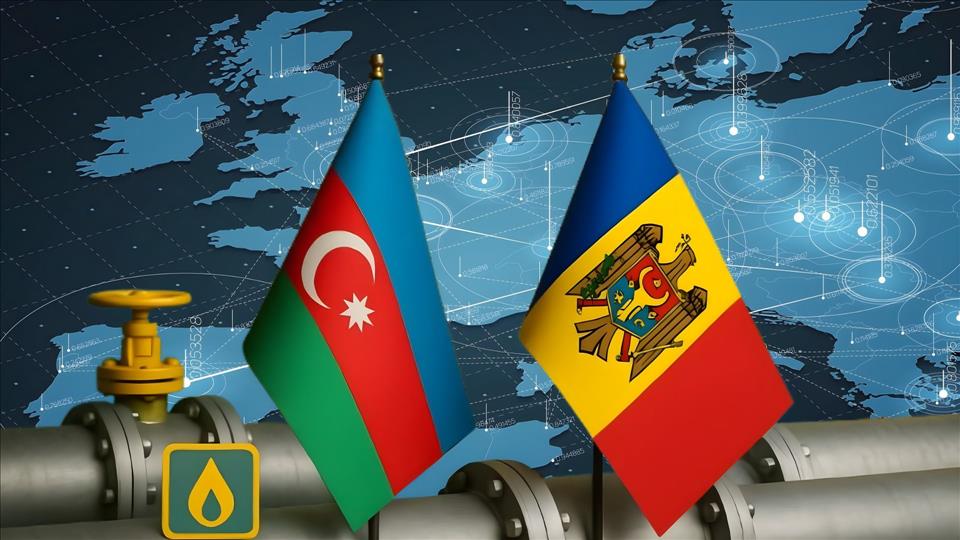
Azerbaijani Gas Moves East As Moldova And US Reshape Europe's Energy Routes
(MENAFN- AzerNews)
Akbar Novruz
Read more
Corridors matter more than contracts. Perhaps, for Moldova, energy security has long been a vulnerability rather than a policy choice. Landlocked, politically exposed, and historically dependent on Russian gas, the country is now positioning itself as a transit node rather than a hostage.
Moldova and the United States are advancing plans to bolster the Vertical Gas Corridor, a strategic gas transit route designed to channel Azerbaijani pipeline gas and U.S.-supplied liquefied natural gas (LNG) northward through Eastern Europe. The project is gaining fresh momentum as Chisinau and Washington align more closely on energy diversification and geopolitical resilience.
Originally conceived in 2016 to link Greece, Bulgaria, Romania and Hungary, the corridor was expanded in 2024 to include Moldova and Ukraine, turning a regional pipeline network into a potential lifeline for countries previously reliant on Russian gas. It builds on the Trans-Balkan Gas Pipeline, enabling flows from Greek LNG import terminals such as Revithus and Alexandroupolis northward into Central and Eastern Europe.
Moldova's Energy Minister, Doreen Yunghieu, and U.S. Energy Secretary Chris Wright have discussed accelerating the corridor's development, underscoring a joint interest in reducing Moscow's historical leverage over European gas markets. Such cooperation reflects broader U.S. policy that views Southeastern Europe as a key arena for energy security and diversification, tapping both Azerbaijani pipeline supplies and LNG imports from global markets.
The Vertical Gas Corridor stands out not just for its geographical reach but for its strategic ambition. It aspires to link a network of existing and emerging infrastructure, from the TANAP and Trans-Adriatic Pipeline (TAP) routes that bring Azerbaijani gas to Greece, through the Greece-Bulgaria Interconnector (IGB), and onward through Bulgaria, Romania and Moldova to Ukraine and beyond.
Moldova revoked the gas supply license of Moldovagaz, in which Gazprom holds a controlling stake, and has handed over all supply functions to the state-owned Energocom from September 1. According to Moldovan Energy Minister Dorin Junghietu, the state-owned company Energocom has a clear strategy focused on source diversification.“We would be glad to see Azerbaijani companies among the suppliers. However, our recommendation is to carefully monitor the tender procedures organized by Energocom, or submit applications, or start direct negotiations,” the minister stated.
Recent developments underscore this shift from concept to implementation. Gas transmission operators from Greece, Bulgaria, Romania, Moldova and Ukraine have jointly proposed new capacity routes labelled“Route 2” and“Route 3” to regulators for approval, aiming to expand cross-border transmission from reek LNG terminals and Azerbaijani sources through the corridor to Ukraine. This kind of infrastructure cooperation reflects a pragmatic response to Russian gas transit reduction and European Union goals to diversify supply as Russian pipeline contracts wind down.
Moldova, for its part, has been proactive. Its National Energy Regulatory Agency has approved new transmission routes that are expected to operate through winter months, strengthening linkages with neighboring systems and boosting regional energy security. And as winters grow more demanding and interconnected markets more competitive, the corridor offers both security and flexibility, by routing gas from multiple sources including LNG as well as traditional pipeline flows.
Why it matters for Chisinau and beyond?
For Moldova, integration into the Vertical Gas Corridor is transformative. Historically dependent on Russian gas, the country has since diversified supplies and modernized infrastructure, securing over 90 percent of its own gas needs heading into the 2025/2026 winter. Participation in the corridor now gives Chisinau direct access to Azerbaijani gas and regasified LNG from Greek terminals, reducing its vulnerability and embedding it more firmly in the European energy market.
The corridor also has broader geopolitical implications. The United States has signaled its support for Greece as a gateway for LNG into Europe, encouraging investment and serving as a hub for diversified flows that circumvent Russia. U.S. diplomats and officials have articulated a clear strategic interest in developing these connections, emphasising that Greece's position as an LNG receiving and transmission point can bolster regional energy independence.
For the European Union, too, the corridor offers a way to align energy markets across the Balkans and Eastern Europe. Expanded capacity, potentially up to 10 billion cubic meters per year in future phases, would link LNG supply points in Greece with transit networks reaching Moldova, Ukraine and even Slovakia, reinforcing EU objectives for cross-border energy connectivity and competition.
Yet the project's momentum is not without hurdles. Past attempts to move gas along the corridor northward have seen mixed results; in some seasons, buyers have opted not to import gas through certain routes when competing options proved cheaper or more convenient. Overcoming such market inertia requires not only infrastructure but market mechanisms, regulatory alignment, and competitive pricing, conditions that the participating countries and their partners are now actively trying to establish.
By late 2026, key infrastructure components in Bulgaria and beyond are expected to come online, boosting transmission capacity and facilitating more robust use of the corridor. The involvement of the United States, both as a policy partner and LNG supplier, adds a geopolitical dimension that transcends regional concerns: it frames Moldova's role in the corridor as part of a transatlantic strategy for energy security and diversification.

Legal Disclaimer:
MENAFN provides the
information “as is” without warranty of any kind. We do not accept
any responsibility or liability for the accuracy, content, images,
videos, licenses, completeness, legality, or reliability of the information
contained in this article. If you have any complaints or copyright
issues related to this article, kindly contact the provider above.
Most popular stories
Market Research

More Story







Comments
No comment