



403
Sorry!!
Error! We're sorry, but the page you were looking for doesn't exist.
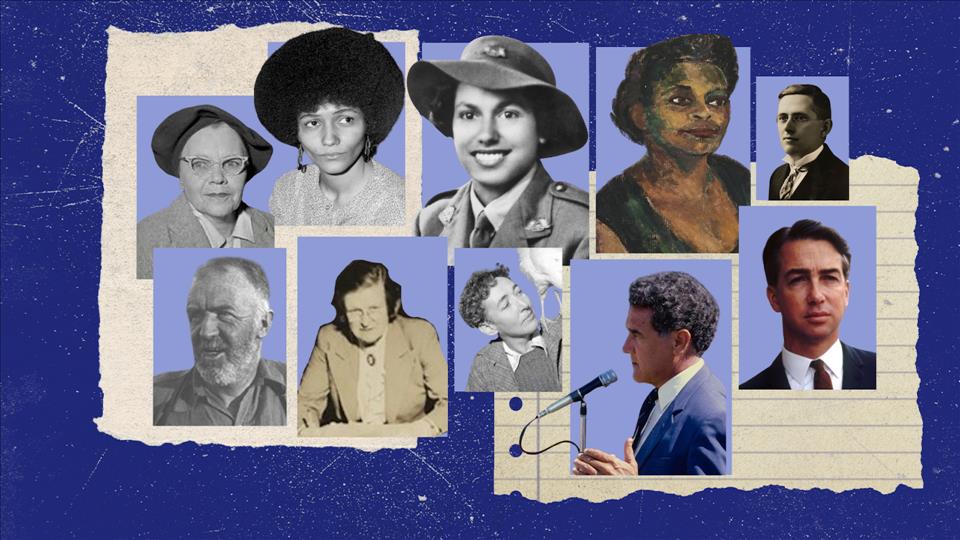
Australia Once Enshrined White Superiority. These 10 Trailblazers Helped Shift Our Attitudes To Race
Author: Angela Woollacott
(MENAFN- The Conversation) In early 20th century Australia, Indigenous people were denied citizenship and the nation had a racially exclusive immigration policy. Most people not only accepted the“White Australia” policy but openly identified with its assumption of white supremacy. Popular culture was replete with overtly racist terms and images.

Even after World War II, as Australians began to focus on their region and nearby colonies threw off their imperial rulers, acceptance of“White Australia” continued for many.
Yet from the late 1940s, some Australians began to question the racial inequality on which colonialism relied. By 1975, when the Whitlam government passed the Racial Discrimination Act, racially exclusive immigration had been jettisoned and First Nations people had legal equality, albeit not parity.
Such a profound shift in popular consensus did not occur spontaneously. Here are ten key Australians who prodded the country to question its own thinking on race.
1. H.V. 'Doc' EvattIn early 1945, as Minister for External Affairs and Attorney-General, Dr H.V. Evatt (1894–1965) co-led the Australian deputation to the United Nations' founding conference. He helped to shape the UN Charter dealing with colonies, requiring their development towards independence.
As president of the third session of the UN General Assembly, on 10 December 1948, Evatt presided over the adoption of the Universal Declaration of Human Rights.
His niece, lawyer and jurist Elizabeth Evatt, recalled that her Uncle Bert held the idea of human rights close to his heart and saw the declaration as the first step in a process. She also pointed to Australia's role in formulating Chapter XI of the UN Charter, calling it a stimulus to decolonisation.
As a supporter of White Australia, Evans was inconsistent as a critic of colonialism. But his role in the adoption of the declaration, which is so often invoked in support of human rights and equality, should be a matter of pride in this country.
2. Jessie StreetJessie Street (1889–1970) was a leading feminist in the 1940s and the only woman on the Australian delegation to the 1945 UN conference. Street helped to insert the phrase“the equal rights of men and women” in the preamble of the UN Charter. She also pushed for a commission to be established to deal with the status of women.
Street and other women delegates fought to include the word“sex” in the Universal Declaration of Human Rights statement. Respect for human rights was to be without distinction as to race, sex, language, or religion.
She knew Evatt and praised his influential work at the early UN. But unlike Evatt, she had no reservations about condemning colonialism. In the mid–1950s, Street investigated the conditions of Indigenous Australians for the London Anti-Slavery Society, writing an important report and working with Indigenous activists such as Pearl Gibbs.
In 1964, Street visited Ghana, then led by socialist President Kwame Nkrumah. It wasn't only his socialist program she admired, nor his commitment to gender equality. She also applauded his vision of redressing the historical wrongs of imperialism, slavery and exploitation, and praised his“burning resentment against race discrimination and other aspects of the old colonial regime”.
3. Pearl GibbsPearl Gambanyi Gibbs (1901-1983), whose maternal ancestry was Ngemba or Muruwari, helped to organise the Aborigines Progressive Association, the 1938 Day of Mourning protest, the Australian Aborigines' League, the Aboriginal-Australian Fellowship, and the Federal Council for the Advancement of Aborigines and Torres Strait Islanders.
She played a vital role in the movement leading to the 1967 Referendum, which would include Indigenous people in the census and empower the Commonwealth government to legislate for them. Gibbs was an advocate for workers, one of Australia's leading human rights activists and a link between the women's and Aboriginal rights movements.
Gibbs saw and articulated the structural nature of colonial oppression within Australia. In 1941, she gave a radio address, arranged by the Theosophical Society of Sydney. Identifying proudly as“a quarter-caste Aborigine”, she condemned“153 years of the white man's and white woman's cruelty and injustice and unchristian treatment”.
She pointed to segregation in picture halls, churches and elsewhere, urging:“When I say that we are Australia's untouchables you must agree with me”.
4. Faith BandlerFaith Bandler 's father was from Ambrym (in what is now Vanuatu), brought to work on the Queensland sugar plantations. Her mother was half-Indian and half-Scottish. While not Indigenous, Bandler (1918–2015) knew racism all too well.
After serving in the Women's Land Army, in the postwar years she joined politically progressive circles in bohemian Sydney. She became a prominent advocate for racial equality.
By 1956, Gibbs and Bandler had begun the Aboriginal-Australian Fellowship, an organisation dedicated to campaigning for Indigenous rights. Bandler became general secretary of its successor. She played a key role in the 1967 Referendum and, as her biographer Marilyn Lake contends, the meaningful achievement of equal citizenship for Aboriginal people.
In an interview, Bandler explained that her activism was influenced by her childhood experiences of racism, and knowledge of its global, structural dimensions:
5. Charles DuguidDr Charles Duguid (1884-1986) was a prominent campaigner for Aboriginal rights from the 1930s onwards. Duguid founded Ernabella mission, for the Pitjantjatjara people in northwest South Australia in 1937. This mission was regarded as extraordinarily progressive in its cultural sensitivity and efforts to preserve language and customs.
Duguid advocated publicly for the significance of the Universal Declaration of Human Rights, quoting from its preamble:“Disregard and contempt for human rights have resulted in barbarous acts which have outraged the conscience of humankind”. He then observed:“From 1788 to 1900 this happened all too often in Australia.”
Duguid often drew comparisons between Australia and South Africa. More than once, Duguid finished an address with the ominous remark:“Asia is looking on”. The statement called into question Australia's regional standing among both its colonised and newly independent neighbours.
6. Kylie TennantKylie Tennant (1912–1988), one of Australia's most prominent writers in the mid-20th century, was known especially for her socialist realist portrayals of the hardships of the working class and unemployed – occasionally referred to as Australia's John Steinbeck.
Tennant was hailed by the Times Literary Supplement and won praise from George Orwell. In the late 1950s, she used her public platform to draw attention to the terrible consequences of colonialism for Aboriginal and Torres Strait Islander people in the far north. Her books Speak You So Gently and All the Proud Tribesmen sold well nationally and internationally.
Tennant's determined use of humour as a vehicle to show all of her characters – Indigenous and settler – as individuals with personalities was undergirded by her awareness of racism, not least on the part of some government officials and mining company prospectors. Condemning discrimination and abysmal living conditions, Tennant evoked the richness of Indigenous cultures and community life.
Her travel writing and fiction brought First Nations people in the north to metropolitan attention – as she had done in the 1930s and early 1940s with the unemployed and the very poor.
7. Don DunstanDon Dunstan (1926-1999) was a democratic socialist South Australian Labor MP, a national political figure and cultural celebrity. As Premier of SA from 1967–68 and 1970–79, Dunstan pioneered legislative and policy reform establishing Aboriginal land rights and prohibiting discrimination.
In 1957, he gained international attention as an outspoken critic of British colonialism in Cyprus. In 1960–61, Dunstan served as president of the Federal Council for the Advancement of Aborigines and Torres Strait Islanders. In 1965, he played a key role in the removal of the White Australia policy from the federal ALP platform. In June 1969, he said, as reported in the Tribune:
In the late 80s and the 90s, he was president of the Mandela Foundation of Australia and presided over the Australian branch of the Movement for Democracy in Fiji, while being a leading voice for Australia to become a republic.
8. Oodgeroo NoonuccalOodgeroo Noonuccal (Kath Walker) (1920–1993) was a poet and Indigenous rights activist. Noonuccal grew up on Minjerribah/North Stradbroke Island. She became a domestic servant before joining the Australian Women's Army Service in World War II. A player and advocate for women's cricket, she worked as a stenographer and house cleaner.
Her political skills were first honed in the Communist Party, which she left before becoming a writer. From the 1960s, Walker/Noonuccal was celebrated for her powerfully evocative poetry and as an internationally prominent political figure fighting for Aboriginal rights.
In 1969, Walker told the Journalists' Club in Sydney that missionaries
The old government policy of assimilation had done nothing to help Aboriginal people, and the new policy of integration was merely a word change:“At present, Aboriginals are given the rights to live upon the rubbish dumps of the white society”.
Noonuccal received many awards and accolades, and was recognised for founding her Indigenous learning centre Moongalba on Minjerribah.
9. Charles PerkinsCharles Perkins (1936–2000) was born on an Aboriginal reserve near Mparntwe/Alice Springs. His strongest memory was
Later he was sent to an institution for Aboriginal boys in Adelaide for schooling. He worked as a fitter and turner, prior to becoming a professional soccer player, a career that took him to England.
His activism began in the mid-1950s as a young man in Adelaide. While studying at University of Sydney, he hit national headlines in 1965 when he led the Freedom Ride student protest against segregation and discrimination in New South Wales country towns.
Perkins' path-breaking career as a public servant culminated as secretary of the Department of Aboriginal Affairs. The photo above, of Perkins speaking at the Tent Embassy while he was secretary, captures his ability to balance activism and senior administration. Long a powerful national voice on Aboriginal rights, in the 1990s he served on the Aboriginal and Torres Strait Islander Commission.
10. Roberta SykesRoberta Sykes (1943-2010) was the daughter of an Australian mother and African–American father. Of her childhood in Townsville in the 1940s-50s, Sykes would recall:
Forced out of school early by racism, she became a nurse, before working as a journalist. She helped to found the Aboriginal Medical Service in Redfern, and the Aboriginal Tent Embassy, among many other entities. In the early 1970s, as a prominent activist for Aboriginal rights, Sykes was invited to speak on racism, rights and colonialism in countries including the UK, New Zealand and Papua New Guinea.
She earned her PhD at Harvard University, held positions in academia and as a consultant, and was awarded the 1994 Australian Human Rights Medal. In 1986, in her Australia Day address to the National Press Club, she condemned the fact that“Australian Aborigines were still living under siege almost 200 years after white people arrived on their land”.
These ten Australians collaborated on many fronts. Evatt and Street worked together at the UN from 1945 to 1949. Tennant wrote the first biography of Evatt. Street connected with Gibbs and Bandler to ignite the movement for constitutional change that resulted in the 1967 referendum.
Duguid and Dunstan worked in the 1959 campaign against the death penalty conviction of Arrernte man Rupert Maxwell Stewart. Dunstan - who was something of a mentor to Perkins - and Noonuccal were both invited delegates to a historically important convention on racism held by the World Council of Churches in London in 1969.
Noonuccal and Sykes, while different generations, bonded as Black women from Queensland, both poets and activists. The ten's connections were links in vital intellectual and political networks, whose webs spread outwards and crossed the country.
Of course, the work of this cohort alone did not change Australia, and many other individuals could – and perhaps should – be added to such a list. But these ten each made singular contributions to the formidable task of changing a nation's mind.
Institution:Australian National University

Legal Disclaimer:
MENAFN provides the
information “as is” without warranty of any kind. We do not accept
any responsibility or liability for the accuracy, content, images,
videos, licenses, completeness, legality, or reliability of the information
contained in this article. If you have any complaints or copyright
issues related to this article, kindly contact the provider above.
Most popular stories
Market Research

More Story
Comments
No comment