


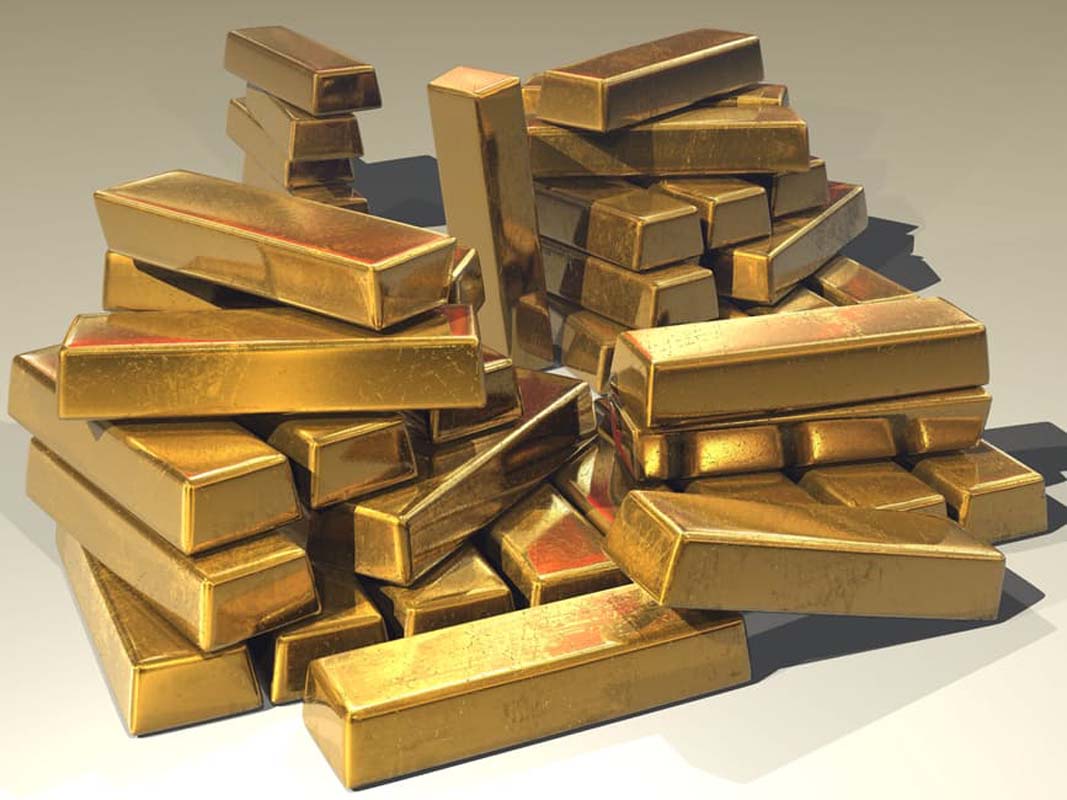
German Lawmaker Urges Return of National Gold


(MENAFN) A senior German parliamentarian has called on Berlin to bring home a substantial portion of its gold reserves currently stored in the United States, according to comments given to a media outlet on Friday. The appeal was driven by unease over what she described as the “unpredictable” approach of US President Donald Trump.
Marie-Agnes Strack-Zimmermann, a representative of the Free Democratic Party (FDP), argued that reclaiming the bullion would help lower strategic exposure at a time of rising international volatility. She emphasized that shifting global dynamics now require greater caution in safeguarding national assets.
Global gold markets have experienced a dramatic upswing in recent years. Prices have climbed sharply over the last four years, with an almost 70% jump in 2025 alone, supported by strong central bank purchases, persistent inflation worries, and escalating geopolitical frictions.
This week, gold futures reached an all-time high of more than $4,860 per ounce, following Trump’s revived tariff warnings aimed at European nations opposing his Greenland acquisition proposal—remarks he later sought to soften.
”At a time of growing global uncertainties and under the unpredictable US policies of President Trump, it is no longer acceptable that around 37% of Germany’s gold reserves, more than 1,230 tons, are stored in New York,” Strack-Zimmermann said.
Germany’s central bank, the Bundesbank, currently safeguards 1,236 tons of gold valued at approximately $178 billion at the US Federal Reserve in New York.
Historically, Germany has maintained a large share of its bullion outside its borders, a practice shaped by postwar conditions and international trading considerations.
According to Strack-Zimmermann, this framework may have been reasonable during the Cold War era but is ill-suited to the present geopolitical environment. She warned that “Mere faith” in “transatlantic partners” is insufficient when it comes to ensuring independence in economic and security matters.
Germany began storing part of its gold abroad during the economic resurgence following World War II. Between 2013 and 2017, the country repatriated a portion of its reserves from New York and Paris. Today, roughly half of Germany’s gold is kept domestically, while the rest remains in New York and London.
Marie-Agnes Strack-Zimmermann, a representative of the Free Democratic Party (FDP), argued that reclaiming the bullion would help lower strategic exposure at a time of rising international volatility. She emphasized that shifting global dynamics now require greater caution in safeguarding national assets.
Global gold markets have experienced a dramatic upswing in recent years. Prices have climbed sharply over the last four years, with an almost 70% jump in 2025 alone, supported by strong central bank purchases, persistent inflation worries, and escalating geopolitical frictions.
This week, gold futures reached an all-time high of more than $4,860 per ounce, following Trump’s revived tariff warnings aimed at European nations opposing his Greenland acquisition proposal—remarks he later sought to soften.
”At a time of growing global uncertainties and under the unpredictable US policies of President Trump, it is no longer acceptable that around 37% of Germany’s gold reserves, more than 1,230 tons, are stored in New York,” Strack-Zimmermann said.
Germany’s central bank, the Bundesbank, currently safeguards 1,236 tons of gold valued at approximately $178 billion at the US Federal Reserve in New York.
Historically, Germany has maintained a large share of its bullion outside its borders, a practice shaped by postwar conditions and international trading considerations.
According to Strack-Zimmermann, this framework may have been reasonable during the Cold War era but is ill-suited to the present geopolitical environment. She warned that “Mere faith” in “transatlantic partners” is insufficient when it comes to ensuring independence in economic and security matters.
Germany began storing part of its gold abroad during the economic resurgence following World War II. Between 2013 and 2017, the country repatriated a portion of its reserves from New York and Paris. Today, roughly half of Germany’s gold is kept domestically, while the rest remains in New York and London.

Legal Disclaimer:
MENAFN provides the
information “as is” without warranty of any kind. We do not accept
any responsibility or liability for the accuracy, content, images,
videos, licenses, completeness, legality, or reliability of the information
contained in this article. If you have any complaints or copyright
issues related to this article, kindly contact the provider above.


Comments
No comment