





403
Sorry!!
Error! We're sorry, but the page you were looking for doesn't exist.
Law And Order, Funds And Authority: Why Centrekp Relations Are Strained
(MENAFN- Tribal News Network) -->
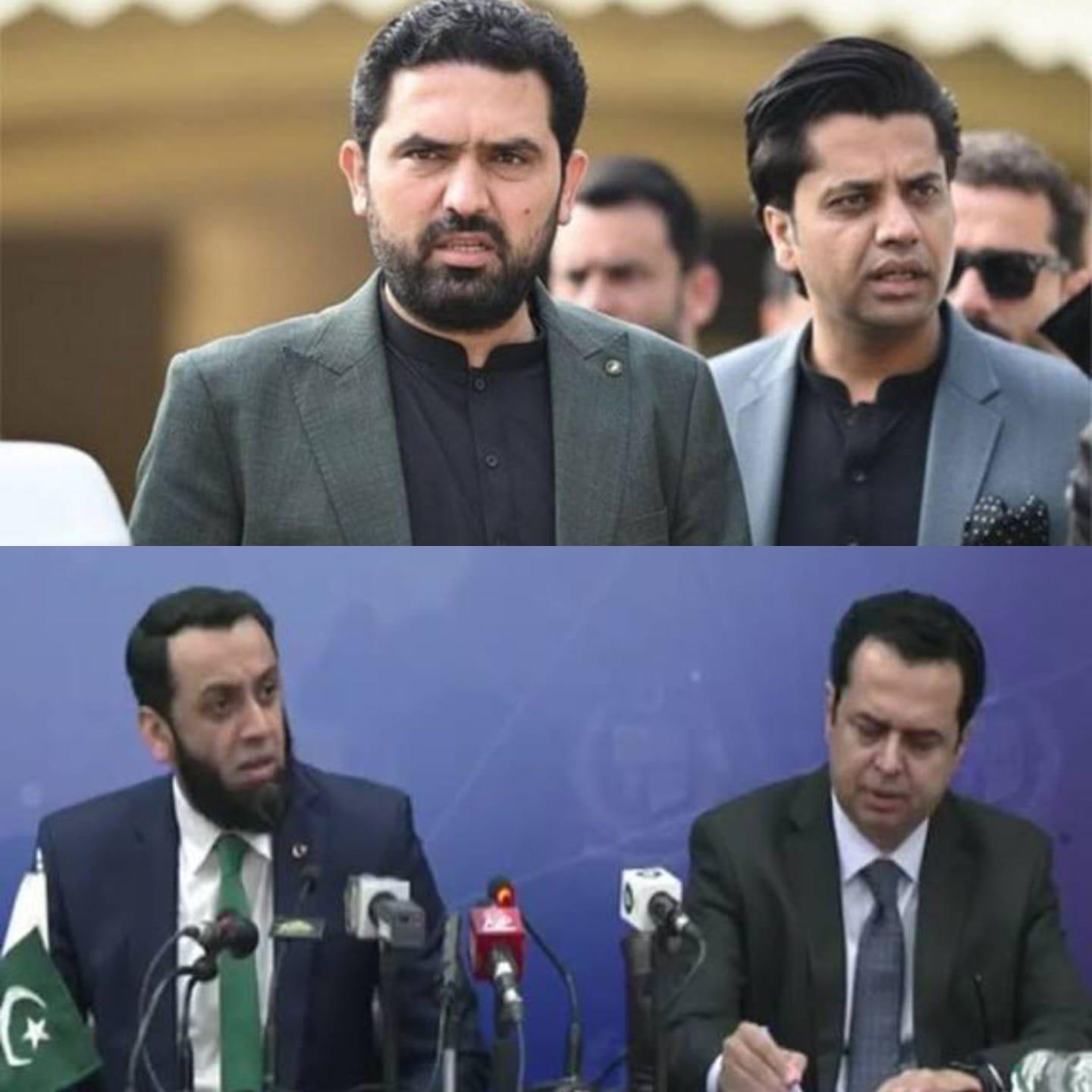
Disputes between the federal government and Khyber Pakhtunkhwa over authority, resources, and security policy have once again intensified. The most serious conflict revolves around the law-and-order situation, where both the provincial and federal governments appear unable to agree on a joint course of action. This disagreement has not only rendered the future of the tribal districts uncertain but has also made the political narrative increasingly bitter.
The provincial government maintains that the financial commitments made for the tribal districts after the merger of former FATA have yet to be fulfilled. Delays and reductions in funds from the NFC Award and other federal sources have adversely affected development projects.
The provincial government claims outstanding dues exceeding Rs. 1,300 billion, while the federal government has maintained complete silence on the matter. Development projects in the tribal districts have been severely impacted, and to meet ongoing expenditures there, the provincial government has been forced to divert funds from the settled districts.
Provincial authorities have also complained that Khyber Pakhtunkhwa, overall, is receiving fewer federal development funds compared to other provinces, further increasing the financial burden on the province.
Dispute over Law and Order and Military Operations:
The federal narrative argues that in light of rising incidents of terrorism in Khyber Pakhtunkhwa, tough decisions are unavoidable. Federal circles claim that the provincial government is avoiding a large-scale operation due to fears of political backlash and public reaction.
In the National Assembly, Minister of State for Interior Talal Chaudhry claimed that the provincial government is refusing to accept an operation out of fear that it might“turn into another Awami National Party.” He further stated that he was aware of the full details of internal meetings and that the truth would be revealed at an appropriate time.
In contrast, Khyber Pakhtunkhwa Chief Minister Muhammad Sohail Afridi has clearly stated that he does not support any new military operation and believes that peace can be achieved through political and administrative measures rather than the use of force.
While people are being displaced due to operations in Tirah, Chief Minister Sohail Afridi visited the area and opposed the operation, stating that it was being carried out forcibly without his consent or approval-an assertion that was also acknowledged by the Director General of Inter-Services Public Relations (ISPR).
Action in Aid of Civil Power Still in Force:
Upon assuming office, Chief Minister Muhammad Sohail Afridi had promised to repeal the Action in Aid of Civil Power law. Some progress was made in this regard during the first cabinet meeting; however, the law has yet to be repealed.
Action in Aid of Civil Power is the legal framework under which the civil government seeks assistance from the military and law enforcement agencies. The Khyber Pakhtunkhwa Assembly passed this law in 2018 under specific security circumstances to provide legal cover for counterterrorism operations.
Previously, this law had been enforced in FATA during the Pakistan Peoples Party's tenure, but it was later declared unconstitutional by the Peshawar High Court. The Khyber Pakhtunkhwa government challenged the decision in the Supreme Court, which granted a stay order, allowing the law to remain in force.
Under this law, security forces are granted powers of arrest, detention, and investigation in designated areas. It provides legal justification for detention centers and security operations, and integrates the roles of the civil administration and the military within a single framework.
However, human rights organizations have consistently objected to the law, arguing that it undermines fundamental rights and lacks transparency. Experts believe the primary reason for its continuation is the persistent security threats in Khyber Pakhtunkhwa. State institutions argue that repealing such laws before the complete elimination of terrorism could create a security vacuum.
Allegations and Derogatory Campaign Against the Chief Minister:
Since assuming office, Chief Minister Muhammad Sohail Afridi has faced a campaign of ridicule and character assassination. On one hand, anonymous accounts are producing false documentaries against him; on the other, certain officials from Punjab and the federal government are using harsh language against Sohail Afridi and, at times, targeting Pashtuns as a whole.
On social media and in certain political circles, allegations of smuggling, facilitating militants, and other serious accusations are being leveled against him-claims the provincial government describes as baseless and part of a coordinated political campaign.
Legal experts note that the Chief Minister or the provincial government has the authority to file civil and criminal defamation cases. Action can also be taken under cybercrime laws for false allegations, and official clarifications along with evidence can be presented at the state level. However, the question remains why the provincial government has not taken any strong legal steps so far. Analysts suggest that political expediency, institutional pressure, and a strategy to avoid further escalation may be among the reasons.
Conclusion:
This struggle between the federal government and Khyber Pakhtunkhwa is not merely political; it is constitutional, financial, and security-related in nature. On one side is the pressure of terrorism, and on the other are questions of public trust, human rights, and provincial autonomy. Unless a serious and joint strategy is developed on law and order, funding, and the legal framework, these disputes will continue to evolve beyond temporary statements into a permanent crisis.

Legal Disclaimer:
MENAFN provides the
information “as is” without warranty of any kind. We do not accept
any responsibility or liability for the accuracy, content, images,
videos, licenses, completeness, legality, or reliability of the information
contained in this article. If you have any complaints or copyright
issues related to this article, kindly contact the provider above.
Most popular stories
Market Research

More Story





Comments
No comment