


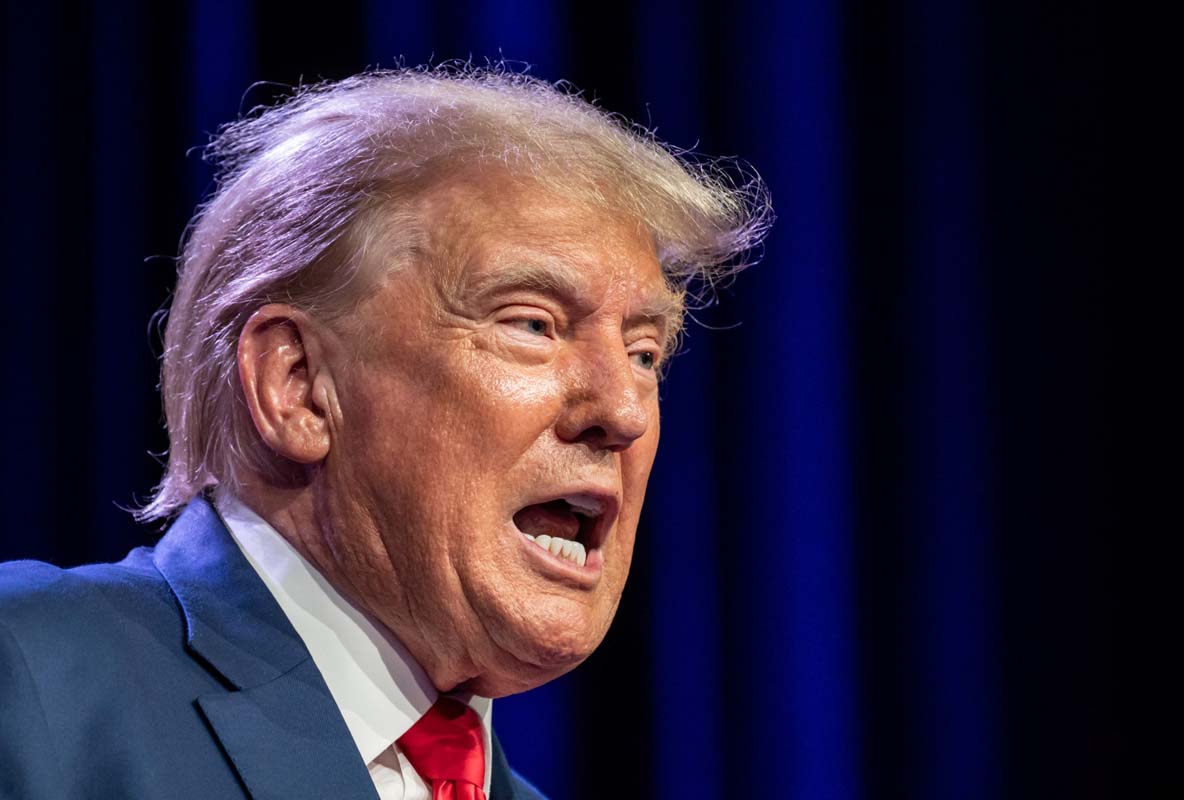
Trump Expands Entry Restrictions to Forty Nations


(MENAFN) U.S. President Donald Trump Tuesday authorized a proclamation dramatically expanding nations facing complete or partial entry prohibitions to encompass approximately 40 countries, taking effect Jan. 1, 2026.
Trump "signed a Proclamation expanding and strengthening entry restrictions on nationals from countries with demonstrated, persistent, and severe deficiencies in screening, vetting, and information-sharing to protect the Nation from national security and public safety threats," the White House said in a fact sheet.
Last June, the White House imposed comprehensive restrictions on citizens from 12 nations "found to be deficient with regards to screening and vetting and determined to pose a very high risk to the United States." Those countries include Afghanistan, Myanmar, Chad, the Republic of the Congo, Equatorial Guinea, Eritrea, Haiti, Iran, Libya, Somalia, Sudan and Yemen.
The U.S. administration simultaneously implemented partial restrictions on nationals from seven nations "who also pose a high level of risk to the United States": Burundi, Cuba, Laos, Sierra Leone, Togo, Turkmenistan and Venezuela.
Tuesday's proclamation introduces complete restrictions and entry prohibitions on five additional nations following recent intelligence assessments: Burkina Faso, Mali, Niger, South Sudan, and Syria. It also adds full restrictions and entry limitations on individuals holding Palestinian Authority-issued travel documents.
The administration further escalated full restrictions and entry prohibitions on two countries previously under partial limitations: Laos and Sierra Leone.
Consequently, the roster of nations facing total entry bans has surged from the original 12 to approximately 20.
The proclamation maintains partial restrictions on nationals from four of the seven initially designated "high-risk" countries: Burundi, Cuba, Togo, and Venezuela. It lifts partial entry restrictions on Turkmenistan nonimmigrant visas but maintains the suspension of entry for immigrant visas.
It adds partial restrictions and entry limitations on 15 additional countries: Angola, Antigua and Barbuda, Benin, Cote d'Ivoire, Dominica, Gabon, The Gambia, Malawi, Mauritania, Nigeria, Senegal, Tanzania, Tonga, Zambia, and Zimbabwe.
Following the updated directive, countries subjected to partial entry restrictions have multiplied from seven to 20.
The policy shift represents the Trump administration's continued campaign to fortify U.S. entry requirements for foreign nationals, emerging after a shooting incident involving two National Guard members in Washington, D.C. during Thanksgiving week. Authorities identified the suspect as a 29-year-old Afghan national who had secured asylum in April.
U.S. Citizenship and Immigration Services (USCIS) unveiled last month the initiation of intensified reviews targeting green card holders from 19 "countries of concern"—the identical 19 nations placed on the restriction roster in June.
Late last month, Trump declared via social media his intention to permanently halt immigration from "Third World countries." The U.S. State Department simultaneously announced a freeze on visa issuance to holders of Afghan passports.
"The president has sought to use politically fraught moments to expand his crackdown on immigration," media reported, noting that the "initial travel ban in June was announced days after authorities said an immigrant from Egypt, who arrived on a visa, used a makeshift flamethrower and molotov cocktails to attack demonstrators marching in Boulder, Colorado, for the release of Israeli hostages in Gaza."
Trump "signed a Proclamation expanding and strengthening entry restrictions on nationals from countries with demonstrated, persistent, and severe deficiencies in screening, vetting, and information-sharing to protect the Nation from national security and public safety threats," the White House said in a fact sheet.
Last June, the White House imposed comprehensive restrictions on citizens from 12 nations "found to be deficient with regards to screening and vetting and determined to pose a very high risk to the United States." Those countries include Afghanistan, Myanmar, Chad, the Republic of the Congo, Equatorial Guinea, Eritrea, Haiti, Iran, Libya, Somalia, Sudan and Yemen.
The U.S. administration simultaneously implemented partial restrictions on nationals from seven nations "who also pose a high level of risk to the United States": Burundi, Cuba, Laos, Sierra Leone, Togo, Turkmenistan and Venezuela.
Tuesday's proclamation introduces complete restrictions and entry prohibitions on five additional nations following recent intelligence assessments: Burkina Faso, Mali, Niger, South Sudan, and Syria. It also adds full restrictions and entry limitations on individuals holding Palestinian Authority-issued travel documents.
The administration further escalated full restrictions and entry prohibitions on two countries previously under partial limitations: Laos and Sierra Leone.
Consequently, the roster of nations facing total entry bans has surged from the original 12 to approximately 20.
The proclamation maintains partial restrictions on nationals from four of the seven initially designated "high-risk" countries: Burundi, Cuba, Togo, and Venezuela. It lifts partial entry restrictions on Turkmenistan nonimmigrant visas but maintains the suspension of entry for immigrant visas.
It adds partial restrictions and entry limitations on 15 additional countries: Angola, Antigua and Barbuda, Benin, Cote d'Ivoire, Dominica, Gabon, The Gambia, Malawi, Mauritania, Nigeria, Senegal, Tanzania, Tonga, Zambia, and Zimbabwe.
Following the updated directive, countries subjected to partial entry restrictions have multiplied from seven to 20.
The policy shift represents the Trump administration's continued campaign to fortify U.S. entry requirements for foreign nationals, emerging after a shooting incident involving two National Guard members in Washington, D.C. during Thanksgiving week. Authorities identified the suspect as a 29-year-old Afghan national who had secured asylum in April.
U.S. Citizenship and Immigration Services (USCIS) unveiled last month the initiation of intensified reviews targeting green card holders from 19 "countries of concern"—the identical 19 nations placed on the restriction roster in June.
Late last month, Trump declared via social media his intention to permanently halt immigration from "Third World countries." The U.S. State Department simultaneously announced a freeze on visa issuance to holders of Afghan passports.
"The president has sought to use politically fraught moments to expand his crackdown on immigration," media reported, noting that the "initial travel ban in June was announced days after authorities said an immigrant from Egypt, who arrived on a visa, used a makeshift flamethrower and molotov cocktails to attack demonstrators marching in Boulder, Colorado, for the release of Israeli hostages in Gaza."

Legal Disclaimer:
MENAFN provides the
information “as is” without warranty of any kind. We do not accept
any responsibility or liability for the accuracy, content, images,
videos, licenses, completeness, legality, or reliability of the information
contained in this article. If you have any complaints or copyright
issues related to this article, kindly contact the provider above.


Comments
No comment