







403
Sorry!!
Error! We're sorry, but the page you were looking for doesn't exist.

Delhi AQI At 400: Does Air Pollution Impact Your Mental Health? Here's What Studies Say
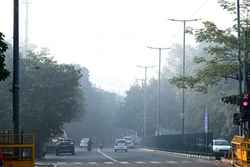
(MENAFN- Live Mint) Delhi's air pollution reached record levels on Sunday, with the overall air quality index (AQI) in the national capital reaching 461. As the air quality remained in the 'severe' category, it soared to 500 in the Wazirpur area and crossed 490-mark in Noida, as per the Central Pollution Control Board (CPCB) data. On Monday, the AQI in Delhi was recorded at around 450.
An AQI over 400 falls under 'severe' category. So, does this high level of air pollution impact your mental health?
While air pollution is known to cause respiratory issues and cardiovascular diseases, it is also associated with higher levels of stress, psychological distress, increased risk of dementia and Alzheimer's and depression.
Several research and studies have been conducted to understand the link between air pollution and psychiatric disorders.
A study published in the 'Journal of Environmental Economics and Management' revealed that "PM2.5 exposure has a differential impact on various mental health conditions, with Depression and Stress being more sensitive to changes in PM2.5 levels compared to anxiety."
'Heterogeneous effect'The study also hinted at "heterogeneous effect" of air pollution (PM2.5) on different age and sex groups on mental health.
The heterogeneous effects revealed that different mental health conditions and age groups experience varying degrees of impact from air pollution.
The results showed that persons under 18 "are the least affected mentally by a change in PM2.5 concentration."
Meanwhile, individuals aged 18–65 years were the most affected by increases in PM2.5 concentration, it said.
"For individuals over 65 years, the estimated impact of PM2.5 on depression was positive but not statistically significant.," it added.
It further claimed that air pollution linked with depression and stress showed highly statistically significant results.
"All categories of conditions were not statistically significant except for stress where an increase in 1 unit of PM2.5 concentration in a county increased stress incidence among that population by 1.7," it added.
Moreover, depression, anxiety, and stress all exhibited stronger effects among working-age adults than in the general population, it claimed.
'Emerging evidence on impact of air pollutants on mental health'The European Environment Agency stated that there is an association between exposure to air pollution and risk of mental illnesses.
"Depression and cognitive impairment are particularly possible, but self-harm, suicide, anxiety and other effects are also risks," it added.
Citing several other studies, the agency said long-term exposure to air pollution has also been correlated to a progressive decline in mental function, and exacerbating the development of other diseases, including Alzheimer's.
It also noted that traffic-related air pollution exposure during childhood and adolescence appears to result in higher generalised anxiety rates in teenagers.
Another study claimed to find a strong association between post-natal exposure to PM2.5 in the first year of life and a moderate association in the second year with autism spectrum disorder.

Legal Disclaimer:
MENAFN provides the
information “as is” without warranty of any kind. We do not accept
any responsibility or liability for the accuracy, content, images,
videos, licenses, completeness, legality, or reliability of the information
contained in this article. If you have any complaints or copyright
issues related to this article, kindly contact the provider above.
Most popular stories
Market Research

More Story







Comments
No comment