


12 Wild Predictions Futurists Got Completely Wrong


The future has always been irresistible territory for dreamers, scientists, and bold thinkers who love declaring what tomorrow will look like. And while some predictions eventually hit the mark-like smartphones, self-driving cars, and video calls-others miss the target so spectacularly that they become comedy gold decades later. These misfires remind us that even the smartest minds can get dazzled by shiny ideas or underestimate humanity's talent for doing the unexpected.
From overly optimistic tech fantasies to hilariously grim warnings, the history of bad predictions is a highlight reel of glorious overconfidence. Strap in, because these twelve blunders show just how unpredictable the future really is.
1. Flying Cars Would Dominate The Streets By The Year 2000Futurists once believed skies would be buzzing with personal aircraft zipping above cities like mechanical dragonflies. They imagined average commuters lifting off from driveways and gliding gracefully to work without traffic jams. The reality, of course, is that most people still struggle with parallel parking, let alone aviation. The prediction underestimated the cost, complexity, and regulatory chaos flying cars would introduce. While prototypes exist, the world is nowhere near the Jetsons-style commute once promised.
2. Humans Would Live On Mars By The 1980sSome visionaries were absolutely convinced that Mars would have residents, neighborhoods, and even tourists by the late twentieth century. They imagined our species casually hopping between planets like it was no harder than a long-haul flight. The truth is, even today we're still wrestling with the logistics of surviving long-term on Mars, let alone building suburbs there. Early futurists simply didn't anticipate how brutally hostile the Red Planet actually is. Mars remains an aspiration, not an address.
3. We Would No Longer Need SleepThere was once a belief that humans would hack biology enough to eliminate the“inconvenience” of sleep entirely. Some predicted pills or machines that would replace eight hours of nightly unconsciousness with just minutes of artificial recharge. Instead, modern science keeps proving just how essential sleep is for survival, health, and sanity. Far from escaping it, we now track it obsessively with wearables and apps. Sleep didn't get replaced-it got upgraded to a wellness obsession.
4. Robots Would Take Over Every Household TaskOptimists in the past assumed robots would cook meals, fold laundry, wash dishes, and maybe even entertain the dog. The dream was a fully automated home where humans kicked back while machines handled the drudgery. While we do have Roombas, smart appliances, and voice assistants, they're nowhere near the hyper-capable robot butlers futurists described. Most household chores still fall on human shoulders, not metallic ones. Turns out building robots with the finesse to fold a fitted sheet is a tougher challenge than expected.
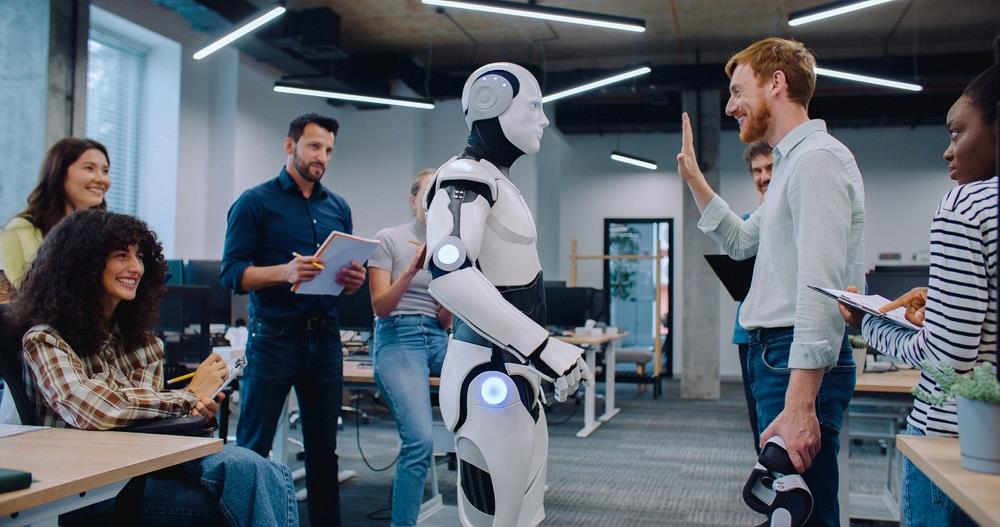
Image Source: shutterstock
5. Everyone Would Wear Matching Metallic Space SuitsDuring the space-age era, futurists predicted fashion would shift toward sleek, silver, uniform jumpsuits that looked like a cross between a flight suit and a baked potato wrapper. They assumed practicality and minimalism would overshadow individuality and creativity. Instead, fashion exploded into more diversity than anyone could have imagined, ranging from cottagecore to techwear to everything in between. Humans didn't want identical outfits-we wanted options. The dream of a shiny, uniform wardrobe died on the runway.
6. All Food Would Come In Pill FormEarly futurists looked at the pace of scientific progress and assumed cooking would become obsolete. Their vision of dinner was a handful of nutrient-rich capsules swallowed in seconds. But humans didn't give up meals-they doubled down on culinary culture, gourmet dining, and food entertainment. Cooking shows, food tourism, and viral recipes dominate modern life. Food remains an experience, not a chore we're eager to replace with tablets.
7. Paper Would Completely VanishWhen the digital age first took off, tech experts predicted that physical paper would disappear entirely. They thought everything-from books to receipts to notes-would exist only on screens. Instead, paper stubbornly persists in offices, classrooms, and homes around the world. E-books didn't erase printed books; they simply created another format. Despite all our technology, humanity still loves the smell of a new book and the satisfaction of a handwritten list.
8. The Internet Would Be A Passing TrendA surprising number of respected thinkers once dismissed the internet as a fringe novelty. Some called it a fad, others said it would never catch on, and a few claimed it had no practical value. As history shows, the internet didn't fade-it devoured nearly every aspect of modern life. The prediction makes us laugh now, but at the time it reflected genuine skepticism. Sometimes the biggest revolutions start as the smallest blips.
9. Solar Energy Would Power Everything By The 1990sEnvironmental futurists once envisioned a world where nearly every home, vehicle, and machine ran solely on sunlight. While solar energy has made impressive progress, the prediction overshot how fast infrastructure and technology could scale. Challenges like storage, cost, and grid integration slowed the revolution. The dream of solar domination wasn't wrong-just wildly early. The future might still get there, just not on the timeline predicted.
10. Working Hours Would Shrink To Ten Per WeekSome futurists believed automation and increased productivity would drastically reduce human work hours. They imagined a utopia where people spent most of their time relaxing, creating, or socializing. Instead, many modern workers feel busier than ever, juggling long hours and constant digital communication. Work didn't disappear-it simply changed shape and followed us home through technology. The ten-hour workweek remains a fantasy waiting for its moment.
11. Everyone Would Travel By MonorailTransportation futurists once insisted monorails would become the dominant mode of urban transit. They believed sleek single-track systems would weave through skyscrapers and above highways in every major city. While monorails exist, they certainly didn't replace buses, subways, or cars. Cities found them expensive, impractical, and better suited for theme parks than large-scale transit solutions. The prediction was stylish, but reality had other plans.
12. Television Would Replace SchoolSome futurists speculated that television would become the main source of education. They imagined kids learning solely through televised lessons rather than attending schools or interacting with teachers. While educational programming became important, traditional schooling didn't vanish. Human connection, hands-on learning, and social development proved irreplaceable. Even today's digital classrooms function as supplements, not replacements.
The Future Always Has A Sense Of HumorThese spectacularly incorrect predictions remind us that imagining tomorrow will always be equal parts science, optimism, and guesswork. Even brilliant minds get it wrong, and that's part of the fun. The future rarely arrives the way we expect, but it always surprises us in the best possible ways.
Which wrong prediction made you laugh, or have you heard other futuristic flops worth sharing? Tell us your thoughts, stories, or your own favorite failed predictions in the comments.

Legal Disclaimer:
MENAFN provides the
information “as is” without warranty of any kind. We do not accept
any responsibility or liability for the accuracy, content, images,
videos, licenses, completeness, legality, or reliability of the information
contained in this article. If you have any complaints or copyright
issues related to this article, kindly contact the provider above.


Comments
No comment