




403
Sorry!!
Error! We're sorry, but the page you were looking for doesn't exist.
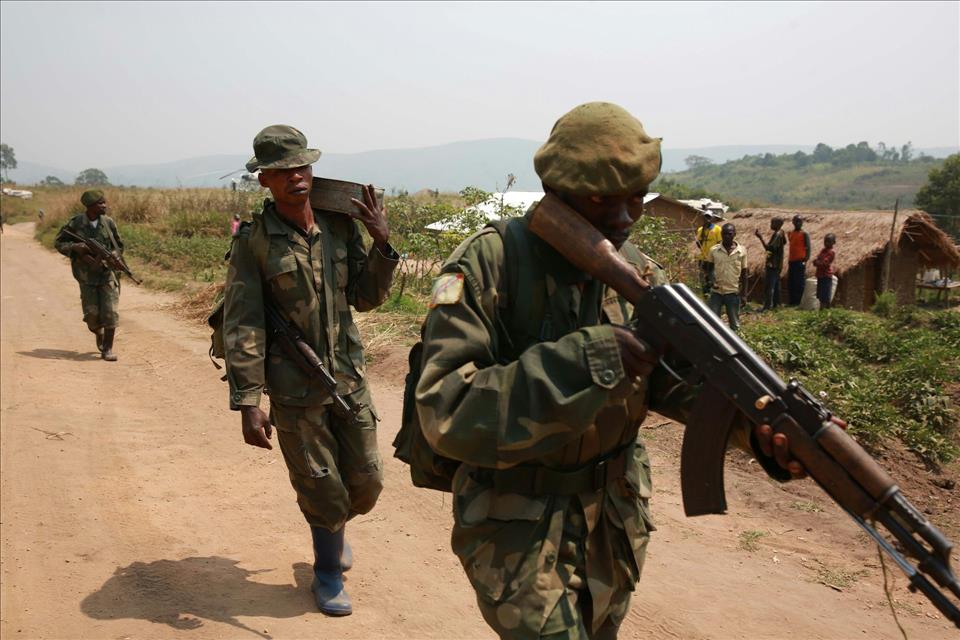
Roger Lumbala Is Accused Of Horrific War Crimes In DRC: Can His Trial In France Bring Justice?
Author: Kerstin Bree Carlson
(MENAFN- The Conversation) The Democratic Republic of Congo (DRC) has been called“the worst place on earth to be a woman” and“the rape capital of the world”. A 2014 survey estimated that 22% of women and 10% of men had experienced sexual violence during the conflict in the country's east. After years of impunity, Roger Lumbala, a 67-year-old former member of parliament who once led a rebel group in eastern DRC, is facing trial for these crimes. He is charged in a French court with complicity in crimes against humanity, including summary executions, torture, rape, pillage and enslavement. Kerstin Bree Carlson, a scholar of international criminal law and transitional justice, explains the significance of this trial and the controversies it has sparked.What is the special war crimes chamber in Paris? And what is 'universal jurisdiction'?

Lumbala is being tried before a special war crimes tribunal in Paris because France exercises“universal jurisdiction” over international atrocity crimes like genocide, crimes against humanity and war crimes. These are the crimes that are the remit of the International Criminal Court (ICC). Because the ICC is designed to be a court of last resort, hearing international atrocity crimes only when states cannot or will not, all ICC member states must criminalise international atrocity crimes in their domestic criminal codes.
Although courts usually only try cases against their own citizens or which occur on their own territory, France's“universal jurisdiction” law allows it to hear cases regarding atrocity crimes committed outside France by non-French nationals. The law restricts the application of universal jurisdiction to individuals residing in France who are citizens of countries that are ICC members. Prosecutors in France's special war crimes unit (“OCLCH”) furthermore enjoy discretion over which cases they pursue.
Prosecutions unfold as they do for any criminal case in France: a claim made by the prosecutor is sent to an investigative judge. The judge examines the claim neutrally, weighing evidence of guilt and innocence, to determine whether to issue an indictment. These findings can be appealed. When the appeals are finalised, if the indictment stands, the indicted individuals are put on trial before a panel of judges and a jury who will determine guilt (and an eventual sentence).
In addition to prosecution and defence, victims can participate in the proceedings as“civil parties”. Civil parties are full participants; they may call witnesses, address the court through argumentation, and question witnesses brought by prosecution and defence.
Lumbala's path to the Paris courtLumbala's trial opened on 12 November 2025. The indictment alleges that Lumbala conspired to and was complicit in the commission of crimes against humanity in relation to Operation “Effacer le tableau” (Wipe the Slate Clean). This was a military campaign that terrorised eastern Congo in 2002-3.
The civil parties in Lumbala's case played a central role in bringing Lumbala before the court. These include international NGOs such as TRIAL International, the Clooney Foundation for Justice, the Minority Rights Group, Amnesty International, We are not Weapons of War and others. These groups have recorded atrocity crimes in the DRC for decades, and some assisted in the 2010 Mapping report by the UN, a seminal document which detailed the extent of the violence between 1993 and 2003.
Lumbala has resided in France on and off since 2013. It was his application for asylum that put him on French authorities' radar, and they opened an investigation into his alleged crimes in connection with his role as leader of a rebel group turned political party, Rally of Congolese Democrats and Nationalists (RCD-N). In late 2020, French authorities arrested him. Investigative judges issued an indictment against him in November 2023; that indictment was upheld by the appeals court in March 2024, leading to the opening of the trial. If convicted, Lumbala could face life imprisonment.
What is at stake in this trial?Although a few low-level soldiers in the DRC have been tried, no high-ranking leader has been convicted for the pervasive practice of using rape as a weapon of war. A decade ago, one of Lumbala's allies, Jean-Pierre Bemba, was prosecuted by the ICC for war crimes, including sexual violence committed in Central African Republic. Bemba's 2016 conviction was widely celebrated as a victory for victims. His 2018 acquittal on appeal for procedural reasons was a bitter pill.
Victims wanting to address Lumbala directly have been served their own bitter pill. At the end of the first day of the trial, Lumbala announced that he did not recognise the court's jurisdiction and would not participate in the trial. He told the court:
Lumbala left the court and has not attended the trial since then. Every morning he is brought from jail, and sits in the basement of the court house instead of in the courtroom. He also fired his lawyers, who in turn refused to assist the court in providing a defence in absentia.
Technically, there is no problem; the trial may continue.
Symbolically, Lumbala's absence deprives civil parties of the chance to address the defendant personally. For a victim, being able to face the alleged perpetrator as a rebalance of power is one of the purposes of trial, and contributes to justice; Lumbala's absence may make the trial less fair for victims.
Without the participation of the defence, will the trial seem fair to others? For Lumbala and his team, who have been fighting France's jurisdiction over this case for years, the move is in keeping with their general defence strategy of sowing doubt.
What this means for the court, and for the prosecution of universal jurisdiction cases more generally, is the larger question. If defendants can endanger judicial legitimacy by refusing to participate, it will not be the last time we see this strategy. Universal jurisdiction has been challenged in other countries: Belgium's wide-reaching 1993 universal jurisdiction law was repealed in 2003 after a decade of practice. France's more limited practice, akin to extraterritorial jurisdiction, is a test case for how individual countries can help support the work of the ICC. Although the ICC can investigate any case in or involving its member states, the unfulfilled arrest warrants against Russia's Vladimir Putin and Israel's Benjamin Netanyahu are a reminder of how difficult it can be for the ICC to take custody over defendants.
The greater significance of the Lumbala case is therefore what it may mean for France, or any country or institution, to prosecute atrocity crimes outside its borders, which will in turn have an impact on impunity for international atrocity crimes.
Institution:Roskilde University

Legal Disclaimer:
MENAFN provides the
information “as is” without warranty of any kind. We do not accept
any responsibility or liability for the accuracy, content, images,
videos, licenses, completeness, legality, or reliability of the information
contained in this article. If you have any complaints or copyright
issues related to this article, kindly contact the provider above.
Most popular stories
Market Research

More Story



Comments
No comment