





403
Sorry!!
Error! We're sorry, but the page you were looking for doesn't exist.
Silver Hallmarking Jumps As 1.6 Million Items Get Unique ID Codes
(MENAFN- Live Mint) New Delhi: Within the first three months of introducing mandatory hallmark unique identification (HUID) for silver, more than 1.6 million pieces have already been hallmarked, reflecting strong uptake among jewellers and growing confidence among consumers, the consumer affairs ministry said in a statement on Thursday.
While silver hallmarking itself remains voluntary, the government has made HUID compulsory for any silver article that is hallmarked, marking a major push to curb fake hallmarking and strengthen purity assurance. HUID is a unique six-digit alphanumeric code laser-marked on each hallmarked gold or silver item to ensure complete digital traceability and purity verification.
Also Read | Meesho fined ₹10 lakh for allowing sale of uncertified walkie-talkiesAs per the consumer affairs ministry, the early response shows strong acceptance of the nationwide rollout of mandatory HUID-based hallmarking for silver jewellery and artefacts from 1 September 2025. Trends in silver hallmarking show the southern region of the country leading in volume of hallmarking, followed by the western and eastern regions.
Purity grades 925 and 800 account for nearly 90% of all hallmarked pieces, with the southern region leading in volumes, it said.
“The sharp rise follows a broader push to introduce full digital traceability in the precious metals sector. Consumers can verify authenticity instantly through the BIS CARE app, which displays purity, item type, jeweller details and the assaying centre involved,” it said.
App to check authenticityThe BIS Care app is a mobile application launched by the the Bureau of Indian Standards (BIS) that helps consumers to check product authenticity and lodge complaints.
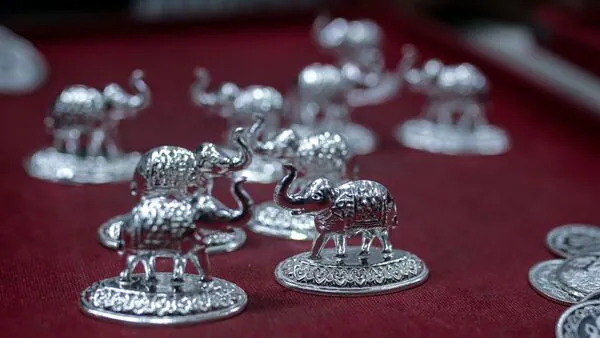
Early hallmarking trends show payals and anklets dominating the list, mostly in 800 purity, followed by silver diyas, plates, idols and coins. Almost all idols are hallmarked at 925 purity, while 99% of coins are at 990 purity. The 800 purity means the silver item is made of 80% pure silver, while 925 purity means it is made of 92.5% pure silver (commonly known as sterling silver).
Also Read | In the works, QCO for food processing machines as China imports surgeBIS has expanded the number of recognised silver purity grades to seven-800, 835, 925, 958, 970, 990 and 999-as part of the updated standards. The agency is also conducting nationwide awareness drives and meetings with jewellers to ensure smooth implementation.
“The move builds on the success of HUID-based gold hallmarking, now mandatory in 373 districts and supported by 1,610 assaying centres and over 2.08 lakh registered jewellers. More than 56 crore gold items have been hallmarked so far,” the ministry said.
Consumer confidence boostWith jewellers preparing for higher festive and wedding-season demand, they believe that the new hallmarking rules will help restore consumer confidence.“Making HUID mandatory for hallmarked silver will help build trust in the market,” said Brijesh Kumar, who runs Brijesh Fancy Jewellers in Delhi.“Customers often worry about purity, and a traceable code gives them reassurance while also protecting genuine jewellers."
Earlier, Mint reported on 25 September that as India enters its peak festival and wedding season, the government has moved to restrict imports of plain silver jewellery to protect domestic manufacturers and safeguard jobs in the sector at a time of high demand.
Also Read | India, US reciprocal tariff pact by end of December, says commerce secretaryAs per a notification issued by the Directorate General of Foreign Trade (DGFT), plain silver jewellery has been placed in a restricted category, which means that importers will require a valid authorisation from the DGFT to bring in such consignments.
India's jewellery sector, which employs over 4.3 million people, typically sees a surge in production and retail activity during festival and wedding months.
India's jewellery industry is one of the country's most important sectors, both culturally and economically. The market was worth $90.4 billion in 2024, and is expected to reach $150.1 billion by 2033, according to IMARC, a consulting firm. The sector makes up around 7% of India's GDP and about 15% of the country's merchandise exports.

Legal Disclaimer:
MENAFN provides the
information “as is” without warranty of any kind. We do not accept
any responsibility or liability for the accuracy, content, images,
videos, licenses, completeness, legality, or reliability of the information
contained in this article. If you have any complaints or copyright
issues related to this article, kindly contact the provider above.
Most popular stories
Market Research

More Story








Comments
No comment