




403
Sorry!!
Error! We're sorry, but the page you were looking for doesn't exist.
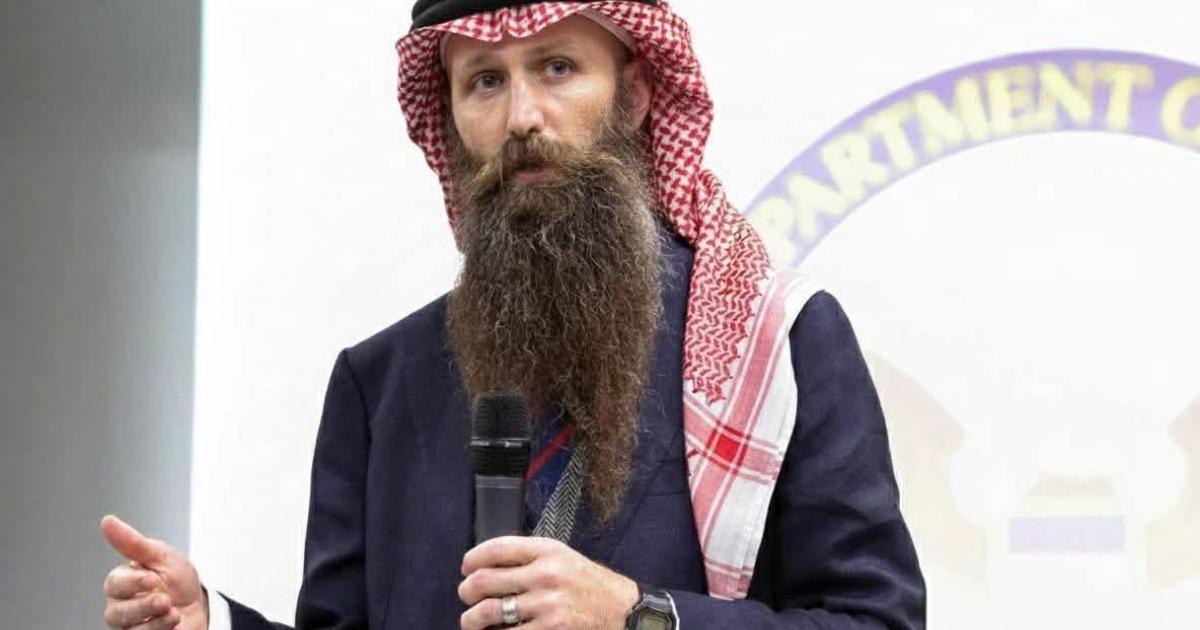
Noise Surrounding The US Ambassador's Tours In Jordan
(MENAFN- Amman Net) Since his arrival in Jordan, the new US Ambassador has hardly ceased direct interaction with Jordanians, utilizing every means to connect with them. However, his most prominent tools remain those linking the Jordanian people to their food and culture. Initially, the Ambassador dedicated himself to eating popular dishes, a practice now known as "Food Diplomacy." In this journey, Jordanian food-rich in history and diversity-was merely a vessel to enter Jordanian hearts. Some partook in "Mansaf," others preferred "Falafel" and "Shawarma," while others turned towards mixed grills. Thus, everyone wonders: what new foods will the Ambassador choose? Will he continue the series, or will he summon a new menu from his political "kitchen"?
However, food diplomacy does not stop there. The new Ambassador has also begun visiting ministries and government institutions and participating in social occasions, sparking the interest of both the media and citizens. Nevertheless, some activities and tours remain unannounced, raising numerous questions regarding the objectives of these closed political tours. What conversations are taking place behind closed doors? And what are his goals behind these visits that appear to encompass all political and social aspects?
The Challenge of Public Perception
In this context, the US Ambassador faces a major challenge in altering the negative image held by many Arab peoples regarding the United States, especially in light of its continued support for Israel. This negative image, often centered on US policy in the region, becomes more complex in Jordan, where many view Washington's unconditional support for Israel as a primary cause for the escalation of violence and tension in the region. Hence, the Ambassador's attempts to improve relations with the Jordanian people may encounter a significant obstacle represented by these collective memories and entrenched political positions.
Despite this negative political image, it cannot be denied that Jordanians treat US Ambassadors with politeness and respect. This, perhaps, is attributed to the culture of Jordanian hospitality, which places special importance on showing respect to the guest, regardless of political backgrounds. Furthermore, there are those who realize that Jordan maintains official and economic relations with the United States, which necessitates a type of cautious balance in official stances.
Reactions and Motivations
Yet, outside these official frameworks, we find that discussions on social media address every step the Ambassador takes. Some pose legitimate questions regarding the motives behind these tours, criticizing certain activities that might be understood as nothing more than a political "maneuver." These critics point out that every movement the Ambassador makes is accompanied by political agendas that may be far removed from the promoted good intentions. Meanwhile, others view these tours as an opportunity for constructive communication and opening the door to a broader political dialogue between Jordan and America.
Ultimately, US diplomatic tours in the Arab world, including Jordan, remain part of a larger American strategy concerned with reinforcing Washington's presence in the region. As is known, US embassies in the Arab world boast large diplomatic teams, where many of these diplomats speak Arabic with various local dialects-whether Jordanian, Egyptian, Syrian, or Lebanese. This reflects the United States' readiness to invest its time and resources in dealing with this complex and challenge-filled region.
Conclusion: Policy vs. Perception
While these activities may reflect an attempt to improve the image, the most important question remains: Will these tours succeed in changing the reality of relations between the two countries? Will the Ambassador continue these patterns, or are they merely initial steps to commence communication? This is what the coming days will reveal, and as time passes, Jordanians will continue to evaluate these activities through their political logic and their intertwined relationship with American policies.
Finally, one cannot ignore that US policy in the region, headed by its support for Israel, places Washington in an extremely embarrassing position. Even if the US Ambassador strives to improve the image, the cost of this policy will be exorbitant for America's reputation in the region. Consequently, Washington must realize that with every passing day, the price of its political stances increases, and it must consider changing its policy rather than attempting to change the Arab peoples' perception.

Legal Disclaimer:
MENAFN provides the
information “as is” without warranty of any kind. We do not accept
any responsibility or liability for the accuracy, content, images,
videos, licenses, completeness, legality, or reliability of the information
contained in this article. If you have any complaints or copyright
issues related to this article, kindly contact the provider above.
Most popular stories
Market Research

More Story





Comments
No comment