





403
Sorry!!
Error! We're sorry, but the page you were looking for doesn't exist.
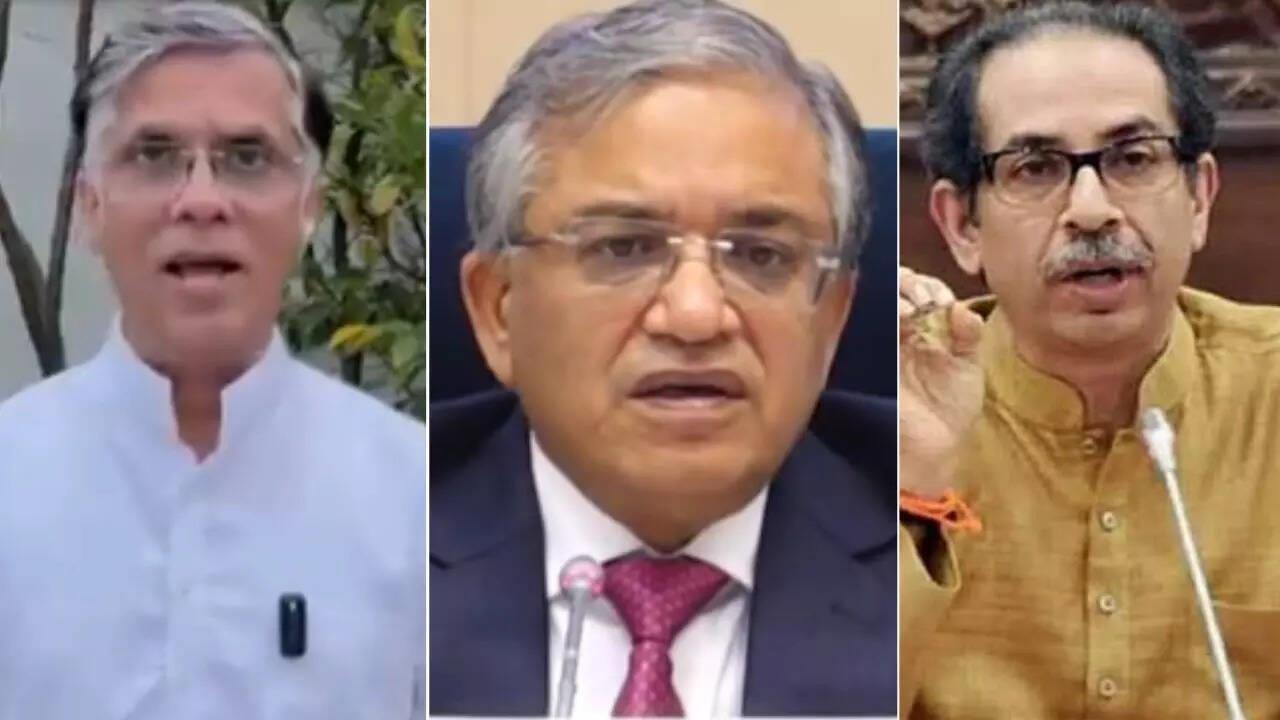
An Election Commission That Treats Critics As Enemies Has No Place In Democracy
(MENAFN- The Arabian Post)
By K Raveendran
The steady erosion of trust between political parties and the Election Commission has become one of the more troubling developments in India's democratic life, revealing an institutional drift that carries implications well beyond a single electoral cycle. The body entrusted with safeguarding the integrity of elections is expected to serve as an impartial arbiter, a referee who ensures fairness without fear or favour. When that referee starts appearing combative, dismissive, or aligned with the executive instead of maintaining equidistance from every stakeholder, the sense of imbalance deepens.
This growing perception has been especially pronounced under the leadership of Gyanesh Kumar, whose tenure has been marked by an observable shift in tone and engagement, prompting questions about whether the Commission fully appreciates the sensitivities involved in dealing with political actors who form the lifeblood of parliamentary democracy.
Elections in India are not merely administrative exercises; they are collective acts of legitimacy. Political parties, despite their ideological differences and electoral rivalries, share a foundational interest in ensuring that the electoral system remains above reproach. The Election Commission, as the guardian of that system, is expected to assume the role of facilitator rather than adversary. The Constitution places a mandate upon the Commission to conduct elections that are free, fair, and insulated from executive interference. This mandate is not just procedural but moral, requiring the institution to behave in a way that instils confidence among all participants. It is this intangible confidence that allows losing parties to accept defeat, winning parties to claim victory without suspicion, and citizens to believe that their vote carries weight.
When political parties raise concerns-whether about electronic voting machines, voter deletions, enforcement of the Model Code of Conduct, or the timing of announcements-the Commission is expected to listen attentively. Even if those concerns arise from political strategy or heated rhetoric, the responsibility of the Commission is not to respond combatively but to demonstrate transparency and address apprehensions through dialogue and credible communication. History shows that the institution has weathered countless disputes through patience and measured explanation, reinforcing its role as a stabilising force. To treat political parties as opponents, or worse, as entities to be rebuked, is to misunderstand the Commission's constitutional purpose. It weakens the very democratic scaffolding the institution is meant to uphold.
The tenor of engagement in recent years suggests a rupture in this understanding. Criticism from opposition parties, instead of being recognised as part of the healthy friction inherent in democracy, has often been met with defensive responses or abrupt dismissals. The resulting atmosphere has contributed to the belief that the Commission is no longer eager to engage constructively when its actions are questioned. This perception gained momentum during a series of interactions in which parties complained of feeling stonewalled rather than heard, conveying that the Commission seems more intent on asserting authority than building consensus. The erosion of trust is not caused by any single incident but by a cumulative pattern in which the Commission appears increasingly reluctant to accommodate scrutiny.
See also Bihar's Unfair Results: Rahul Gandhi Gets It Wrong For One More TimeWhat has made this shift more concerning is the manner in which the government has stepped in to defend the Commission at moments when the institution itself should be capable of speaking with clarity and independence. In a robust democracy, the Election Commission stands apart from the executive, not merely in structure but in public comportment. Its credibility depends on visible autonomy. When the government feels compelled to endorse the Commission's actions or shield it from criticism, it inadvertently highlights the absence of institutional self-assurance. For an independent authority, reliance on executive validation signals that its own voice is no longer carrying the weight it once did. The optics of the government defending the poll panel creates the impression of an alignment that the Commission must avoid if it hopes to retain the confidence of the electorate.
The issue is not limited to perception alone; it also touches upon the deeper question of institutional culture. Independence is reinforced not just through constitutional provisions but through daily habits of functioning-the instinct to lean towards openness rather than opacity, to welcome questions rather than fend them off, and to uphold transparency even when it invites discomfort. Political neutrality requires deliberate cultivation, especially in a country as politically charged as India. A Commission that appears impatient or adversarial risks distancing itself from the realities of electoral politics, the very arena it is meant to mediate impartially.
Supporters of the Commission might argue that political parties often raise allegations to create narratives, exert pressure, or position themselves advantageously. While that may sometimes be true, the Commission's role is not to engage in the political logic behind those allegations but to preserve faith in the democratic process by responding with steadiness and clarity. Even when parties behave strategically, the legitimacy of the electoral system must not be sacrificed at the altar of institutional ego. A Commission confident in its procedures and mindful of its duty would treat questions as opportunities to reaffirm integrity rather than as provocations to be countered.
See also China Sees Political Coldness In India's Dealing With Coming QUAD SummitIt is also worth recognising that the electoral landscape has grown more complex, technologically and politically. Electronic voting machines have been a source of debate for decades, and the introduction of VVPATs did not entirely dispel scepticism. Digital processes in voter rolls, heightened political polarisation, and the increasing use of state power in communication ecosystems place additional burden on the Commission to act as a buffer against undue influence. In such an environment, institutional sensitivity becomes not optional but essential. A Commission that brushes aside concerns risks amplifying them, creating the opposite effect of what is intended. Transparency, proactive disclosures, and open forums with stakeholders would help counter anxieties that technology and executive power might tilt the playing field.
Another dimension to the current unease is that elections in India are moments of mass mobilisation, public emotion, and fierce political competition. The Commission's conduct during such periods shapes national perceptions. Any sign of proximity to the executive-whether through favourable scheduling, uneven application of the Model Code of Conduct, or the handling of violations-invites criticism. The Commission must therefore not only act fairly but demonstrate fairness. Behaviour perceived as dismissive strengthens the narrative that the institution is no longer above politics. Once such doubts take root, they can persist across cycles, damaging the credibility of future elections.
The constitutional design assumes an Election Commission that stands firm against undue executive influence, not one that appears insulated from political parties while remaining comfortable with the government. The Commission's independence is most visible when it confronts pressures from the state machinery, not when it distances itself from political stakeholders who participate directly in elections. Political parties, for all their flaws, represent voters and articulate public sentiment. When they raise alarms, however politically motivated, the Commission must respond as an impartial constitutional authority, not as a defensive institution irritated by questioning. (IPA Service)
The article An Election Commission That Treats Critics As Enemies Has No Place In Democracy appeared first on Latest India news, analysis and reports on Newspack by India Press Agency).

Legal Disclaimer:
MENAFN provides the
information “as is” without warranty of any kind. We do not accept
any responsibility or liability for the accuracy, content, images,
videos, licenses, completeness, legality, or reliability of the information
contained in this article. If you have any complaints or copyright
issues related to this article, kindly contact the provider above.
Most popular stories
Market Research

More Story





Comments
No comment