



403
Sorry!!
Error! We're sorry, but the page you were looking for doesn't exist.
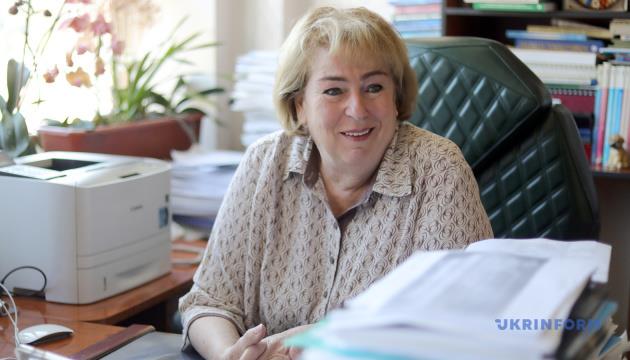
Libanova: No Post-War Baby Boom Expected In Ukraine, Unlike After World War II
(MENAFN- UkrinForm) She expressed this opinion in an interview with RBC-Ukrain, according to Ukrinform.
“I do not believe in a baby boom after the war; there will not be one. At least not one like there was after World War II. First, back then, children were economically expedient. Second, the cost of childcare and education at that time cannot be compared to today's needs. Third, back then, there were different requirements for the standard of living and quality of life,” she said.
Libanova explained that compared to the period after World War II, the factor of birth control is now at work.“After World War II, there were almost no means of contraception. Today, those who want to give birth do so,” she clarified.
According to her, in 2021, a year before the great war, there were an average of 2.1 children per woman in Ukraine. Today, there are about 0.7. "After the war, not immediately, but over time, we can grow to 1.6. And that's the limit. In order for the next generation to replace the generation of parents, we need 2.15. To tell the truth, even in Europe, the rate is not 2. That is the“norm.” And even in Asia. In South Korea, where the standard of living is not bad, this rate is also 0.7," clarified the director of the Institute for Demography and Social Studies.
Libanova also believes that increasing payments for childbirth and childcare will not particularly stimulate the birth rate.
"Indeed, many MPs have decided that if payments are increased, everyone will line up to give birth. But this assistance is in no way related to an increase in the birth rate. It is intended to enable people to buy diapers, formula, toys, and other things for their children. In other words, it is related to overcoming poverty among families with young children, but not at all to the birth rate," the expert noted.
In addition, in her opinion, after the announcement of the increase in payments, an ordinary family that counts its money will decide to wait a year to have a child, when they will start paying UAH 40,000. "Because of this, in the last year before the increase in assistance, the birth rate drops significantly compared to what it would normally be. And after the introduction of new payments, there is a“delayed” birth, and some even decide to have a second child," Libanova added.
Read also: Occupiers to intensify terror over children skipping Russian schools – journalistAs reported by Ukrinform, Ella Libanova, director of the M.V. Ptukha Institute of Demography and Social Studies of the National Academy of Sciences of Ukraine, said that Ukraine's total losses during 11 years of war amount to 10 million peopl - those who were not born, died, were killed, or left the country.

Legal Disclaimer:
MENAFN provides the
information “as is” without warranty of any kind. We do not accept
any responsibility or liability for the accuracy, content, images,
videos, licenses, completeness, legality, or reliability of the information
contained in this article. If you have any complaints or copyright
issues related to this article, kindly contact the provider above.
Most popular stories
Market Research

More Story






Comments
No comment