





403
Sorry!!
Error! We're sorry, but the page you were looking for doesn't exist.
Meet Sesha Sai Sravanthi Valiveti An Engineer Whose Automation Sparked A Quiet Revolution In Modern Software Delivery
(MENAFN- GetNews)
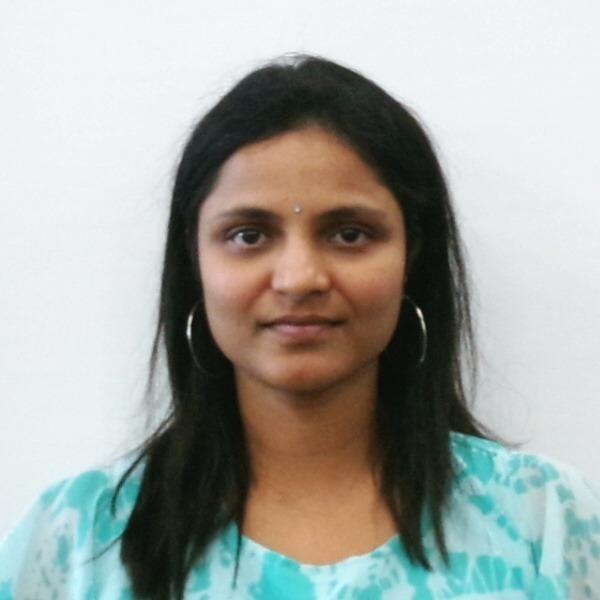
There's a familiar pressure that quietly tightens around engineering teams across countless industries: move faster, deliver flawlessly, and somehow keep outdated systems from collapsing under their own weight. Companies pour billions into digital transformation, yet many still operate with pipelines held together by manual fixes and long nights. Slow releases, inconsistent quality, and teams fighting the same fires constantly are the predictable results. It was in the middle of such everyday chaos that Sesha Sai Sravanthi Valiveti found her calling.
When she first stepped into the environment, she was met with a maze of tedious steps that developers had learned to tolerate simply because "that's how things were always done." Code had to be built by hand, tests were often skipped for the sake of time, and deployments felt like crossing a busy street blindfolded. Instead of being discouraged, she saw an opportunity. She often says, "If people are drowning in repetitive work, there's a system problem, not a people problem." And with that mindset, she began quietly reshaping the foundation while others were still trying to patch cracks on the surface.
Her deep expertise in automation engineering, CI/CD pipelines, and intelligent deployment systems became the blueprint for change. She designed and implemented a fully automated ecosystem piece by piece, one that could build, test, validate, and then deploy code without constant human intervention. What once took hours now reliably happened in minutes. Internal reports would later show a 40% drop in deployment-related errors and about $50,000 in annual savings-numbers that even seasoned engineers were surprised by, having seen many attempts at modernization fail over the years.
But perhaps her most ingenious contribution came when she tackled a problem that frustrated developers everywhere: dependency management. Anyone who's worked with .NET systems understands how mismatched packages can easily derail an entire build. Rather than accepting it as an unavoidable inconvenience, she wrote intelligent scripts that handled package updates automatically. That simple but powerful shift eliminated a steady stream of recurring issues and immediately became a model reused across other teams. "Software should work for people," she said once, "not the other way around."
What makes her contribution stand out is not the technology she built, but the human ripple effect that followed. Engineers who used to be buried in repetitive tasks suddenly had time-and mental space-to solve bigger problems. She made sure no one felt left behind. Her documentation was clear, approachable, and full of that kind of practical tips only someone who truly understands the pain points would include. Many colleagues refer to her as a person who "never makes you feel small for asking a question" and someone who "brings calm into chaotic projects."
Her efforts did not go unnoticed. She received multiple recognitions for architectural excellence and rapid delivery under demanding timelines. But she talks about these milestones with a kind of grounded humility. "Awards are nice," she once said with a grin, "but the real win is when a teammate tells you their day got easier because of something you built."
The impact of her work goes far beyond a single team. As engineering culture shifts globally toward automation, intelligence, and cloud-native development, her frameworks reflect where the industry is going-and in some cases, where it needs to be. Global studies show that organizations that have adopted DevOps automation see quicker releases, fewer failures, and stronger innovation cycles. Her contributions fit squarely within this trajectory, serving as a real-world example of how smart automation can transform not only systems but also the people running them. And she's far from done. She has been exploring ways to bring data-driven prediction into deployment workflows using patterns and past outcomes to prevent failures before they happen. It's the kind of forward-focused thinking that's defined her work from the beginning.
"The best systems," she's often said, "are the ones that disappear into the background so people can do their best work without worrying about what might break." In a digital world where reliability and speed are often the deciding factors between a company's ability to sink or swim, Sesha Sai Sravanthi Valiveti has grown into a quiet, yet undeniable,
force-driving innovator whose work empowers teams, strengthens systems, and builds a future in technology foundations that organizations are desperate to have. She continues to shape the future in the field of intelligent software delivery through her commitment and skill and with the view that meaningful change is often initiated by one engineer who dared to envision a better way forward.

Legal Disclaimer:
MENAFN provides the
information “as is” without warranty of any kind. We do not accept
any responsibility or liability for the accuracy, content, images,
videos, licenses, completeness, legality, or reliability of the information
contained in this article. If you have any complaints or copyright
issues related to this article, kindly contact the provider above.
Most popular stories
Market Research

More Story





Comments
No comment