


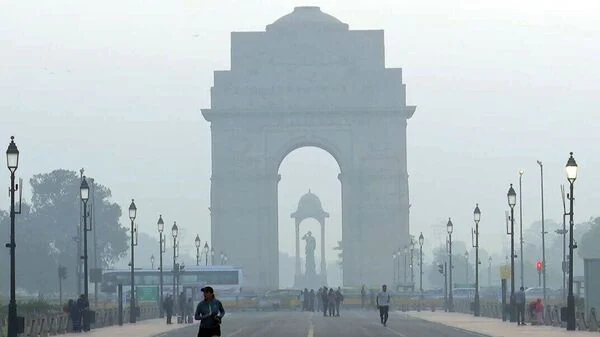
Delhi AQI Today: Battle With Pollution Gets 'Severe' As 14 Locations Record Toxic Air Quality


This comes after Delhi registered 279 AQI in 'poror' range on 30 November, 304 on 1 December and 372 on 2 December.
As a blanket of smog covers the capital city, Delhi recorded an AQI reading of 376. The list of areas where the air pollution level is the highest and AQI is in 'severe' range is listed below:
Anand Vihar - 405
Ashok Vikar - 403
Bawana - 408
Chandni Chowk - 431
Dr Karni Singh Shooting Range - 406
Jahangirpuri - 406
Jawaharlal Nehru Stadium - 405
Nehru Nagar - 436
Okhla - 404
RK Puram - 420
Rohini - 417
Sirifort - 408
Vivek Vihar - 415
Wazirpur - 406
CPCB's Sameer app reading shows NSIT Dwarka as the only location across the national capital with AQI in 'poor' range. All the remaining 25 stations recorded 'very poor' AQI today. Nehru Nagar and Chandni Chowk recorded the worst air quality today.
The Centre for Science and Environment (CSE) recently releases a report analysing annual air quality trends in the national capital early winter months - October to November.
Giving a clear view the growing toxicity of the air, the report said,“more worrying is the daily synchronised rise of PM2.5 and other toxic gases of nitrogen dioxide (NO2) and carbon monoxide (CO) largely from vehicles and combustion sources, creating a toxic cocktail that has gone unnoticed. The long-term air quality trend in Delhi has also plateaued without showing improvement. This signals an urgent need for deep-rooted shifts in infrastructure and systems to upscale action to cut emissions from vehicles, industry, power plants, waste, construction and household energy.”
Chronic exposure to toxic air not only triggers breathing difficulties among people with asthma, lung conditions or heart diseases but also poses risk of respiratory diseases even in healthy individuals.
Pointing to worsening of air quality in smaller towns of the National Capital region (NCR), the report added, "The tinier towns in the region display more intense and longer-lasting smog buildup. Even though the peak pollution spikes are lower this winter due to lesser contribution of farm fires, the airshed is getting increasingly more saturated."

Legal Disclaimer:
MENAFN provides the
information “as is” without warranty of any kind. We do not accept
any responsibility or liability for the accuracy, content, images,
videos, licenses, completeness, legality, or reliability of the information
contained in this article. If you have any complaints or copyright
issues related to this article, kindly contact the provider above.


Comments
No comment