








403
Sorry!!
Error! We're sorry, but the page you were looking for doesn't exist.
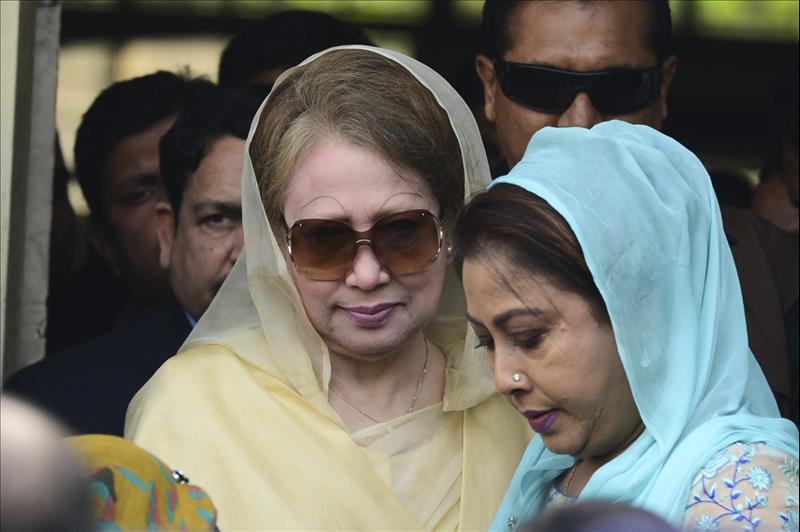
The Gentle Power Of Bangladesh's Khaleda Zia
(MENAFN- Asia Times)
In Bangladesh, there are few figures whose presence can stir the public conscience the way Khaleda Zia's can. The scene that has unfolded for several days outside the hospital in Dhaka where the former prime minister lies in critical condition tells you of the fervor for this octogenarian stateswoman.
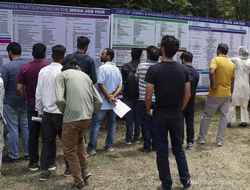
People from literally all walks of life have congregated on sidewalks and in courtyards, offering prayers and speaking quietly of a woman who had, for decades, stood at the center of their country's turbulent history.
Whatever one's political alignment, the emotional response reveals something deeper: Khaleda Zia remains, for many, a living emblem of Bangladesh's democratic longing, and the affection being directed toward her is rooted in memory.
It is easy to forget that, before she became one of the most consequential political figures in South Asia, Khaleda Zia was a private citizen thrust into history by tragedy. The assassination of her husband, President Ziaur Rahman, would set her on a path that she had neither sought nor expected.
And yet, in the years that followed, she emerged as the head of the Bangladesh Nationalist Party (BNP), weathering arrest, surveillance, intimidation and public skepticism. Under the dictatorship of Hussain Muhammad Ershad, she became an unlikely symbol of democratic resistance.
She led protests and endured detention and isolation, refusing to capitulate to authoritarian power. When the military regime finally collapsed in 1990, it was in no small part because she had helped galvanize a mass movement demanding representative governance.

Legal Disclaimer:
MENAFN provides the
information “as is” without warranty of any kind. We do not accept
any responsibility or liability for the accuracy, content, images,
videos, licenses, completeness, legality, or reliability of the information
contained in this article. If you have any complaints or copyright
issues related to this article, kindly contact the provider above.
Most popular stories
Market Research

More Story





Comments
No comment