







403
Sorry!!
Error! We're sorry, but the page you were looking for doesn't exist.
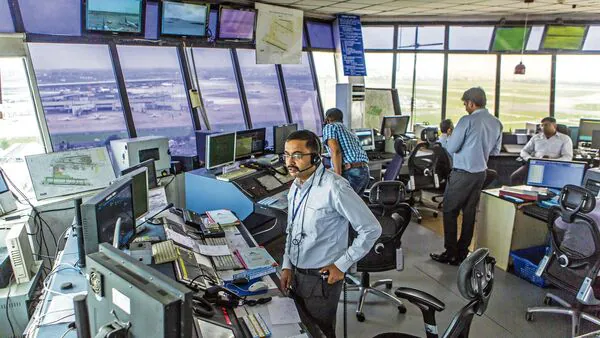
Govt Turns To Short-Term Hires To Plug DGCA's Wide Manpower Gaps
(MENAFN- Live Mint) New Delhi/Mumbai: India is planning to appoint short-term contractual staff at its civil aviation regulator, which is facing a severe shortage of manpower at a time when the country's aviation market is expanding rapidly.
Short-term appointments could be for one year, depending on the post or nature of work, and are generally made directly by the regulator.
Of the sanctioned 1,630 posts at the Directorate General of Civil Aviation (DGCA), 801 posts are vacant, minister of state for civil aviation Murlidhar Mohol informed the Rajya Sabha on Monday.
Previous submissions made in the Lok Sabha showed that 814 out of 1,692 sanctioned positions at the DGCA remained vacant as of 31 March 2025. DGCA had 878 staff as of 31 March 2025.
Also Read | What Parliament answers reveal about India's aviation sector“...to meet the requirement in the interregnum, efforts are made to recruit persons through short term contractual hiring. Regular efforts are made to address and augment technical manpower shortage, enhanced training and succession planning,” Mohol said in a written response to the upper house of Parliament.
He said 441 posts have been created during“the last 3 years as a part of DGCA restructuring”.“Out of total 1,630 sanctioned strength of DGCA, 829 posts are currently filled,” Mohol said, adding that the“shortfall has not impacted the surveillance plans of DGCA.”
New posts after crashOn 21 July 2025, about 40 days after the Air India crash that killed 241 people and raised concerns over the DGCA's chronic staffing shortages, Mohol said the regulator had created 441 new posts between 2022 and 2024, including 426 technical roles. Of the DGCA's 1,644 sanctioned posts, 823 remain vacant. Thus, between July and November, there has been a reduction in sanctioned posts by about 1%, while vacancy levels remain around 50%.
Between 31 March 2020 and 31 March 2025, the DGCA has added 116 employees, as its workforce rose from 762 to 878. However, according to Parliament discussion records reviewed by Mint, the number of unfilled positions has jumped from 471 to 814. During this period, the combined fleet of IndiGo, the Air India group, Akasa and SpiceJet rose from 566 aircraft in March 2020 to 780 in March 2025, which also includes grounded planes.
Also Read | Why are thousands of Airbus jets grounded?Put simply, the world's fastest-growing commercial airline market added more planes than people to oversee safe and efficient air travel.
Queries emailed to the civil aviation ministry and DGCA remained unanswered till press time.
Serious Problem of Understaffing
According to Mark D. Martin, chief executive officer at Martin Consulting and an aviation safety specialist, the manpower shortage at DGCA is a“stark reality” that continues to be overlooked. Most of the short-term contractual hiring is done directly by the DGCA - the regulator. But this does not help fill up all existing vacancies.
2,000 to inspectHe pointed out that there are nearly 2,000 aircraft that require inspection, which include scheduled commercial carriers across IndiGo, Air India, Akasa, SpiceJet, Star Air, Fly91, among others, non-scheduled operators, private jets and flying school aircraft. By comparison, the DGCA has 830 staff. Even if all were qualified as flight-operations inspectors, each would still be responsible for at least 2.5 aircraft.“In comparison to India, where 1 person is inspecting over two aircraft, the global average is 2.5 people inspecting one aircraft. Hence, understaffing at DGCA is a serious problem that needs to be addressed,” he told Mint.
Sanjay Lazar, aviation expert and chief executive of Avialaz Consultants, said that short-term, temporary hiring of DGCA personnel is“only a band-aid solution and reflects a lack of seriousness in addressing the problem”.“This short-term recruitment may offer some immediate relief, but it does nothing to resolve the long-term structural gaps. These short-term hirings will not be filling more than 5-10% of that gap, maybe 20% at best. To even start addressing a 50% manpower deficit, DGCA needs continuous, almost monthly inductions,” he said.
Also Read | Mineral security pivot: SteelMin orders PSUs to acquire critical assets abroad“In situations where the post remains vacant due to reasons like inadequate response to the advertisements, non-joining of selected candidates, persons with insufficient service in the feeder cadre for promotion, insufficient response to deputation posts", interim hirings are being looked into, Mohol said.
Lazar pointed out that one needs to ask why candidates aren't opting for these roles.“It could be the terms and conditions, or inadequate incentives because clearly something isn't appealing enough. If the industry doubles and DGCA staffing stays at current levels, the regulator's effective capacity will drop to about 25% because the system will have expanded so much.”

Legal Disclaimer:
MENAFN provides the
information “as is” without warranty of any kind. We do not accept
any responsibility or liability for the accuracy, content, images,
videos, licenses, completeness, legality, or reliability of the information
contained in this article. If you have any complaints or copyright
issues related to this article, kindly contact the provider above.
Most popular stories
Market Research

More Story




Comments
No comment