



403
Sorry!!
Error! We're sorry, but the page you were looking for doesn't exist.
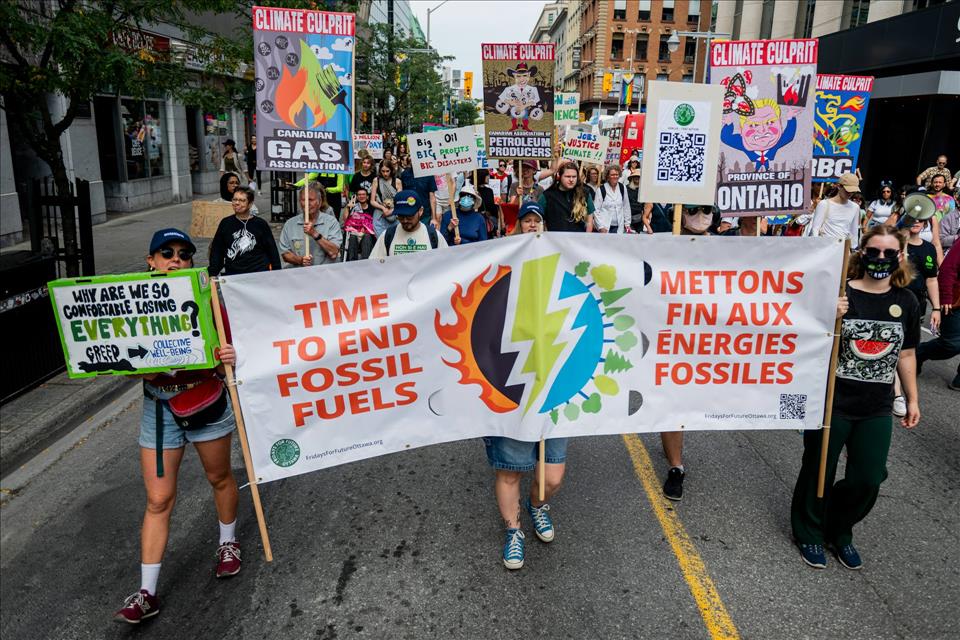
Youth Climate Corps: Young Canadians Need More Action And Less Tokenization
Author: Lilian Barraclough
(MENAFN- The Conversation) Youth engagement is critical in the fight for a just and sustainable future. And creating opportunities for young people is a vital part of a just transition away from fossil fuels.![a child holding a maraca and wearing a headdress made of feathers stands near a large yellow banner at a demonstration]()
An Indigenous youth takes part in a demonstration to pressure leaders to implement a just energy transition and to phase out fossil fuels, ahead of the country hosting the COP30 climate summit, in front of the Itamaraty Palace, in Brasilia, Brazil, in April 2025. (AP Photo/Eraldo Peres)![a man at a demonstration holds a small placard that reads: no more bla bla bla]()
A person holds a sign that reads 'no more bla bla bla' during a youth climate demonstration at the COP30 UN Climate Summit on Nov. 14, 2025, in Belem, Brazil. (AP Photo/Joshua A. Bickel)

The Canadian government's 2025 federal budget has emphasized creating new opportunities for young people by establishing a Youth Climate Corps, providing employment placements in renewable energy, protecting biodiversity and retrofitting buildings. The government promised to invest $40 million over two years starting in 2026-27.
However, while the creation of the Youth Climate Corps is an encouraging step toward a more sustainable, equitable and resilient country, the 2025 budget simultaneously caters to the oil and gas industry, reducing requirements for urgent emissions reduction and increasing subsidies supporting oil and gas production.
Scientists have called for urgent and rapid cuts to fossil fuel production and emissions for decades in order to avoid the worst consequences of the climate crisis. While Prime Minister Mark Carney has declared that Canada remains on track to meet the emissions reductions targets set out in the Paris Climate Agreement, the expansion of oil and gas brings this into question.
One of the leading causes of climate grief and anxiety among young people is government inaction, in Canada and elsewhere, that has led to feelings of betrayal, anger and despair about climate change.
In our research, colleagues and I have found that young Canadians are experiencing intense emotions related to the climate crisis, and they often have little to no hope for the future, envisioning apocalyptic conditions for themselves and their children.
Eco-anxietyAn Indigenous youth takes part in a demonstration to pressure leaders to implement a just energy transition and to phase out fossil fuels, ahead of the country hosting the COP30 climate summit, in front of the Itamaraty Palace, in Brasilia, Brazil, in April 2025. (AP Photo/Eraldo Peres)
Although I am now a researcher, I have been involved in environmental and climate action since I was a child. I have witnessed the never-ending cycle of false commitments and lack of follow-through on the climate crisis.
Climate grief refers to grief in response to the losses caused by climate change - of trees, animals, place, homes as well as more intangible elements of culture and connection. Climate or eco-anxiety is defined by the American Psychological Association as“a chronic fear of environmental doom.”
Young Canadians describe their grief in visceral, embodied ways, emphasizing how their concerns about climate change invade their daily lives, relationships and life choices.
In our research, politically active youth expressed anger, frustration and hopelessness at the state of inaction on the climate crisis.
As one participant told us:
Youth need genuine engagementA person holds a sign that reads 'no more bla bla bla' during a youth climate demonstration at the COP30 UN Climate Summit on Nov. 14, 2025, in Belem, Brazil. (AP Photo/Joshua A. Bickel)
It's critical to involve more young people in the sectors addressing climate change and create better employment opportunities while building capacity to respond to increasing pressures from the realities of the climate crisis. The Youth Climate Corps is an important step in that direction.
The challenge, however, is that when youth are left out of the decisions that truly influence Canada's ability to reduce emissions, address biodiversity loss and adapt to the changes we face, it reinforces feelings of betrayal and grief.
Models of youth-adult partnership on climate action show that the most important outcomes come from positive, meaningful youth engagement. These models, when paired with the real-world experience of youth activists, make it clear that both youth and their adult counterparts - in this case government decision-makers - have a responsibility to ensure that climate action is implemented in an intentional, thorough and meaningful way.
When youth are engaged in climate decision-making but the impact on overall action to address the crisis is negligible, it can reinforce and exacerbate climate grief and anxiety.
I see many of my peers facing an impossible job market, forced to take under-paying jobs that don't align with their values and desires for change. The Youth Climate Corps undoubtedly represents progress, but the recent federal budget investment is limited. It will create few jobs and likely won't meet the demands of young Canadians.
Limited progress in green jobs for young people doesn't make up for Canada's failure to reduce emissions and hold the fossil fuel industry accountable, making young Canadians question whether the federal budget is really one of“generational investment.”
Without inclusive decision-making and concrete action, young people will continue to feel grief and anxiety over the climate crisis and its impact on their health, well-being, jobs and future prospects.
Institution:University of Guelph

Legal Disclaimer:
MENAFN provides the
information “as is” without warranty of any kind. We do not accept
any responsibility or liability for the accuracy, content, images,
videos, licenses, completeness, legality, or reliability of the information
contained in this article. If you have any complaints or copyright
issues related to this article, kindly contact the provider above.
Most popular stories
Market Research

More Story







Comments
No comment