




403
Sorry!!
Error! We're sorry, but the page you were looking for doesn't exist.
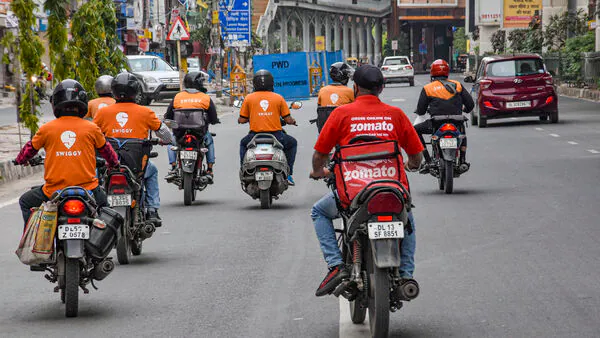
From Uber To Urban Co, Uniform Partner Standards Are Coming To The Platform Economy Giants
(MENAFN- Live Mint)
Online aggregators such as Uber , Swiggy, Amazon and Airbnb may soon have to follow uniform standards to sign up, assess and retain partners like drivers, delivery workers, vendors and property owners, three people familiar with the government's plans said.
The Bureau of Indian Standards (BIS) will formulate standards to assess partners across sectors such as ride-hailing, food delivery, e-commerce and homestays, the people cited above said on the condition of anonymity. The move may have a sweeping impact on India's digital platforms, standardizing partner treatment across platforms and ensuring that consumers experience consistent service quality.
In the absence of any common standard, companies follow their own procedures to engage and evaluate partners, often leading to inconsistencies and complaints on assessments, incentives and dispute redressal. In the past, partners of aggregator companies have taken to the streets to protest against alleged high-handed practices, forcing the government to mediate.
System gapAccording to one of the three people cited above, this highlights a gap in the system, where some workers receive clear rules and benefits while others face inconsistent or unclear treatment, requiring standardized guidelines.
“The proposed standard seeks to create a transparent and fair framework for both workers and consumers by defining parameters for partner evaluation, grievance redressal, feedback systems and privacy safeguards," the person said.
BIS will study global benchmarks and best practices, including those developed by national standards bodies in other countries, and incorporate them suitably to ensure the Indian standards are world-class, the second person added.
Also Read | New GST rule to hit last-mile delivery, squeeze margins at logistics firmThe European Union has set out rules on improving working conditions in platform work, enhancing transparency in algorithmic management, clarifying employment status, and ensuring fair pay and better working conditions.
In response to a query, Amit Kumar Singh, deputy director, marketing & consumer affairs, BIS, said,“Recognizing significance, the Business Services Sectional Committee, SSD 09 of the BIS has decided to develop an Indian standard on the subject. Considering that the subject is new and no international standard is available, the committee decided to undertake research and development (empirical study) on the subject. Currently, the terms of reference (ToR) for the said R&D project have been hosted on the BIS website to seek proposals to take up research on the subject," Singh said.
Queries sent to Amazon, Flipkart, Ola , Uber, Airbnb remained unanswered.
Global stageExperts said this will also help Indian platforms compete on the global stage by aligning their partner management practices with internationally accepted norms.
“It has been observed that ride-hailing platforms currently operate according to their own rules, creating an opaque system. Framing standards for all such platforms will help partners associated with them and also ensure that consumers receive services as per set norms," said Ashim Sanyal, CEO, Consumer Voice, a consumer advocacy group.
The development marks yet another step towards the formalization of India's gig economy. Gig workers in India have seen a big push for social security, including the government's plan to extend healthcare benefits through the Ayushman Bharat scheme and facilitate registration via the e-Shram portal. States such as Karnataka, Tamil Nadu and Rajasthan have rolled out various schemes to protect such workers.
Also Read | Mint Explainer: Will Karnataka's new 'welfare' mandate mess up the gig economySharing and aggregator platforms digitally connect people who offer goods or services with those who need them. The process involves three main participants: platform providers, partners or service providers, and consumers. Platform providers run the online systems that make these exchanges possible. Partners are individuals or businesses who share or sell their goods and services through these platforms, while consumers are the people who use them.
Sharp growthThis ecosystem has grown rapidly in India, with millions of workers depending on platforms for income and millions of consumers relying on them for convenience and choice. The ride-hailing market, led by Uber, Ola and Rapido, alone is projected to reach $8.28 billion in 2025 and is expected to grow at an annual rate of 12.08% to reach $14.65 billion by 2030 as per Statista, an online statistics portal. The number of users is forecast to rise to 400.37 million by 2030, with user penetration increasing from 19.2% in 2025 to 26.3% by 2030, it said. This growth underlines the scale of the gig economy and the importance of introducing standardized evaluation practices for workers and service providers.
According to a Niti Aayog report in 2022, India's Booming Gig and Platform Economy, the number of gig workers in India was estimated at 7.7 million in FY21. The report projected that this number would increase to 23.5 million by FY30, accounting for about 6.7% of the non-agricultural workforce and 4.1% of the total workforce in India. Using this report as a base, a Labour ministry institute's study released in June 2025 projects India's gig and platform workforce to reach nearly 62 million by 2047, around 15% of the non-agricultural workforce.
“The BIS will prepare the standard through a structured, evidence-based study beginning with a comprehensive literature review, followed by primary data collection and comparative analysis," said the third person.“It will define platform responsibilities, including monitoring, reporting, partner support, and communication channels among consumers, partners, and platforms," this person added.
Also Read | Snapdeal tries fashion route to reclaim its spot in e-commerce racExisting procedures such as standard operating processes, audits, and non-compliance handling will be reviewed, and systems for feedback and regular improvement will be established.
Industry experts said the move could bring much-needed consistency and credibility to the gig and platform economy, which has so far operated with limited regulatory oversight.
“Ride-hailing platforms have emerged as significant employment generators, offering livelihoods to millions across India. Establishing standardised parameters for engaging with workers will bring clarity and consistency to how employment is provided, ensuring fair treatment for partners while maintaining service quality for consumers," said Sonal Arora, country manager, GI Group Holding, a staffing solution provider in the retail sector.

Legal Disclaimer:
MENAFN provides the
information “as is” without warranty of any kind. We do not accept
any responsibility or liability for the accuracy, content, images,
videos, licenses, completeness, legality, or reliability of the information
contained in this article. If you have any complaints or copyright
issues related to this article, kindly contact the provider above.
Most popular stories
Market Research

More Story








Comments
No comment