




403
Sorry!!
Error! We're sorry, but the page you were looking for doesn't exist.

Kashmir's Golden TV Days: When One Channel Was Enough
(MENAFN- Kashmir Observer)
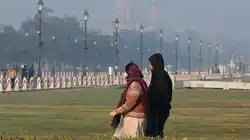
Representational photo
Representational photo
By Syed Majid Gilani
There was a time in Kashmir when watching a film on television was an event that brought everyone together.
I remember how Hindi films from the late '70s to the '90s had a simple charm that felt close to home. Those stories spoke gently but deeply, with grace and emotion that touched the heart.
Films like Anand, Bawarchi, Chupke Chupke, Masoom, and Sparsh felt like reflections of real life, told with dignity and respect for the audience. Watching them, you learned about kindness, patience, and love, all without anything that felt forced or exaggerated.
Even as the '90s brought new hits like Qayamat Se Qayamat Tak, Maine Pyar Kiya, Hum Aapke Hain Koun, and Dilwale Dulhania Le Jayenge, these stories stayed true to their roots.
Read Also Govt Simplifies LCO Registration With Online Process Want To 'Tighten Up' Self-Regulatory Mechanism For TV News Channels, Says SCFamilies in Kashmir could watch together without discomfort. There were no bold or crass scenes, no unnecessary glamour or cheap tricks. Actors wore modest clothes, and the romances were tender, not explicit. It was entertainment that respected our values and spoke to the heart.
The songs from those films still echo in our memories. Whether from Masoom, Saath Saath, Ram Teri Ganga Maili, or Sajan, those melodies carried feelings that never faded.
Every week, shows like Chitrahaar and Rangoli brought those songs into our homes, making them part of our routine. Even today, many young singers on reality shows pick these timeless tunes, proving their lasting beauty.
I recall how the dialogues were simple, yet they stuck with us. They didn't need to be pretentious to become part of our daily conversations. This was a connection built on emotion, not hype.
Back then, we had only one television channel: Doordarshan. Most homes had black-and-white sets, sometimes old and small, but it was enough.
We never felt shortchanged. Whatever was on that one channel was enough to bring meaning into our evenings.
I remember those moments when the broadcast would suddenly stop, and the screen would show the message:“Rukawat ke liye khed hai...” Sorry for the interruption.
Sometimes, strong winds would misalign the rooftop antenna. Someone would climb up, while the rest of us shouted from below,“Haan, thoda aur... bas, wahi rakh!”
When the picture finally returned, it felt like a small victory. The family would gather close again, grateful for those flickering images that united us.
Sunday evenings at 5:30 were sacred. The whole family would wait eagerly for the film to start. Sometimes the movies were slow, artistic, or symbolic, not always easy for young minds to grasp. Yet, we watched patiently, giving respect to whatever was on screen.
Weekday evenings had their own rhythm. The regional telecast began with Butraat, a programme full of useful advice on farming and horticulture, vital for many families in Kashmir countryside.
Then came the news: the Kashmiri bulletin at 7:30, followed by the Urdu bulletin at 7:45. Beyond updates, they were part of our daily life, watched and trusted.
We also had weekly serials in Kashmiri and Urdu: Aalav, Harud, Hazar Daastan, Jum German.
Those stories echoed our culture and language. Missing an episode was a small setback, but thankfully there was often a morning repeat.
Electricity was never certain. Frequent power cuts meant a sudden blackout during a film or serial was a moment of real frustration.
We hadn't grown addicted. Rather, we had waited an entire week for that one show. Losing it to the dark felt like losing a precious moment.
National TV serials had a special place too. Shows like Udaan, Fauji, Circus, Nukkad, Yeh Jo Hai Zindagi, Wagle Ki Duniya, Dekh Bhai Dekh, Shriman Shrimati, and Gul Gulshan Gulfam gave us characters who felt familiar. They lived simple lives, faced everyday challenges, and taught lessons about honesty, patience, love, and sacrifice.
Those stories never overwhelmed with loud music or exaggerated drama. Children and elders could watch side by side without awkwardness.
The absence of obscenity mattered. Those stories had boundaries and stayed within them. Decency was respected, and that gave the shows a kind of gentle strength.
Looking back, the technology was limited, and the screens were small. Yet, those films and serials filled our hearts. They never tried too hard to impress, but spoke simply and sincerely.
Perhaps that's why they remain part of us, not because they were flawless, but because they were honest.
-
The author is a government officer by profession and a storyteller by passion. He can be reached at [email protected] .

Legal Disclaimer:
MENAFN provides the
information “as is” without warranty of any kind. We do not accept
any responsibility or liability for the accuracy, content, images,
videos, licenses, completeness, legality, or reliability of the information
contained in this article. If you have any complaints or copyright
issues related to this article, kindly contact the provider above.
Most popular stories
Market Research

More Story



Comments
No comment