




403
Sorry!!
Error! We're sorry, but the page you were looking for doesn't exist.
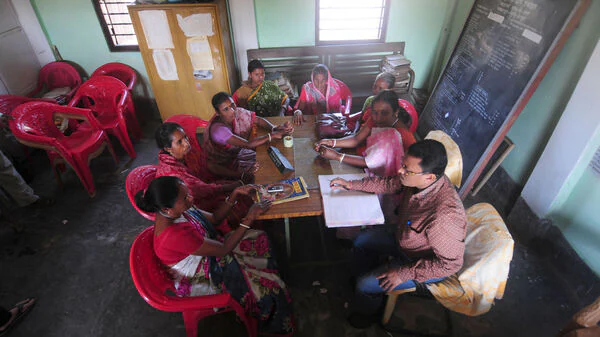
Centre Working On Framework To Help Panchayats Become Financially-Autonomous
(MENAFN- Live Mint) New Delhi: The government is working on a framework to help village councils (panchayats) generate their own revenue and become financially autonomous, carrying out development works without relying on funds from the Centre or states.
The Union Panchayati Raj ministry has set up a panel, consisting of senior officials from various state governments, which is tasked with formulating a blueprint that can act as a guide for states and Union territories (UTs) in creating and amending their model OSR (Own Source of Revenue) rules.
"We have constituted a committee comprising senior officials from various state governments, to prepare a model OSR framework of panchayats, which can serve as a benchmark for the states in formulating and amending their OSR rules," Vivek Bharadwaj, secretary, ministry of panchayati raj, said.
The template, to be shared with states and UTs, aims to plug the gaps in existing regulations and guide local bodies in mobilising revenue, which mainly comes from taxes, fees and other charges.
Also read | Budget 2025 | Grassroots governments may get a funding boostThe development assumes significance, as nearly a dozen states and UTs don't have OSR rules. The 22 states and UTs that have already formulated the rules need to update them, said Bharadwaj.
Own Source Revenue (OSR) refers to the revenues that panchayats generate on their own, from sources such as property tax, water charges, market fees, trade licence fees and building permit fees. OSR rules help regulate, standardize, and empower panchayats to collect and manage the revenues efficiently. The OSR rules are crucial to panchayat as they empower them to function independently and also reduce over-dependence on central and state grants. Additionally, they support local development projects with locally-generated funds.
Lacking in OSR rulesAccording to Bharadwaj, there are 11 states and UTs that have not yet framed OSR rules. These include Arunachal Pradesh, Bihar, Jharkhand, Manipur, Nagaland, Sikkim, Uttar Pradesh, Andaman & Nicobar Islands, Dadra and Nagar Haveli and Daman and Diu, Ladakh and Lakshadweep.
Twenty two states and UTs have already developed and implemented OSR-based regulations, allowing panchayats to levy and collect taxes, fees, tolls, or other local sources of revenue. Among these states are Andhra Pradesh, Assam, Chhattisgarh, Goa, Gujarat, Haryana, Kerala, Maharashtra, Tamil Nadu, and Karnataka.
Also read | NITI Aayog calls for improvement in data qualitSome States have detailed guidelines on fixing OSR rates. In many instances across the states, it has been observed that much more efforts need to be made towards fulfilment of these requirements. "Financial rules related to OSR generation were prepared long ago in states, and hence have been suffering from various deficiencies like use of incomprehensible legal jargons and lack of updating," Bharadwaj added.
Panchayats, which act as grassroots-level bodies to implement government programmes and for achieving the sustainable development goals, get grants from the Centre, state governments, as well as raise their own revenue in a limited way through internal sources like local-tax revenues and user charges.
"Self-sufficiency is an ideal state for gram panchayats as they can have more funds to carry out developmental works. However revenue collection is conditional as it depends on economic activities in a particular area," said Sri Hari Nayudu, economist, National Institute of Public Finance and Policy (NIPFP), New Delhi.
"Most of the time we are dependent on state government grants for developmental works, since most of us doen't know how to increase revenue. The proposed rules can guide us in that direction," said Gurcharan Singh, Panch-Charik Patti Sarkar, a rural local body in Moga district of Punjab.
In 2021-22, the average per capita OSR collected by panchayats at all-India level was ₹100. Also, the average OSR for gram panchayat was ₹230,000 per year, with 42% of gram panchayats having less than ₹100,000 revenue per year. "The key reasons behind low revenue collection are over-dependence on grants, underutilization of tax powers, weak administrative systems and trust deficit with citizens which limit the revenue," said an economist who requested not to identified.
Also read | Urban renewal: Indian cities need a governance overhau
Legal Disclaimer:
MENAFN provides the
information “as is” without warranty of any kind. We do not accept
any responsibility or liability for the accuracy, content, images,
videos, licenses, completeness, legality, or reliability of the information
contained in this article. If you have any complaints or copyright
issues related to this article, kindly contact the provider above.
Most popular stories
Market Research

More Story





Comments
No comment