







403
Sorry!!
Error! We're sorry, but the page you were looking for doesn't exist.
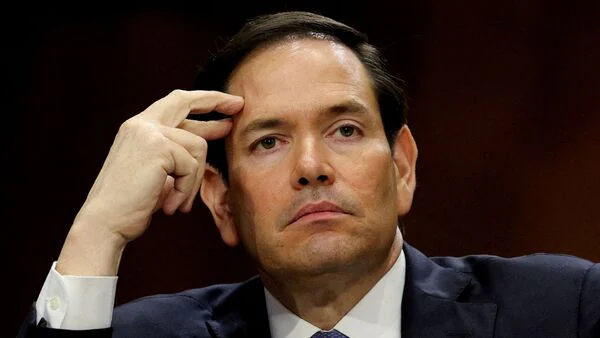
AI Impersonator Pretending To Be US Secretary Of State Marco Rubio Targets Three Foreign Ministers: Report
(MENAFN- Live Mint) An individual using an AI-generated voice to impersonate US Secretary of State Marco Rubio contacted three foreign ministers, a US governor, and a member of Congress in June, according to a diplomatic cable reviewed by Reuters.
The fraudulent outreach was made via the Signal messaging app , with the impersonator leaving voicemails for at least two targets.
“The actor likely aimed to manipulate targeted individuals using AI-generated text and voice messages with the goal of gaining access to information or accounts,” the cable stated, according to the news report.
Targets lured via Signal and textThe impersonator reached out in mid-June using Signal . In one instance, a text message was sent to invite the recipient to continue the conversation via the app, the report stated. The cable warns that although no direct cyber threat to the State Department was identified, sensitive information could be compromised if the targeted individuals were deceived.
“There is no direct cyber threat to the department from this campaign, but information shared with a third party could be exposed if targeted individuals are compromised,” the cable reportedly warned.
Rubio, officials not directly involvedThe diplomatic cable did not reveal the identities of the foreign ministers or US officials contacted. The State Department has launched an investigation into the matter.
“The State Department is aware of this incident and is currently investigating the matter,” a senior department official told Reuters on condition of anonymity.
“The Department takes seriously its responsibility to safeguard its information and continuously takes steps to improve the department's cybersecurity posture to prevent future incidents,” the official added.
No perpetrator namedWhile the cable did not name a perpetrator, it referenced an earlier effort in April linked to a Russian cyber actor. That campaign involved phishing emails sent to think tanks, Eastern European dissidents, and former US officials. The attacker used fake "@state" email addresses and official-looking branding from the State Department's Bureau of Diplomatic Technology.
“The actor demonstrated extensive knowledge of the department's naming conventions and internal documentation,” the cable noted.
That phishing effort has been attributed to a hacker affiliated with Russia's Foreign Intelligence Service (SVR), according to industry partners cited by the State Department.
FBI flags AI threats in MayIn May, the FBI issued a public service announcement warning that malicious actors were using AI-generated voices and text messages to impersonate senior government officials. The goal: to access personal accounts or solicit information or funds.
The FBI declined to comment on this week's incident.
“Access to targets' accounts could be used to go after other government officials or their associates and contacts,” the May announcement warned.
Cybersecurity concerns mountThe cable follows a separate internal crisis last month involving former National Security Adviser Mike Waltz, who accidentally added a journalist to a group chat where military strike details on Yemen were shared.
The July 3 cable urged all diplomatic and consular posts to warn external partners about fake accounts and impersonation risks.
Also Read | Trump again dismisses Musk's 'America Party', says, 'it will help us'
Legal Disclaimer:
MENAFN provides the
information “as is” without warranty of any kind. We do not accept
any responsibility or liability for the accuracy, content, images,
videos, licenses, completeness, legality, or reliability of the information
contained in this article. If you have any complaints or copyright
issues related to this article, kindly contact the provider above.
Most popular stories
Market Research









Comments
No comment