






403
Sorry!!
Error! We're sorry, but the page you were looking for doesn't exist.

How Kashmir Mastered The Art Of Growing Old
(MENAFN- Kashmir Observer)
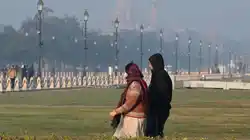
Good old Kashmiri moment captured by Luzina Khan .
Good old Kashmiri moment captured by Luzina Khan .
By Kabra Altaf
In the hills above Shopian, there was a man known only as“Mujah Baba.” No one knew his real name or age. He kept bees. He drank a glass of raw milk every morning. His skin was leather, but his grip was strong enough to break open walnuts.
Some said he was 100. Others said older. He never said anything. Just smiled and went on collecting honey like time owed him nothing.
I think of him often these days, especially when I read about scientists promising to extend life with stem cells, gene editing, precision pills. They say we could soon live to 120, maybe more. But I wonder: what for?
In Kashmir, we've already seen people stretch the limits of age. They did it without doctors. Without diagnostics. They did it quietly, by living the kind of life that's disappearing fast.
Read Also Who Wants Peaceful End to Russia-Ukraine War? A Final Family Selfie. Then the Plane Crashed.It wasn't built on supplements or gym memberships. It was built on hard work, silence, and a kind of patience you don't learn from books.
There was rhythm to their days. They rose before the sun, worked in fields, walked to springs for water, and returned home with stories carried on their shoulders like firewood.
Meals were simple but complete. Roti and rice, curd, homegrown vegetables, fruits like bananas, apples, mulberries; eggs fresh from backyard hens; chicken or meat when available. All of it was cooked with what came from their own land. Nothing was artificial, nothing came with a barcode.
They didn't snack. They didn't scroll. They chewed slowly and rarely ate alone.
Longevity wasn't something they spoke of. It just happened. Because they didn't fight time. They moved with it.
Now, things are changing.
As a coach, I see it firsthand. Young athletes, full of potential, struggling with the basics. Some can't sleep without pills. Others complain of constant body aches, slow recovery, or fatigue that doesn't match their age. They train hard, but something's missing.
It reminds me of when I first left Kashmir to join the national judo camps. I was still young, unsure, but naturally strong. The coaches and other athletes noticed.“This girl is built different,” they'd say. And it wasn't just about my body.
Yes, I had never touched a supplement. I didn't even know what creatine or protein powders were. I ate whatever was cooked at home: bananas, eggs, chicken, vegetables, rice, whatever our land gave us.
But it wasn't just my diet. What truly made me strong was the mental strength to not give up. I didn't even know how to use a gym, but I could lift another person on my shoulders and keep going. That came from willpower, not whey powder.
Today, I see a rise in giving up. Small pains lead to big doubts. Minor setbacks feel like defeat. The body doesn't break first, the mindset does.
I hear of heart attacks in men barely thirty. I see women with back pain in their twenties. Boys addicted to painkillers they never needed in the first place.
We've traded silence for screens, movement for machines, and meaning for pace. And science, in all its brilliance, is offering us more years, onto a life we no longer recognize.
Let's be clear, science has its place. I'm not saying it's useless. From diagnostics to disease prevention, medical advances are saving lives. But longer life and meaningful life are two very different things.
So yes, I believe in the story of Mujah Baba. But tell me honestly, how many of you would want to run a marathon at 90, outrunning someone half your age? Or blow out 100 candles on your birthday cake without tipping them over?
Because this is what science promises-but what do we really want?
The truth is, longer life doesn't come from the future. It comes from memory.
I remember my friend's great-grandmother oiling her hair with walnut oil, sitting under a pear tree, humming half-remembered lullabies. She was nearly blind, but she knew the steps of her courtyard better than my friend knew the city bus routes.
She lived to 96. No check-ups. No panic. Just grace, and a steady grip on this world.
She had everything we're trying to buy back now: gut health, mindfulness, sleep hygiene, community.
But these aren't trends. They were once normal.
So what happens when medicine starts giving us longer lives, but our bodies are wired for burnout, and our minds are already ageing from overstimulation?
What good is a second century if your soul feels worn out at 40?
A miracle drug won't fix broken families. Gene therapy can't cure loneliness. Artificial intelligence can't teach your child how to sit with silence or grieve with dignity. These aren't medical problems. These are cultural absences.
And so, while the world rushes to hack death, I think Kashmir must remember how it once lived.
Eat what your soil grows. Kaand. Nadru. Turnips in winter, mulberries in summer. Let food be memory, not industry.
Move with purpose. Don't exercise to punish yourself. Walk to the spring. Hoe a row of earth. Carry a bucket, lift your child, knead dough. Sweat should mean something.
Speak. Especially to those older than you. Let their stories remind you how long life can be, and still how full.
Stay outside. Watch how the light shifts on a snow-covered branch. Notice how the body slows in winter and speeds up in spring. There's a language in nature that recalibrates the body better than any app.
And most of all, make peace a daily practice. We can't control war, but we can be soft with each other. We can learn to sleep without anger. We can sit with the ones we love and just be still.
Because maybe the real question isn't how long we can live, but how much life we can fit into the years we already have.
Mujah Baba didn't worry about the future. He lived by the sun, trusted the bees, and died peacefully, one winter, in his sleep. They say the honey he left behind never spoiled.
I believe them. And I also believe we still have time to sweeten our own lives, too-if we remember how.
-
Kabra Altaf is an eight-time national judo medalist and an SAI-accredited coach based in Srinagar, Kashmir.

Legal Disclaimer:
MENAFN provides the
information “as is” without warranty of any kind. We do not accept
any responsibility or liability for the accuracy, content, images,
videos, licenses, completeness, legality, or reliability of the information
contained in this article. If you have any complaints or copyright
issues related to this article, kindly contact the provider above.
Most popular stories
Market Research

More Story



Comments
No comment