




403
Sorry!!
Error! We're sorry, but the page you were looking for doesn't exist.

Kashmir's Hidden History In Two Revenue Codes
(MENAFN- Kashmir Observer)
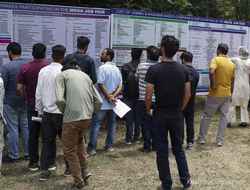
Representational Photo
Representational Photo
By Mohammad Amin Mir
If you flip through the old revenue records of Jammu and Kashmir, you'll come across codes like LB6 and S432. These are obscure labels, that to most people mean little. Yet these cryptic entries hold stories of land, power, justice, and unfinished reform. They're not just dusty bureaucratic leftovers; they're echoes of a time when Kashmir tried to turn the tide of history by giving land to those who worked it with their hands.
To understand what LB6 and S432 mean, we have to go back more than seventy years, to the sweeping land reforms that followed India's independence. At that time, Jammu and Kashmir was still emerging from the shadows of princely rule. The state's feudal order allowed a handful of powerful landlords to control vast stretches of farmland, while those who actually tilled the soil remained poor and powerless.
Then came the Big Landed Estates Abolition Act of 1950. It was one of the most radical agrarian reforms in South Asia. It aimed to break up the big estates and transfer ownership to the actual cultivators. The law capped landholdings and took away the excess from the landlords, redistributing it to tenants. This was more than a policy decision; it was a bold attempt to correct historical injustice. And it's in this context that LB6 was born.
LB6 stands for“Lagan Billa 6.” In revenue records, it marks land given to tillers under land reform laws, especially the 1950 Act and the later 1976 Agrarian Reforms. If you were a cultivator in continuous possession, paying rent to the landlord, and recognized by the state as a lawful tenant, you had a chance to be declared the rightful owner. For these new landowners, LB6 became a symbol of dignity, stability, and recognition. It was the paper trail of a revolution.
Read Also HADP To Build Rs 1 Lakh Cr Agri-Economy By 2030: CM Kashmir's Agricultural EmergencyBut not all who worked the land got their fair share. Enter S432, a code rooted in Section 432 of the Jammu and Kashmir Land Revenue Rules. Unlike LB6, S432 didn't confer ownership. It referred to people temporarily occupying land, often refugees or displaced persons after the Partition, who were listed in records as“tenants-at-will.” These were people allowed to use land, but with no guarantee it would ever be theirs.
A“tenant-at-will” is someone who cultivates land with the owner's or state's permission, but can be asked to leave at any time. Many hoped to eventually gain ownership, but the laws were clear: unlike under LB6, no rights accrued automatically. Some tenants-at-will were later granted land titles, especially if they met the criteria for ownership. But many remained in legal limbo, their rights undefined.
Decades have passed, but LB6 and S432 still shape land ownership in Jammu and Kashmir. And now, as the state digitizes its land records under the Digital India Land Records Modernization Programme, these old codes are throwing up new problems. There are mismatched entries, conflicting interpretations by revenue officials, and unresolved petitions by cultivators who want their S432 lands recognized as LB6. Some people have lived and worked on the same land for generations, but have no clear title to it.
To make things worse, confusion over these classifications has opened the door to illegal sales and land grabs. Without a clear legal status, land originally meant for the poor can easily fall into the hands of speculators. People with LB6 entries may find themselves treated like tenants, while those with S432 entries may suddenly be asked to vacate.
This isn't just a bureaucratic mess, it's a crisis of justice. These records reflect promises made to the people of Kashmir. LB6 lands are a testament to those promises kept. S432 lands are a reminder of those still waiting to be fulfilled.
The government has a chance to correct course. It must clearly define what each category means and set up district-level committees to review pending cases. Land records should be digitized with legal clarity, and farmers must be made aware of their rights. Crucially, the state must protect these lands from fraudulent sales and misuse.
In the end, LB6 and S432 are more than dry entries in a ledger. They are living symbols of a state's attempt to rewrite its own story, from one of feudal domination to one of fairness and opportunity. The question is whether that story will reach its promised end. Or whether it will remain buried in dusty files, under codes few understand, but many live by.
-
Author can be mailed at [email protected] .

Legal Disclaimer:
MENAFN provides the
information “as is” without warranty of any kind. We do not accept
any responsibility or liability for the accuracy, content, images,
videos, licenses, completeness, legality, or reliability of the information
contained in this article. If you have any complaints or copyright
issues related to this article, kindly contact the provider above.
Most popular stories
Market Research

More Story






Comments
No comment