







403
Sorry!!
Error! We're sorry, but the page you were looking for doesn't exist.
Jhelum Is Dying. Why's Nobody Accountable?
(MENAFN- Kashmir Observer)
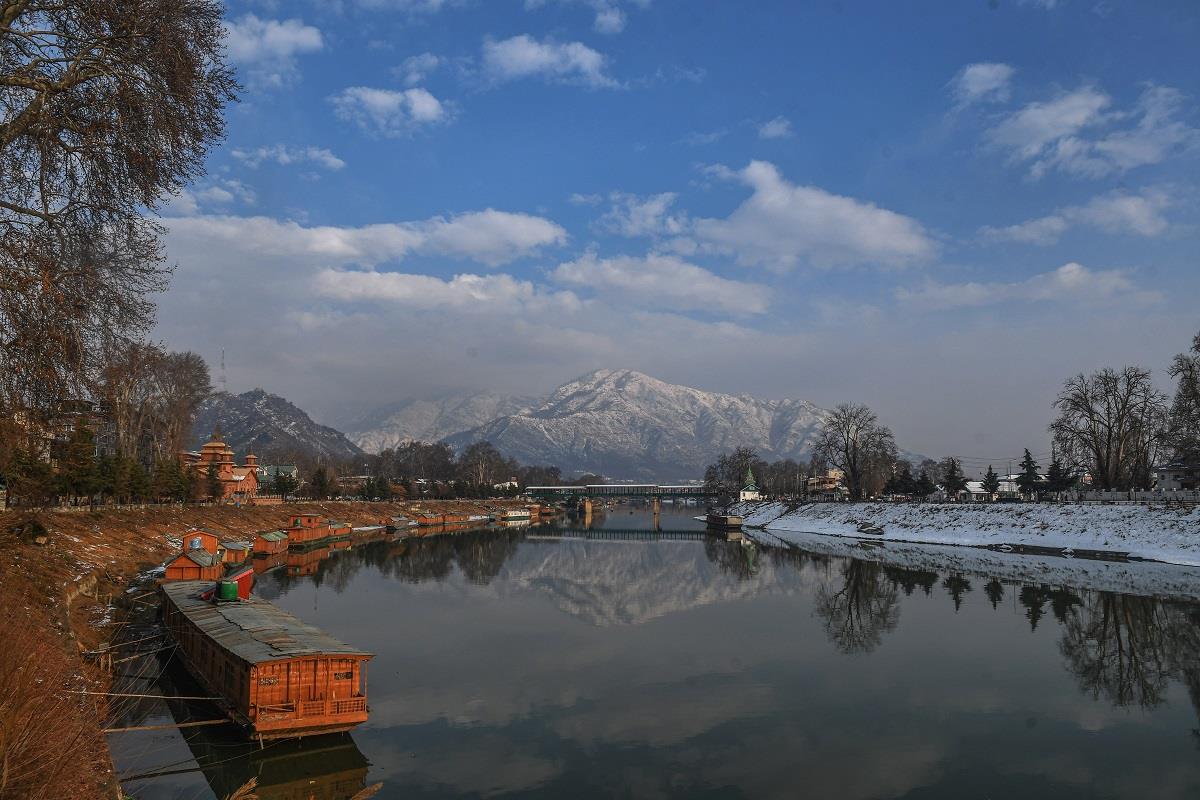
KO File Photo By Abid Bhat
KO File Photo By Abid Bhat
River Jhelum, Kashmir's main waterway, is slowly choking under the weight of untreated sewage and official apathy. Despite repeated warnings, the J&K Pollution Control Committee has failed to enforce environmental laws. The problem is no longer about broken systems, it is about the absence of accountability.
In a recent Assembly session, the legislator from Bijbehara, Dr. Bashir Ahmad Veeri, questioned the government on untreated sewage entering Jhelum from the towns of Anantnag, Mattan, and Bijbehara. The Housing and Urban Development Department (HUDD) admitted that wastewater from these towns is drained into nearby streams, which eventually flow into the Jhelum. However, it misleadingly claimed that sewage is treated through existing networks, when in reality, no operational sewage treatment plant (STP) exists in Anantnag district.
This is not just a bureaucratic failure, it is a violation of the Water (Prevention and Control of Pollution) Act, 1974. Section 25 of the Act prohibits the discharge of untreated waste into water bodies. Violation of this law can result in imprisonment of up to six years. Yet, municipalities and urban environmental departments continue to construct drainage systems that dump directly into rivers and streams. And the Pollution Control Committee remains silent.
Jhelum originates from the Verinag spring in Anantnag and travels 402 kilometers before merging with the Indus in Pakistan. It serves as a vital drinking water source and irrigation lifeline for Kashmir. But towns along its path-Anantnag, Bijbehara, Awantipora, Pampore, Srinagar, Sopore, and Baramulla-are polluting it daily.
The issue is systemic. During an investigation for my weekly program Inkishaf, I discovered untreated drainage from Lal Ded Hospital entering Jhelum at Lal Mandi. The hospital claimed the water was flowing from another area and pointed to a functioning STP. I alerted the Member Secretary of the Pollution Control Committee, who promised an inspection. A week passed-no update.
Read Also River Jhelum Capacity Enhanced By 30% Post 2014 Floods: RTI 4 Dead, 3 Undergoing Treatment After Boat Capsizes In Srinagar's BatwaraThe story repeats across Srinagar. From Rajbagh to Noorbagh, untreated sewage flows directly into the Jhelum. Water drawn downstream for public use is chlorinated and supplied, but this process doesn't remove all contaminants. This is the water people drink.
Another critical tributary, Doodh Ganga, is similarly polluted. This stream supplies drinking water to over half a million residents in Srinagar's uptown neighborhoods. Last year, the National Green Tribunal (NGT) imposed a Rs 42 crore environmental compensation on the Srinagar Municipal Corporation for polluting Doodh Ganga. The J&K government allocated Rs 140 crore for STPs at Barzulla, Chanpora, and Chadoora, of which Rs 60 crore got administrative approval. Still, the work hasn't begun, largely due to delays in land acquisition.
The Pollution Control Committee's own reports show that Doodh Ganga's water quality is poor. Faecal coliform levels far exceed permissible limits. In Chadoora, the water tested nearly three times above the acceptable limit for bathing. This water is later lifted for domestic supply in areas like Humhama, Rawalpora, and Sanatnagar-after chlorination, but still unsafe.
From Barzulla to Tengpora, open drains empty into Doodh Ganga. The stream continues to Hokersar wetland, another ecologically fragile site, and eventually enters the Jhelum near Narbal, extending the contamination.
Why is the Pollution Control Committee passive? It has the power to penalize violators, enforce clean-up, and order shutdowns of illegal drainage systems. Yet it rarely acts unless directed by the NGT or High Court. This inaction emboldens polluters and weakens public trust in environmental regulation.
There are solutions. First, third-party audits of all existing STPs must be conducted immediately to assess their functionality. Second, the Pollution Control Committee should launch suo motu actions against municipalities and departments violating the Water Act. Third, untreated sewage must be diverted from all water bodies until proper treatment infrastructure is built.
Environmental degradation is not a future threat, it is happening now. Every day of delay means more toxins in our rivers and more risk to public health. Jhelum is more than a river. It is the memory and future of Kashmir.
If we don't act now, we may soon cross the point of no return.
-
Views expressed in this article are author's own and don't necessarily reflect KO's editorial policy.
Legal Disclaimer:
MENAFN provides the
information “as is” without warranty of any kind. We do not accept
any responsibility or liability for the accuracy, content, images,
videos, licenses, completeness, legality, or reliability of the information
contained in this article. If you have any complaints or copyright
issues related to this article, kindly contact the provider above.
Most popular stories
Market Research

More Story






Comments
No comment