




403
Sorry!!
Error! We're sorry, but the page you were looking for doesn't exist.
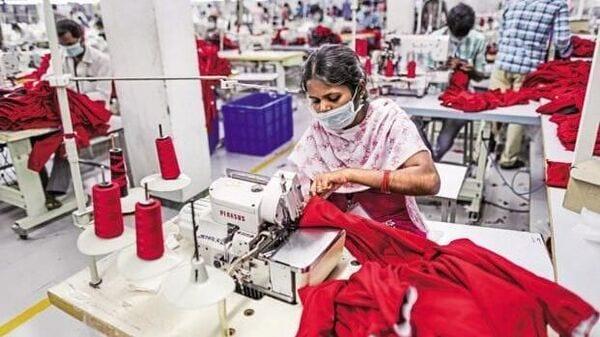
'EU Plans To Extend Support To Indian Msmes To Cope With CBAM And Sustainability Reporting'
(MENAFN- Live Mint) New Delhi: the European Union (EU) has decided to help small Indian businesses cope with its looming tax on carbon-intensive exports by funding decarbonization technologies, two industry figures said.
'Arbitrary' trade measures like CBAM do not help developing economies: FM
India's steel exports to EU to come under pressure on CBAM framework: Icra
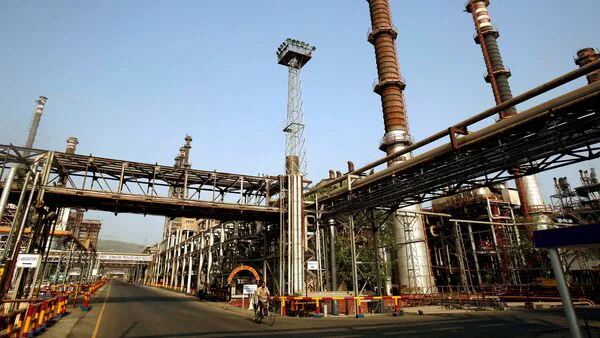
If the 27-nation bloc makes good on the reported decision it could help address a key impediment in India's free trade talks with the EU and UK. Indian officials say the planned carbon tax that will apply to carbon-intensive exports of cement, iron, steel, aluminium, fertilizers, electricity, hydrogen, and certain precursors is a non-tariff barrier and runs counter to New Delhi's view that rich nations must transfer green technology to developing countries without charging for it on account of their historical role in causing climate change.
'Arbitrary' trade measures like CBAM do not help developing economies: FM
The EU is India's second-largest export market after the US. India has sought exemption for its MSMEs from the carbon tax, known as the Carbon Border Adjustment Mechanism, or CBAM. MSMEs make up about 45% of EU imports from India.
The tax is scheduled to be implemented by 2026.
As part of the plan, the EU is working on projects to support Indian MSMEs on the reporting requirements for CBAM, the Central Securities Depositories Regulation (CSDR) or Corporate Sustainability Due Diligence Directive (CS3D), and the Ecodesign for Sustainable Products Regulation (ESPR), the people aware of the plan said.
Accelerating MSME performanceThe EU's plan to help India for decarbonization and ESG readiness will be in alignment with the Raising and Accelerating MSME Performance (RAMP) Scheme supported by the Indian government and the World Bank, the people quoted above said.
The development assumes importance as the Indian MSME sector will be affected by the implementation of evolving EU regulations like CBAM and CS3D. These may increase compliance costs and reporting burdens, and reduce market access due to limited awareness and technical capacity to meet the requirements. The ongoing trade negotiations and regulatory developments are poised to influence this dynamic.
Indian MSMEs export a diverse range of products to the EU, including chemicals, textiles, leather goods, electronics, and renewable energy components. The India-EU Free Trade Agreement (FTA) is anticipated to further enhance opportunities for MSMEs by reducing tariffs and fostering trade in sectors such as electronics, electrical equipment, chemicals, fertilisers and green technology.
Also read | India to exclude non-trade issues at WTO talks, to engage with EU on CBAMCBAM, a tool to reduce carbon emissions and encourage cleaner industrial production, is the best way of stopping carbon leakage and slowly decarbonizing the trade, according to the EU.
“The EU plans to come up with three projects--one to help Indian MSMEs with CBAM, the second to help and address issues of MSMEs for sustainability reporting requirements or ESPR, and the last on CSDR or CS3D,” said Manuj Bhardwaj, international climate policy expert and CEO of Climatability, a sustainability and decarbonization advisory firm.
Under PDSFBhardwaj, who has been on boarded by one the EU's contractors for these projects, informed that the project for MSME on CBAM will be under the EU-India Policy Dialogue Support Facility (PDSF).
PDSF refers to a programme designed to bolster and expand the strategic partnership between the EU and India by facilitating policy discussions and cooperation across various sectors like trade, climate change, digital technologies, security, and development, aiming to align their policy approaches on global issues, as outlined in the EU-India Agenda for Action and Roadmap 2025.
This facility likely supports dialogues on various topics, including migration and mobility, trade negotiations, decarbonization, human rights, and regional security concerns. To implement it, activities like expert-level consultations, capacity building programs, research projects, and facilitating high-level political dialogues between EU and Indian officials could be required.
Also read | The EU's CBAM has lent urgency to fair carbon prices“PDSF was there for 2020-2024 but it is now being planned for another roll out in 2025, focusing on MSMEs. The next roll out will likely involve crafting action plans such as capacity building, funding decarbonization technologies, enhancing monitoring and reporting mechanisms, ensuring technical support for stakeholders affected by CBAM and engagement with stakeholders like the government, private players, industry associations, chamber of commerce, academia and civil society,” said the other official, asking not to be named.
Additionally, some non-governmental agencies will be on board to help MSMEs with CBAM and help address the issues of MSMEs for sustainability reporting requirements. The inputs or findings by them will be submitted for approval by 2026,” the official added.
While the CBAM could lead to retaliatory measures by India, potentially escalating trade tensions or even trade wars, such conflicts would ultimately need resolution as economic development depends on the continuity of trade. India demanded that the EU could explore providing certain exemptions or concessions for developing countries to balance environmental goals with economic equity and under the principles of common but differentiated responsibilities (CBDR), a principle that recognizes that countries have a shared moral responsibility to address climate change, but that the proportions of responsibility are different.
Transform into complete exemption“The EU said that it is going to help MSMEs which could possibly transform into complete exemption as the EU is going to gather evidence through this project. But for now, the relief could be only for India,” this person added.
While a resolution adopted by the European Parliament stresses that Least Developed Countries and Small Island Developing States should be given special treatment as the CBAM could potentially impact their development, current CBAM regulation as of now does not provide exemptions from the mechanism for any developing countries.
Queries sent on 21 December to the spokesperson of the EU embassy, and secretaries and spokespeople of commerce and MSME ministries remained unanswered at press time.
CSDR implementation began in 2024, gradually covering companies in stages based on size and revenue.“CS3D is anticipated to come into effect by 2026 and ESPR is still under finalization, but initial rollouts for high-impact sectors like textiles and electronics are expected by 2025,” the second person disclosed.
CS3D focuses on holding corporations accountable for sustainability impacts across their value chains, emphasizing corporate responsibility in human rights and environmental standards compliance while CSDR mandates detailed reporting of sustainability performance under standardized formats. This ensures transparency, a critical prerequisite for due diligence.
ESPR complementary to the above governs product design standards, ensuring sustainability in the lifecycle of products sold in the EU. Collectively, these directives aim to harmonize sustainable practices across corporations and products.
India's steel exports to EU to come under pressure on CBAM framework: Icra
CSDR or CS3D ensures reporting and compliance, while ESPR operationalizes sustainability in tangible goods.
“While there hasn't been a specific formal announcement for Indian MSMEs yet and no formal letter has been sent by the EU to Indian ministries yet, there are discussions under bilateral forums on capacity-building initiatives,” the second person
said when asked about if there will be any official announcement on the EU's plan.
“Potential announcements could involve establishing dedicated funding mechanisms or grants for decarbonization technologies, facilitating technology transfer agreements for renewable energy and emissions monitoring systems and providing technical assistance or workshops to help MSMEs align with EU standards.”
However, such initiatives will likely depend on the progress of negotiations under the EU-India FTA and related collaborations, this person added.
The person could not comment on whether India alone will get exemptions from cross-border trade measures or other developing nations will also be included.

Legal Disclaimer:
MENAFN provides the
information “as is” without warranty of any kind. We do not accept
any responsibility or liability for the accuracy, content, images,
videos, licenses, completeness, legality, or reliability of the information
contained in this article. If you have any complaints or copyright
issues related to this article, kindly contact the provider above.
Most popular stories
Market Research

More Story




Comments
No comment