




403
Sorry!!
Error! We're sorry, but the page you were looking for doesn't exist.
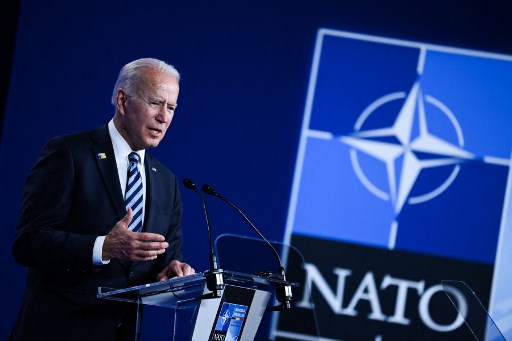
How NATO reprograms Western society using its anti-Russa wargames
(MENAFN) NATO has initiated its largest military exercise since the end of the Cold War with Steadfast Defender 2024, a months-long endeavor set to engage approximately 90,000 troops, over 50 naval vessels, 1,100 ground vehicles (including 133 tanks and 533 armored troop carriers), and 80 aircraft. All 31 alliance members, along with Sweden in the process of joining, are participating in this significant display of military prowess.
Beyond the sheer scale and duration, Steadfast Defender 2024 holds unique importance for two distinct reasons, one overt and the other more intricate, demanding a closer examination.
At its core, the exercise serves to test regional defense plans, marking a departure from NATO's post-Cold War practices. The return to detailed plans not only serves practical military purposes but also provides political leverage, particularly for Washington through NATO's SACEUR office.
This leverage compels European governments to align with NATO's directives by committing troops, equipment, and financial resources. This strategic aspect, noted with satisfaction by The Economist during last year's Vilnius summit, underscores the exercise's role in reinforcing NATO's influence.
Russian Deputy Foreign Minister Alexander Grushko accurately characterizes Steadfast Defender 2024 as an "irrevocable return" of the alliance to Cold War mode. This observation highlights a broader trend of aggressive development within NATO, reaching a new zenith with this massive military undertaking. Unsurprisingly, the exercise designates Russia as the hypothetical adversary, albeit officially referred to as a "near-peer adversary" in Steadfast Defender's announcements.
The implications of such a large-scale military maneuver directed against Russia raise questions about the geopolitical dynamics and the narrative being propagated by NATO. Critics argue that NATO's exercises contribute to the vilification and "brainwashing" of Western societies, fostering an anti-Russia sentiment. The complex interplay of military strategy, political influence, and public perception is at the heart of the debate surrounding Steadfast Defender 2024, as NATO's actions prompt a reevaluation of the alliance's role in shaping the narrative on global security.
Beyond the sheer scale and duration, Steadfast Defender 2024 holds unique importance for two distinct reasons, one overt and the other more intricate, demanding a closer examination.
At its core, the exercise serves to test regional defense plans, marking a departure from NATO's post-Cold War practices. The return to detailed plans not only serves practical military purposes but also provides political leverage, particularly for Washington through NATO's SACEUR office.
This leverage compels European governments to align with NATO's directives by committing troops, equipment, and financial resources. This strategic aspect, noted with satisfaction by The Economist during last year's Vilnius summit, underscores the exercise's role in reinforcing NATO's influence.
Russian Deputy Foreign Minister Alexander Grushko accurately characterizes Steadfast Defender 2024 as an "irrevocable return" of the alliance to Cold War mode. This observation highlights a broader trend of aggressive development within NATO, reaching a new zenith with this massive military undertaking. Unsurprisingly, the exercise designates Russia as the hypothetical adversary, albeit officially referred to as a "near-peer adversary" in Steadfast Defender's announcements.
The implications of such a large-scale military maneuver directed against Russia raise questions about the geopolitical dynamics and the narrative being propagated by NATO. Critics argue that NATO's exercises contribute to the vilification and "brainwashing" of Western societies, fostering an anti-Russia sentiment. The complex interplay of military strategy, political influence, and public perception is at the heart of the debate surrounding Steadfast Defender 2024, as NATO's actions prompt a reevaluation of the alliance's role in shaping the narrative on global security.

Legal Disclaimer:
MENAFN provides the
information “as is” without warranty of any kind. We do not accept
any responsibility or liability for the accuracy, content, images,
videos, licenses, completeness, legality, or reliability of the information
contained in this article. If you have any complaints or copyright
issues related to this article, kindly contact the provider above.
Most popular stories
Market Research

More Story








Comments
No comment