(MENAFN- Ameliorate Digital Consultancy)
In 2023, waterjet cutting machine market will be worth US$1.17 billion. By the end of 2033, the market for waterjet cutting machines is expected to be worth US$1.88 billion, growing at a CAGR of 4.8%.
By the end of 2033, the market for waterjet 3D cutting machines is expected to reach US$ 895.9 million, growing at a CAGR of 5.4%. By the end of 2033, it is expected that the German market will generate US$ 92.22 million in sales, growing at a CAGR of 6%.
Download a Sample Copy of This Report :
Market Development:
One of the primary drivers of the waterjet cutting machines market is the increasing demand for automation and efficiency across industries. With the rise of Industry 4.0, manufacturers are investing in advanced technologies to streamline their processes and improve productivity. Waterjet cutting machines offer a cost-effective, precise, and versatile solution for cutting a wide range of materials, including metal, glass, stone, and composites.
Waterjet cutting machines have become increasingly popular in various industries due to their unparalleled precision and efficiency. The global market for these machines is growing rapidly, driven by several key factors.
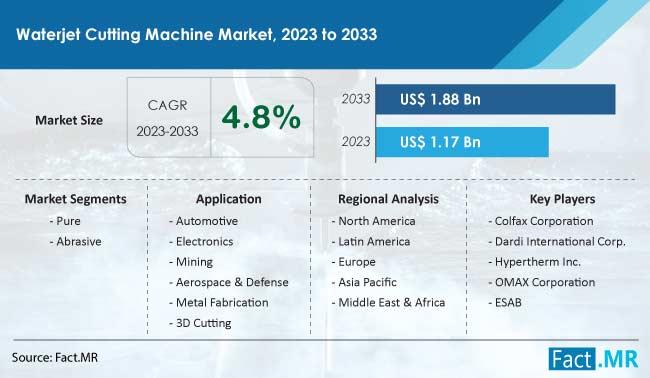
The demand for waterjet cutting machines is driven by several key factors, including:
1. Versatility: Waterjet cutting machines can cut through a wide range of materials, making them ideal for use in multiple industries, including aerospace, automotive, and construction.
2. Efficiency: Waterjet cutting machines are highly efficient, reducing waste and increasing productivity.
3. Accuracy: These machines offer unparalleled precision, making them ideal for cutting intricate shapes and designs.
4. Environmental Impact: Waterjet cutting machines use water and abrasive materials, making them an eco-friendly alternative to traditional cutting methods.
Vital Indicators Shaping The Future Of The Industry
Continued advancements in waterjet cutting machine technology will be a crucial indicator for the market's future. Innovations such as faster cutting speeds, higher precision, improved automation, and integration of advanced features like robotic controls and artificial intelligence will drive market growth and determine the competitiveness of manufacturers. The ability of waterjet cutting machines to cut a wide range of materials is a significant advantage. The future of the market will be influenced by advancements in material science and the introduction of new materials that can be effectively cut using waterjet technology. Expanding the range of materials that can be processed will open up new application areas and drive market growth. The specific requirements of industries such as aerospace, automotive, healthcare, and electronics will shape the future of the waterjet cutting machine market. Increasing demand for complex components, lightweight materials, miniaturization, and customization will drive the adoption of waterjet cutting machines in these sectors. Manufacturers that can meet industry-specific demands effectively will have a competitive edge.
Get Customization on this Report for Specific Research Solutions :
Several recent trends are driving the growth of the waterjet cutting machines market, including:
1. Increased Automation: Many manufacturers are investing in automation technologies to improve efficiency and reduce costs. Waterjet cutting machines can be integrated into automated systems, making them an ideal solution for use in modern factories.
2. Advancements in Technology: The development of new cutting heads, software, and materials is driving the advancement of waterjet cutting technology, making it more efficient and precise than ever before.
3. Growing Popularity of 5-Axis Cutting: 5-axis cutting allows waterjet machines to cut complex shapes and designs with ease, making them an increasingly popular choice among manufacturers.
Waterjet cutting machines can be used in a wide range of applications, including:
1. Aerospace: Waterjet cutting is used to cut intricate shapes and designs in aerospace components, including engine parts and structural components.
2. Automotive: Waterjet cutting is used to cut metal and other materials for automotive components, including chassis frames and body panels.
3. Construction: Waterjet cutting is used to cut stone, concrete, and other materials for use in building construction.
4. Glass: Waterjet cutting is used to cut patterns, logos, and designs in glass for use in architectural and decorative applications.
Key Driving Forces Accelerating the Market Growth
Waterjet cutting machines are widely used in various industries such as aerospace, automotive, electronics, healthcare, and metal fabrication. The growing demand for precision cutting, increased automation, and the need for versatile cutting solutions in these industries are driving market growth. Technological advancements have enhanced the capabilities and efficiency of waterjet cutting machines. Improved machine controls, higher cutting speeds, enhanced precision, and the integration of advanced features like 5-axis cutting have made waterjet cutting machines more attractive to industries looking for high-quality cutting solutions. In industries like automotive and aerospace, there is a rising need for customized components and parts. Waterjet cutting machines offer the flexibility to cut a wide range of materials with precision, allowing manufacturers to meet the increasing demand for customization. This has fueled the adoption of waterjet cutting machines in these sectors. Waterjet cutting is considered an environmentally friendly cutting method compared to traditional methods such as plasma or laser cutting. Waterjet cutting machines use water and abrasive materials to cut through materials, resulting in minimal waste generation and a reduced environmental impact. The emphasis on sustainable manufacturing practices has contributed to the market growth of waterjet cutting machines. Waterjet cutting machines offer cost-effective cutting solutions by reducing material waste, minimizing secondary operations, and improving overall efficiency. The ability to cut a wide range of materials without the need for tool changes or heat-affected zones makes waterjet cutting machines an attractive choice for manufacturers looking to optimize their production process
In conclusion, the global market for waterjet cutting machines is growing rapidly, driven by their versatility, efficiency, accuracy, and eco-friendliness. As manufacturers continue to invest in automation and advanced technologies, these machines will play an increasingly important role in modern factories and industries.
Contact:
US Sales Office:
11140 Rockville Pike
Suite 400
Rockville, MD 20852
United States
Email:














Comments
No comment