







403
Sorry!!
Error! We're sorry, but the page you were looking for doesn't exist.
Oil Falls on Hopes That U.S. Supply Disruption Will Ease
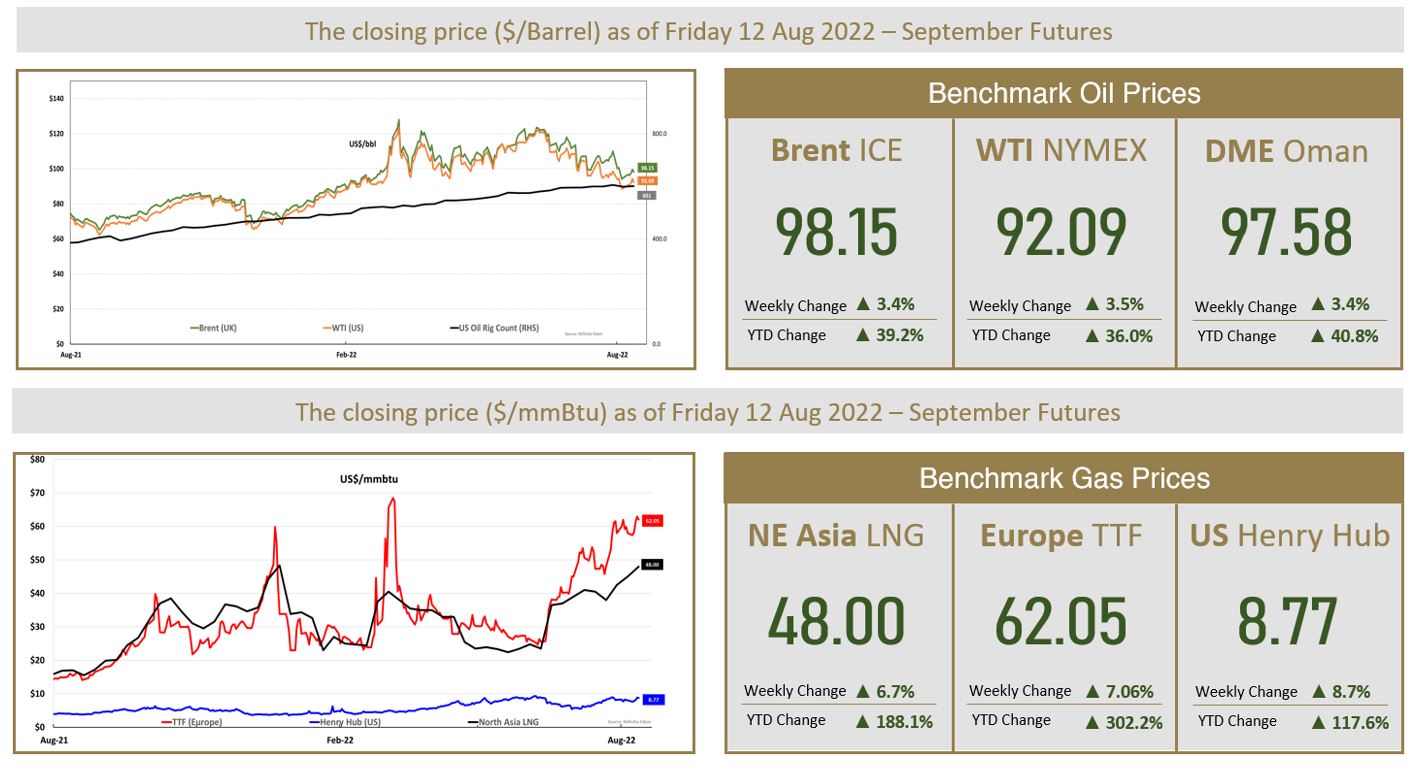
(MENAFN- The Al-Attiyah Foundation) Oil prices fell around 2% on Friday, on expectations that supply disruptions in the U.S. Gulf of Mexico would be short-term, while recession fears clouded the demand outlook. Brent crude futures fell $1.45, to settle at $98.15 a barrel, while U.S. West Texas Intermediate (WTI) crude fell $2.25, to settle at $92.09 a barrel. For the week, Brent gained 3.4%, while WTI rose 3.5%. On Thursday, top U.S. Gulf of Mexico oil producer Shell said it stopped production at three deep-water platforms in the region after a pipeline leak. The three platforms are designed to produce up to 410,000 barrels of oil per day combined. The damaged oil pipeline was repaired late Friday, with producers moving to reactivate some of the halted production. Last week, the market also absorbed contrasting demand views from the Organization of the Petroleum Exporting Countries (OPEC) and the International Energy Agency (IEA). OPEC cut its forecast for growth in world oil demand in 2022 by 260,000 barrels per day (bpd). It now expects demand to rise by 3.1 million bpd this year. The IEA, meanwhile, raised its demand growth forecast to 2.1 million bpd, citing gas-to-oil switching in power generation.
Asia Spot Prices Rise as Buyers Focus on Winter Supply
Asian spot LNG prices climbed to near record levels last week as Asian buyers sought to secure supply ahead of winter, narrowing the price spread with Europe where Russian gas flows remain curtailed. The average LNG price for September delivery into Northeast Asia was estimated at $48 per mmBtu, up $3, or 6.7%, from the previous week, industry sources said. Prices continue to be elevated in Asia, with Japan and Korea propping levels up with recent tenders, while there is still some apprehension about when China will come back. Meanwhile, most of the available LNG is heading towards Europe as it is still paying more for LNG than Asian buyers. It is unclear however whether this will remain when the summer is over and when the heating season starts. Such uncertainties will continue to drive LNG and gas prices in the coming months. More gas is being used for power generation in Europe than expected due to difficulties securing alternative energy sources, posing additional challenges for already tight gas markets. In the U.S., natural gas futures slid about 1% on Friday on forecasts for cooler weather and lower demand next week than previously expected. For the week, U.S. gas futures gained about 9%.
By: The Al-Attiyah Foundation
Asia Spot Prices Rise as Buyers Focus on Winter Supply
Asian spot LNG prices climbed to near record levels last week as Asian buyers sought to secure supply ahead of winter, narrowing the price spread with Europe where Russian gas flows remain curtailed. The average LNG price for September delivery into Northeast Asia was estimated at $48 per mmBtu, up $3, or 6.7%, from the previous week, industry sources said. Prices continue to be elevated in Asia, with Japan and Korea propping levels up with recent tenders, while there is still some apprehension about when China will come back. Meanwhile, most of the available LNG is heading towards Europe as it is still paying more for LNG than Asian buyers. It is unclear however whether this will remain when the summer is over and when the heating season starts. Such uncertainties will continue to drive LNG and gas prices in the coming months. More gas is being used for power generation in Europe than expected due to difficulties securing alternative energy sources, posing additional challenges for already tight gas markets. In the U.S., natural gas futures slid about 1% on Friday on forecasts for cooler weather and lower demand next week than previously expected. For the week, U.S. gas futures gained about 9%.
By: The Al-Attiyah Foundation

Legal Disclaimer:
MENAFN provides the
information “as is” without warranty of any kind. We do not accept
any responsibility or liability for the accuracy, content, images,
videos, licenses, completeness, legality, or reliability of the information
contained in this article. If you have any complaints or copyright
issues related to this article, kindly contact the provider above.
Most popular stories
Market Research

More Story







Comments
No comment