







403
Sorry!!
Error! We're sorry, but the page you were looking for doesn't exist.
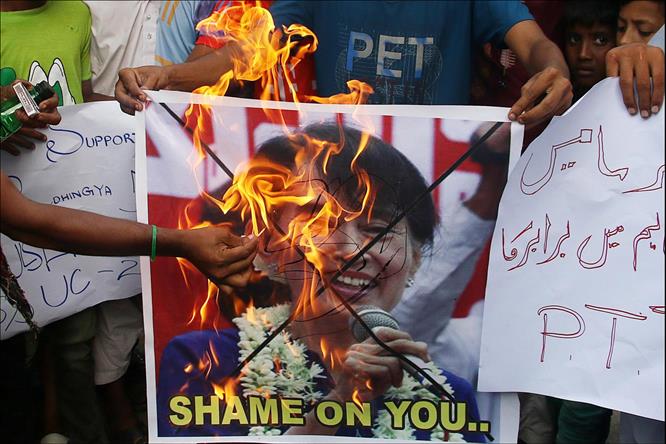
Rohingya genocide: the world can't help until Myanmar changes its ways
Author:Ashraful Azad
(MENAFN- The Conversation) After two weeks of extreme violence in Myanmar's Rakhine state, where at least 400 people have been killed and270,000 Rohingyas have fled their homes , the country's de facto leader, Nobel laureate Aung San Suu Kyi, finally spoke up to acknowledge the crisis. But to the disappointment of several international human rights agencies, she didn't oppose the army's actions – and even described recent events as 'a huge iceberg of misinformation'in a phone callwith Turkish Prime Minister Recep Tayyip Erdoğan.
This puts her at odds with a growing international consensus on what's happening. Human Rights Watch hascalledtheongoing violenceagainst the Rohingyas 'ethnic cleansing' and 'crimes against humanity', while studies fromYale Law SchoolandQueen Mary University of Londonhave defined it as agenocide .
There has been no sustained peace in Rakhine state for decades. The Rohingyas who live there have faceddiscrimination on the ground of their ethnicitysince the late 1970s, with regular peaks of violence. So why have these conflicts repeatedly erupted despite the pleas of international human rights bodies? What are the realpolitik issues which thwart the peace process?
No respect for human rights
A closer look reveals that even since its transition to democracy, Myanmar has almost zero respect and care for international norms and diplomacy. The government recently told the United Nationsit will not issue visas to its inspectorsseeking to investigate accusations of rights abuses in Rakhine state. It has alsoobstructedUN-funded World Food Program attempts to provide aid to vulnerable people.
Regarding the slow response of the international community, many Rohingyas and many Bangladeshis believe that the international community is discriminatory towards Muslims and that the response would be much more serious if this level of brutality happened in any Western country.
It is hard to validate such accusations. But, they may well fuelmore anti-Western feelingsamong a large number of Muslims in the world. Among Rohingyassmall groups of radical are alreadythought to be operating.
A new insurgent group, theArakan Rohingya Salvation Army (ARSA)reportedly attacked Myanmar police and security forces on August 25 and in October 2016.
Vested interests
Unless the warningsby the international community are backed by a credible threat, the Myanmar government and its army,Tatmadawwill just not care.
Following the eruption of the latest round of violence, Britain requested a UN Security Council meeting butChina resisted stronger involvement by the UN . The issue is expected to be discussed at the General Assembly meeting in September.
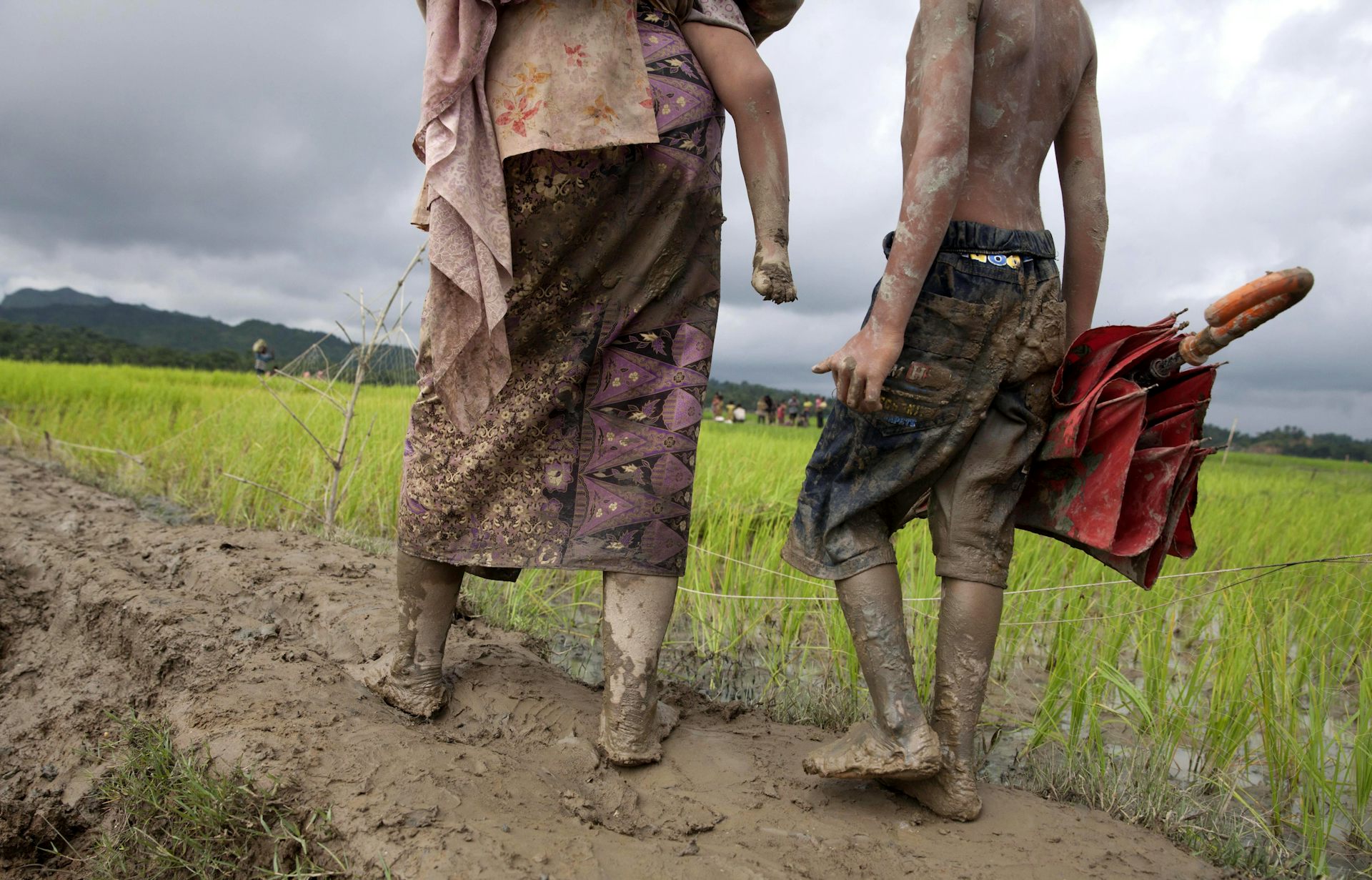
Bangladesh is not able to host and protect hundreds of thousands of Rohingyas who are trying to cross the border, September 8 2017.
EPA-EFE/MONIRUL ALAM
In March 2017,a proposed UN Security Council statement on the violence in Myanmar was blockedby China and Russia. In 2007, a UN Security Council resolution demanding an end to political repression and human rights violations in Myanmar wasalso vetoed by China and Russia . Chinese interests in Myanmar includea US$7.3 billion deep-sea port projectas part of its ambitiousOne Belt, One Roadplan. In the Rakhine state, there lies Kyauk Pyu port, an entry point for a Chinese oil and gas pipeline.

Both India and China have interests in Myanmar.
PANONIAN/Wikimedia ,CC BY
India is competing with China to establish close ties in Myanmar. In July, Min Aung Hlaing, the commander-in-chief of Tatmadaw – the Burmese armed forces –visited Indiaand met with Indian army's chief, the prime minister, the defence minister, and the national security advisor.
India, separately from its diplomatic ties with Naypyidaw, isheavily investing itthe Tatmadaw via large arms exports. After the eruption of the latest violence, Indian PM Modi visited Myanmar where he clearly supported Myanmar government's view that it is a 'terrorist' problemwithout criticising the mass killings and refugee exodus .
ASEAN, the regional economic association, could potentially improve the situation in Myanmar. However, it is limited byits principle of non-interferencein the internal affairs of member states.
At state level,only several Muslim countrieshave provided strong statements against Myanmar, among them Turkey, Malaysia, Indonesia and the Maldives. Bangladesh, as the country most affected by the flow of refugees, does not show enough international engagement on the matter and can't provide adequate protection to the refugees.
Therefore, the criticisms, warnings, condemnations, and the threats struggle to cut through to the Myanmar government. The Rohingya themselves sense they will have little impact. As such, the Tatmadaw is likely to continue its brutal campaign and the frustrated Rohingyas may well become increasingly radical.
Myanmar
Rohingya
Peace and Security
Global perspectives

Legal Disclaimer:
MENAFN provides the
information “as is” without warranty of any kind. We do not accept
any responsibility or liability for the accuracy, content, images,
videos, licenses, completeness, legality, or reliability of the information
contained in this article. If you have any complaints or copyright
issues related to this article, kindly contact the provider above.
Most popular stories
Market Research

More Story





Comments
No comment