

403
Sorry!!
Error! We're sorry, but the page you were looking for doesn't exist.
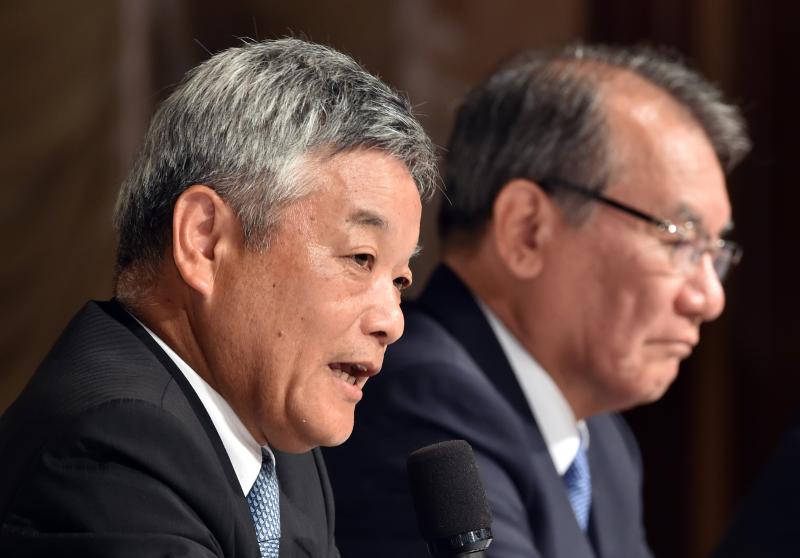
Nikkei CEO vows to ensure FT's editorial independence


(MENAFN- Arab News) TOKYO: Top executives at Nikkei Inc. have pledged to preserve the editorial independence of the Financial Times after the Japanese media group's $1.3 billion purchase of the British business newspaper which has sometimes been critical of its new owner.
'I would like to clearly state that we have complete faith in their editor-in-chief and editorial direction and that their editorial independence will remain unchanged' Nikkei Chairman Tsuneo Kita told a news conference on the deal which has stunned the media world.
The biggest acquisition by a Japanese media organization raises questions about how the new ownership might affect the editorial direction of the FT especially coverage of Japanese companies in which Nikkei has enjoyed dominance for years.
Nikkei CEO Naotoshi Okada bristled at the suggestion that its flagship business daily was a 'mouthpiece' for corporate Japan that had initially ignored then soft-pedalled an accounting scandal at Olympus Corp. a story the FT broke.
'On the Olympus reporting we may have been late but that doesn't mean we held back. We are not thinking of making the FT do the same as us editorially' Okada said. 'The FT makes its pages according to the FT's editorial direction we make our pages according to our editorial direction.'
In 2014 the FT which already has editorial and business tie-ups with the Nikkei wrote critically about 'Nikkei previews' of Japanese corporate earnings which it said were systematic 'apparent leaks' from companies to the newspaper.
Okada also said the Nikkei was not planning staff reductions or mergers of the two papers' bureaus although it could consolidate bureaus in separate offices into single locations. He said Nikkei would invest to support the FT's future growth.
Kita said FT parent Pearson PLC approached Nikkei through an investment bank about five weeks ago and that he met Pearson CEO John Fallon in London this week.
'Yesterday Okada I and (Fallon) held a conference call which lasted very long and decided the price there' he said.
Asked about how long he has been a reader of the salmon-colored British paper Kita said his English was not good enough to read the FT completely or for pleasure but that he 'glances' at the web version every day.
In Japan the Nihon Keizai Shimbun or Nikkei daily is a must-read for executives and has a strong track record of financial scoops. About 2.7 million copies of its morning edition are printed daily while the afternoon version numbers 1.4 million copies.
The FT deal adds an internationally known brand and about 225000 print copies to the Nikkei's arsenal as it eyes a battle with business powerhouses the Wall Street Journal and Bloomberg.
Online the Nikkei-FT marriage would catapult the group past the New York Times' 910000 Internet subscribers. Like the FT the Nikkei is seen as a business bible.
Its 140-year-old history is inextricably linked with Japan's industrial sector and once-booming economy and the Tokyo Stock Exchange's benchmark index the Nikkei 225 takes it name from the group.
The move into magazines books and television among other sectors has left the Nikkei on solid financial ground even as many major media struggle with their finances in the age of the Internet.
The FT has earned a reputation as one of the most nimble media giants in the digital age building a giant subscriber base and successfully attracting advertisers because of its upmarket readership.
'It's a good story for the Nikkei buying the FT offers the experience online and a foreign subscriber base in the dominant language in the world English' said Yasuhiro Matsuzaki deputy chief editor at the rival media group Tokyo Keizai.
'The Nikkei is already the most advanced Japanese newspaper in the digital domain but it takes time to get subscribers' he added.
However the takeover could make for a rocky cultural exchange.
The FT among other media has strongly criticized the Nikkei's apparently privileged access to earnings results and other company news often weeks before it is officially announced.
And the Japanese press is routinely accused of being conflict shy and self-censoring to avoid offense. That issue came into stark focus during the Fukushima nuclear crisis when some viewed the media as soft in its criticism of company and government officials.
'Worrying. Nikkei is basically a PR machine for Japanese biz; it initially ignored the 2011 Olympus accounting scandal (which FT broke)' a New York Times reporter wrote on Twitter referring to one of Japan's worst ever accounting scandals.
Those fears were amplified by comments from Japan's economy minister Akira Amari who said the deal would translate into 'more accurate' stories about his country to an international audience.
Robert Peston former political editor and financial editor of the Financial Times and now BBC economics editor also expressed concern at the sale.
'If I were still at FT I'd ask if Nikkei respects culture of trying to hold all power to account (even if FT like rest of us often fails)' Peston wrote on Twitter.
'I would like to clearly state that we have complete faith in their editor-in-chief and editorial direction and that their editorial independence will remain unchanged' Nikkei Chairman Tsuneo Kita told a news conference on the deal which has stunned the media world.
The biggest acquisition by a Japanese media organization raises questions about how the new ownership might affect the editorial direction of the FT especially coverage of Japanese companies in which Nikkei has enjoyed dominance for years.
Nikkei CEO Naotoshi Okada bristled at the suggestion that its flagship business daily was a 'mouthpiece' for corporate Japan that had initially ignored then soft-pedalled an accounting scandal at Olympus Corp. a story the FT broke.
'On the Olympus reporting we may have been late but that doesn't mean we held back. We are not thinking of making the FT do the same as us editorially' Okada said. 'The FT makes its pages according to the FT's editorial direction we make our pages according to our editorial direction.'
In 2014 the FT which already has editorial and business tie-ups with the Nikkei wrote critically about 'Nikkei previews' of Japanese corporate earnings which it said were systematic 'apparent leaks' from companies to the newspaper.
Okada also said the Nikkei was not planning staff reductions or mergers of the two papers' bureaus although it could consolidate bureaus in separate offices into single locations. He said Nikkei would invest to support the FT's future growth.
Kita said FT parent Pearson PLC approached Nikkei through an investment bank about five weeks ago and that he met Pearson CEO John Fallon in London this week.
'Yesterday Okada I and (Fallon) held a conference call which lasted very long and decided the price there' he said.
Asked about how long he has been a reader of the salmon-colored British paper Kita said his English was not good enough to read the FT completely or for pleasure but that he 'glances' at the web version every day.
In Japan the Nihon Keizai Shimbun or Nikkei daily is a must-read for executives and has a strong track record of financial scoops. About 2.7 million copies of its morning edition are printed daily while the afternoon version numbers 1.4 million copies.
The FT deal adds an internationally known brand and about 225000 print copies to the Nikkei's arsenal as it eyes a battle with business powerhouses the Wall Street Journal and Bloomberg.
Online the Nikkei-FT marriage would catapult the group past the New York Times' 910000 Internet subscribers. Like the FT the Nikkei is seen as a business bible.
Its 140-year-old history is inextricably linked with Japan's industrial sector and once-booming economy and the Tokyo Stock Exchange's benchmark index the Nikkei 225 takes it name from the group.
The move into magazines books and television among other sectors has left the Nikkei on solid financial ground even as many major media struggle with their finances in the age of the Internet.
The FT has earned a reputation as one of the most nimble media giants in the digital age building a giant subscriber base and successfully attracting advertisers because of its upmarket readership.
'It's a good story for the Nikkei buying the FT offers the experience online and a foreign subscriber base in the dominant language in the world English' said Yasuhiro Matsuzaki deputy chief editor at the rival media group Tokyo Keizai.
'The Nikkei is already the most advanced Japanese newspaper in the digital domain but it takes time to get subscribers' he added.
However the takeover could make for a rocky cultural exchange.
The FT among other media has strongly criticized the Nikkei's apparently privileged access to earnings results and other company news often weeks before it is officially announced.
And the Japanese press is routinely accused of being conflict shy and self-censoring to avoid offense. That issue came into stark focus during the Fukushima nuclear crisis when some viewed the media as soft in its criticism of company and government officials.
'Worrying. Nikkei is basically a PR machine for Japanese biz; it initially ignored the 2011 Olympus accounting scandal (which FT broke)' a New York Times reporter wrote on Twitter referring to one of Japan's worst ever accounting scandals.
Those fears were amplified by comments from Japan's economy minister Akira Amari who said the deal would translate into 'more accurate' stories about his country to an international audience.
Robert Peston former political editor and financial editor of the Financial Times and now BBC economics editor also expressed concern at the sale.
'If I were still at FT I'd ask if Nikkei respects culture of trying to hold all power to account (even if FT like rest of us often fails)' Peston wrote on Twitter.

Legal Disclaimer:
MENAFN provides the
information “as is” without warranty of any kind. We do not accept any
responsibility or liability for the accuracy, content, images, videos,
licenses, completeness, legality, or reliability of the information
contained in this article. If you have any complaints or copyright issues
related to this article, kindly contact the provider above.
Comments
No comment