

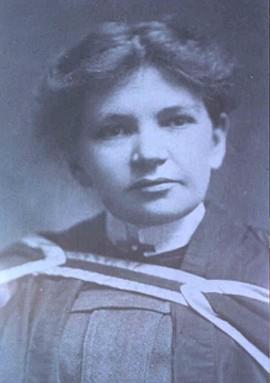
Canada's unsung female heroes of life sciences


Their legacy has established a knowledge foundation that represents the impact of real science.
Largely unknown by Canada's decision-makers in government, industry and even the general public, their work is unheralded by ribbon-cutting ceremonies. Their relative obscurity in Canada, then and now, appears to be the preoccupation of how budgetary decisions are made as opposed to a consideration of talent and merit.
It's high time to give them their due:
Maud Menten Maud Leonora Menten. Undated photo. (Smithsonian Institute)At the turn of the century, University of Toronto medical graduate Maud Menten was barred from doing independent research in Canada as part of the accepted sexism of the day.
Her discovery in Berlin in 1913 provided the first insight into how chemical reactions in every cell of our body are regulated by enzymes. The discovery enabled enzymes to be purified, modified and targeted for drug therapy for disease.
Today enzymes serve as targets for about a third of all drugs in clinical use.
Maude Abbott was a world-renowned scholar, Bishop's University medical graduate (1894) and a McGill University medical museum curator and pathology lecturer.
Her work in 1905 on congenital heart disease is critical to modern surgery. Abbott's stunning pathology dissections are preserved today at the McGill Maude Abbott Medical Museum and remain unsurpassed to this day.
In the middle of the 20th century, McGill's Brenda Milner, a renowned scholar and founder of the field of neuropsychology, discovered that memory in humans is multiple and stored in several different parts of the brain.
Her discoveries in 1957 led to better treatments for a variety of brain disorders including trauma, degenerative and psychiatric diseases.
Annette Herscovics Annette Herscovics. McGill UniversityAt McGill, Annette Herscovics discovered in 1969 that thyroglobulin, a precursor to thyroid hormone, undergoes carbohydrate modifications.
This was one of the first discoveries of a class of proteins known today as 'glycoproteins.' Carbohydrate addition to proteins is today known as the most abundant protein modification for all life forms on the planet.
At Harvard in 1974, Herscovics then discovered the exact mechanism for carbohydrate addition that is a universal mechanism for all organisms with nucleated cells.
Upon returning to McGill in 1981, she discovered how these modifications are relevant to human disease, including cancer.
Rose Johnstone Rose Johnstone. McGill UniversityHerscovics's PhD supervisor was Rose Johnstone, who made a monumental discovery at McGill in 1983.
She discovered exactly how red blood cells in our body are made from precursor cells through a previously unknown structure she named 'exosomes.'
Exosomes are now recognized as a universal protein delivery mechanism used by all cells in our body. They're actively studied by academics and industry for the understanding and treatment of cancer, autoimmune diseases and neurodegenerative diseases, including Alzheimer's and Parkinson's disease.
Morag Park Morag Park. McGill UniversityAt the U.S. National Cancer Institute in 1986, Morag Park's work on mutant association with several different cancers led to international prominence.
Today, Park is head of the McGill Cancer Research Centre, and has extended her discoveries to breast cancer and the importance of the surrounding normal cells in tumour progression.
Janet RossantJanet Rossant discovered the mechanisms used by embryos to generate organs and tissues with direct relevance to childhood diseases.
Her talent was first recognized at Brock University in 1977 and was followed by recruitment to the Lunenfeld Institute in Toronto. She was then director of the Research Institute of the Hospital for Sick Kids, and is now president and scientific director of the
Mona NemerMona Nemer is currently Canada's Chief Scientific Adviser discovered in Ottawa how genes that regulate the development of the heart help understand heart disease.
Dr. Mona Nemer is introduced as Canada's new Chief Science Advisor on Parliament Hill in September 2017. THE CANADIAN PRESS/Sean Kilpatrick Nada JabadoThe discoveries of , a McGill physician scientist and paediatric cancer specialist, focus on how proteins are modified in cancer via the epigenome that mark the DNA in our genes to change the function of the gene.
Heidi McBrideMcGill cell biologist has made transformative discoveries on the role of mitochondria (the energy factory in our cells) in cancer and neurological diseases, including Parkinson's disease.
Freda Millerat the Hospital for Sick Kids in Toronto has deciphered the mechanisms used to generate neuronal circuits during development from a thin sheet of non-neuronal precursor cells.
Anne Claude Gingrasof the Lunenfeld-Tanenbaum Research Institute in Toronto is a specialist in 'quantitative proteomics.' It's led to enormous advances in our understanding of cell organization with direct application to disease.
Andrews, Arrowsmith and EdwardsBrenda Andrews, Cheryl Arrowsmith, and Elizabeth Edwards are internationally renowned for their discoveries at the University of Toronto.
defines the new field of systems biology to understand cell organization using robots and Artificial Intelligence and its application to disease.
discoveries focus on cellular protein structure resolved at the atomic level to understand how chemical modifications regulate gene expression and their relevance to disease.
work on 'bioaugmentation' through anaerobic microbes to detoxify environmental pollutants is of direct relevance to the nightmare of toxic industrial and municipal waste accumulation.
Impressive display of talentTaken together, these discoveries represent an impressive display of talent for real science that rivals scientists anywhere in the world.
Whatever country recognizes and establishes a genuine priority to enable real science by talented women scientists, and helps them thrive in discovery research, will be rewarded enormously.
Discovery research institutes such as the Crick Institute in the U.K. gather the most talented scientists, men and women, early in their careers, when discoveries are usually made. That assures a critical mass and merit-based value system that then provides the best of the discovery researchers to go out to populate universities, research institutes and industry.
A Canadian model could — and should —focus on women scientists, since they now may be Canada's most talented. And also its most undervalued.
John Bergeron gratefully acknowledges Kathleen Dickson as co-author.


Legal Disclaimer:
MENAFN provides the
information “as is” without warranty of any kind. We do not accept any
responsibility or liability for the accuracy, content, images, videos,
licenses, completeness, legality, or reliability of the information
contained in this article. If you have any complaints or copyright issues
related to this article, kindly contact the provider above.
Comments
No comment