


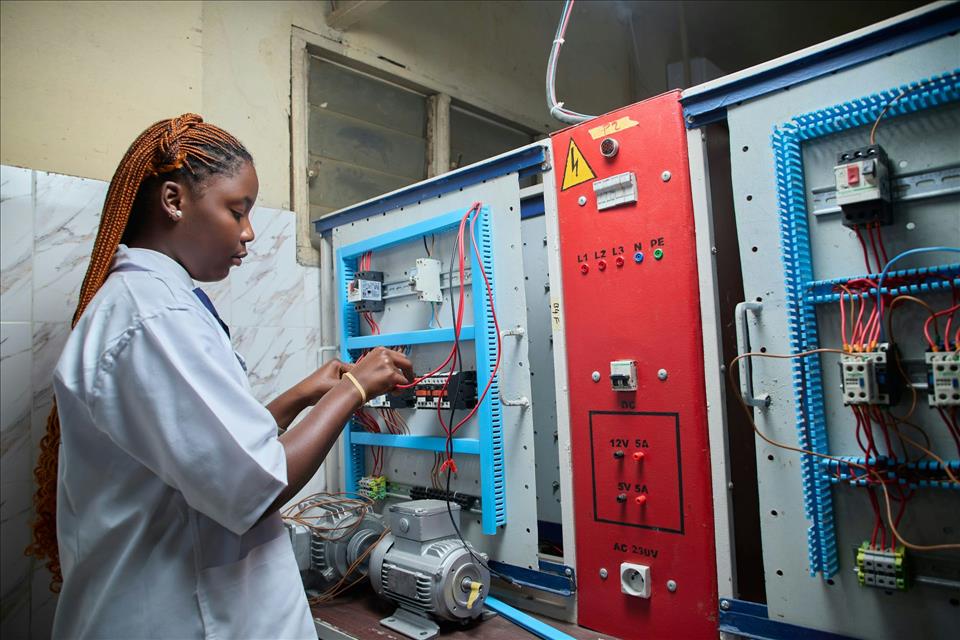
Who Gets The Clean Energy Jobs And Contracts? How Ghana And South Africa's Plans Can Do More For Women


But none of this will happen automatically. The green economy could take off and women could still be shut out of the better-paid technical jobs, finance, contracts, business ownership and decision-making positions.
Cleaner technology does not automatically make society fairer. If new technologies enter societies where women already have less access to money, skills, assets and power, those inequalities can simply carry over into the new economy.
Read more: African women are key to fighting climate change – these are the green skills they will need
We are development economists who study how Africa can use the green transition to support social and economic development. In our new working paper, we looked at what needs to change in Ghana and South Africa so that instead of just receiving clean technologies like solar panels or electric stoves, women can have a real say in the policies, investments and business decisions of green industries.
We combined three types of evidence. We reviewed research on how energy affects women's access to jobs and business opportunities. We examined how 14 major green-energy policies, six in Ghana and eight in South Africa, address gender inequality. These ranged from South Africa's 1998 White Paper on Energy Policy to Ghana's 2023 Integrated Power Sector Master Plan. Finally, we interviewed nine government officials, policy advisers, researchers and civil society specialists working on industry, energy and gender in both countries.
Read more: Green energy doesn't benefit everyone: ubuntu ideas can help include more people
Our research found that in Ghana and South Africa, some policies address inequality between women and men; others barely mention it. Both countries lack reliable data, funding and staff with the skills to turn promises into action.
In South Africa, departments often work separately and treat gender inequality as someone else's problem. Ghana has a national gender policy and dedicated ministry teams, but these often lack the staff and expertise to do the work.
For this reason, we developed the Gender-Transformative Industrial Policy framework. This is a practical way of designing green industrial policy so that it tackles the barriers, hidden biases and wider pressures that stop women from fully taking part in – and gaining from – the green economy.
Women get cleaner energy but miss out on well paid jobsOur research found that in Ghana and South Africa, women are often concentrated in lower-paid and non-technical jobs. Men occupy most engineering, technical and leadership positions. This shows why skills matter: many of the best-paid green jobs require technical, engineering or digital skills, yet women remain underrepresented in these fields.
Our review also found that even improved electricity access can reproduce inequality. Men may use more electricity for productive commercial activities. Women continue to be most responsible for providing unpaid care and household work even if they get an electric stove and no longer need to cook on a fire. Giving a household electricity or a clean stove is therefore only part of the story. Who controls money, assets and decisions also matters.
Read more: Women are seen as 'saviours' or 'victims' in climate change debates: why this is a problem
Our review found that some policies in both countries recognise the time and effort women spend collecting fuel and cooking, their roles as workers and business owners, and the support they need. Ghana's Renewable Energy Master Plan, for example, calls for better data on women's participation, equal job opportunities and finance for women-owned businesses.
Other policies barely mention women. Even those that do often fail to turn promises into action.
The people we interviewed explained why. Women's needs are often treated as an afterthought when governments plan energy projects, training, business funding and contracts.
How governments can offer more to womenWe propose a Gender-Transformative Industrial Policy Framework. It's based on the Triple B Framework developed by Gillian Marcelle to attract more investment, put money to better use and fund sustainable development.
Our framework is built around four issues: bottlenecks, blind spots, external influences and blended policymaking.
Bottlenecks are the practical barriers that hold women back. These could be limited access to finance, training, assets, contracts, transport and affordable childcare.
Blind spots are the hidden assumptions that make policies seem neutral while still excluding women. For example, training programmes that women cannot easily attend because of their location, timing or entry requirements.
Read more: Climate change and inequality are connected – policies need to reflect this
External influences recognise that donors, investors, development banks and civil society can attach conditions to funding and programmes that put women first.
Blended policymaking means energy policy cannot work alone. Progress depends on education, finance, labour, procurement, infrastructure and social policy working together.
Our framework therefore asks four simple questions:
- what is blocking women?
what is being overlooked?
who is shaping the rules?are policies working together?
These questions help turn the green transition into real jobs, businesses, ownership and economic power for women.
What needs to happen nextGovernments can use our framework to check whether green energy policies will expand women's economic opportunities or not.
Before approving a programme, governments should ask what could keep women out, whether its rules favour men, how funders affect who benefits, and what else needs to change so women can take part.
Read more: Solar power in rural Zimbabwe hasn't reduced women's unpaid work: can policy do better?
Women workers, entrepreneurs, engineers, community organisations and business groups should help design green technology programmes and set priorities.
Energy and industry ministries need clear responsibility and targets for women's employment, business ownership and contracts, backed by budgets and better data. This means government departments must work together on:
- education and training that expands women's technical and digital skills.
green finance and public procurement programmes that help women-owned firms compete for investment and contracts.
labour and social policies to make workplaces safe and childcare affordable, and wipe out inequality in unpaid care.There are many green technology opportunities for women in solar and wind jobs, and businesses in mini-grids, solar-home systems, clean-cooking services and battery-based solutions. These offer work in installation, maintenance, sales, finance and customer service.
Meaningful change means women becoming technicians, engineers, entrepreneurs, business owners and decision-makers, beyond mainly using green technologies.


Legal Disclaimer:
MENAFN provides the
information “as is” without warranty of any kind. We do not accept
any responsibility or liability for the accuracy, content, images,
videos, licenses, completeness, legality, or reliability of the information
contained in this article. If you have any complaints or copyright
issues related to this article, kindly contact the provider above.


Comments
No comment