


The Power Of Poo: Why Conservationists Love Animal Scat


As a wildlife researcher, I'm used to early alarms and long days out in the field. But one morning, before my team headed out to trap and monitor Tasmanian devils, I woke up to find my boots destroyed and stripped of their laces.
It didn't take us long to find the culprit. In a trap not far from our campsite sat a cheeky older devil – and her scat that had several inches of shoelace curled up in it.
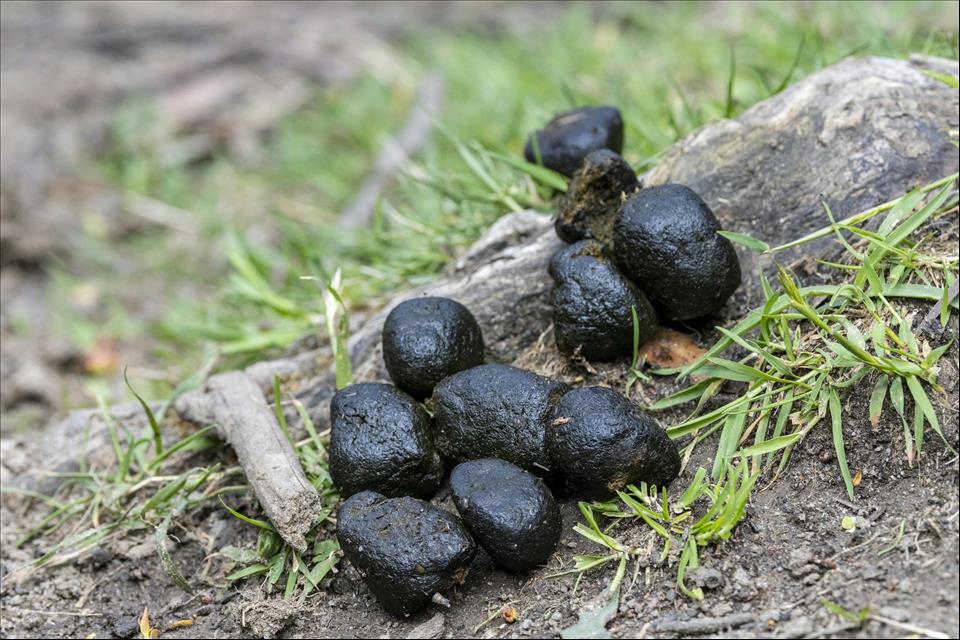
Scat is the scientific term for wild animal poo. Scat comes in all shapes and sizes, from the cube-like droppings of wombats to the tiny round pellets that rabbits leave behind.
Studying scat may help identify a shoelace thief, but it is also a vital part of species conservation. Let's unpack why.
Searching for scatWhile conducting research into the diet of Tasmanian devils, we have spent countless hours searching for scat, in order to pull it apart and study its contents.
Traditionally, researchers find scat by conducting systematic grid searches. This involves setting up transects, a type of narrow path, that stretch across a study area and allow scientists to pick up any scat they see.
More recently, researchers have enlisted the help of scat detection dogs. With their millions of olfactory receptors – the reason for dogs' superior sense of smell – these dogs are trained to sniff out scat. In one study, these dogs found about 53% more koala scat than their human counterparts.
Why scat mattersBut why are researchers searching for scat in the first place?
Scat is a waste product that most people would steer clear of. But for scientists, scat is a rich reservoir of information, particularly about our most vulnerable animals.
Population size
Threatened species exist in low numbers and can be quite elusive. This makes them difficult to find, let alone monitor.
However, studying scat allows scientists to not only determine if a species lives in a certain area, but estimate how many of them are present.
Gut health
Scat also gives us clues about what animals are eating and how healthy their gut microbiome is.
The gut microbiome is the collection of bacteria and viruses living inside an animal's digestive system that supports digestion and immunity. An animal's gut microbiome can change depending on where they live. For example, captive Tasmanian devils have significantly fewer bacteria in their scat than wild devils. But when released, these captive animals are able to gain new bacteria quickly and adjust to living in a wild environment.
An animal's gut microbiome is largely shaped by what it eats. In the case of Tasmanian devils, that includes just about everything. From shoelaces and wetsuit zippers to frogs, fish and even sheep, devil scats are practically their own ecosystem. By tracking what devils eat, scientists can meet the nutritional needs of captive animals. They can also identify which species devils most commonly eat, including wallabies and birds, and take measures to protect these prey species, such as setting up exclusion fences.
Disease risk
Scientists most commonly monitor the spread of disease by trapping individual animals and taking blood or swab samples, similar to COVID tests for humans. But this type of testing can be uncomfortable for animals.
Studying scat is an easy way to detect infectious diseases. Scat collection is an alternative, non-invasive way of detecting any harmful bacteria, viruses and parasites. That's because, like humans, animals' bodies shed infectious material in multiple ways, including by producing scat. For instance, researchers can identify koalas with chlamydia just by examining their scat. The results are just as accurate as invasive swab samples.
Genetic health
As scat moves through an animal's body, it collects cells that line its gut. Researchers can extract DNA from these cells to see how diverse that animal's genes are. This variation is known as genetic diversity and is why no two animals – or humans – look and behave exactly the same.
In general, the more genetic diversity an animal or species has, the better. That's because genetic variation allows animals to adapt to threats, such as disease and climate change, and ultimately survive.
Using scat DNA, researchers have successfully assessed the genetic diversity of the greater bilby, studied the breeding and movement patterns of ghost bats across remote northern Australia and identified that snow leopards do not travel across breeding sites in the Tibetan plateau.
The power of pooScat is a powerful, and perhaps unlikely, conservation tool. There is no other substance that can tell you so much about an animal you may never actually see.
However, studying scat does have limitations. When exposed to the elements, the DNA in scat can quickly degrade, making it harder to extract reliable data from it. Researchers are investigating ways to keep scat fresh out in the field. However, more work is needed before scientists can rely on scat collection alone, instead of blood and tissue samples.
Studying scat may not appeal to everyone. But for researchers like us, it is a fascinating and uniquely hands-on way of protecting our precious wildlife.


Legal Disclaimer:
MENAFN provides the
information “as is” without warranty of any kind. We do not accept
any responsibility or liability for the accuracy, content, images,
videos, licenses, completeness, legality, or reliability of the information
contained in this article. If you have any complaints or copyright
issues related to this article, kindly contact the provider above.


Comments
No comment