


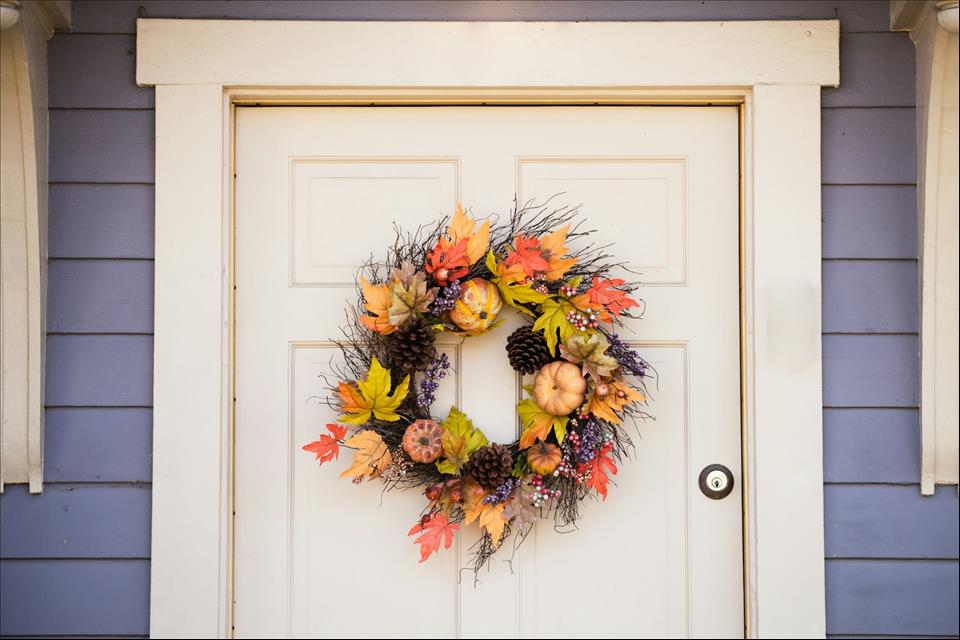
Autumn Wreaths And 'Doorscaping': Why We Need More Life In Our Front Gardens


Now red and gold autumn wreaths and Halloween wreaths are popping up everywhere. These seasonal displays are part of a wider social media fashion for “doorscaping”.
It is easy to see the appeal. A wreath introduces colour, foliage and a little seasonal personality without much effort. But this enthusiasm for decorating the front door raises an interesting possibility: could it encourage people to pay more attention to the garden immediately below?
Choosing a wreath and choosing plants for a front garden can both be ways of making the entrance to a home more attractive. A study of 1,000 people in England found that creating something beautiful was one motivation for front gardening. People motivated by appearance also tended to have greener front gardens.
That does not mean wreath enthusiasts will necessarily become gardeners. But the same interest in seasonal colour and decoration could encourage some to try planting around their front door.
And British front gardens could benefit from more planting.
The Royal Horticultural Society's 2025 mapping estimates that 55% of front-garden space in Britain is paved, compared with 36% of back-garden space. Earlier RHS research found that the proportion of completely paved front gardens tripled between 2005 and 2015, although subsequent surveys suggested some recovery in planting.
Parking is one reason. An Ipsos survey found that, among people with largely paved front gardens or driveways, 28% said they needed the space for cars, while 45% thought it was too small for plants. Front gardens also have to accommodate access, bins and the everyday demands of domestic life.
But the cumulative effect of paving matters. One driveway can seem negligible. A street of them is a landscape.
This is where the appeal of seasonal decoration becomes useful. The seasonal colours and foliage that make a wreath attractive could also be found in plants growing around the front door. Someone who enjoys decorating their entrance might also be tempted to extend that interest into the garden.
A reused container, a few bulbs or a hardy perennial can be an inexpensive starting point. The RHS recommends containers for completely paved spaces, as well as climbers for walls and plants for otherwise unused corners.
Living plants do require some care. Pots need watering, and not everyone has the time, confidence or physical ability to maintain a garden. But starting with a few manageable plants offers a way to try growing something without committing to a complete redesign.
There may also be opportunities to go further. A strip beside a driveway or an unused corner could provide space for plants. Where practical, a few paving slabs could also be lifted to make room for planting. Parking and greenery do not have to be mutually exclusive.
These changes offer more than decoration. Flowers can provide nectar for insects, while shrubs and hedges offer shelter for wildlife. Larger plants, particularly trees and climbers, can provide shade and help keep buildings cooler in summer. Unlike impermeable paving, exposed soil and properly designed permeable surfaces can also help rainwater soak into the ground.
A study of more than 900 sites in front and back gardens and streets across England and Wales assessed combinations of grass, hedges, trees, shrubs and container plants. It found that mixtures of different plants generally performed better across several environmental measures, such as cooling or flood control, than just one type.
A pot of flowers cannot provide all these benefits, but it can still support insects and introduce planting where paving and parking have left little growing space.
Those decisions matter for new housing too. The 2026 Building for a Healthy Life design toolkit, a government guide to the design of housing developments, encourages space for planting in the front of houses.
But having space for plants is only part of the picture. People also need a reason to grow something. And this brings us back to the wreath. Its appeal lies in how easily people can add colour and character to the front of their homes.
If even some of that enthusiasm extended from the door to a pot, a border or a climbing plant, our streets could become more attractive and better for wildlife. If that interest grew to include more trees, shrubs and planted ground, it could also help our neighbourhoods cope better with heat and heavy rain.
What starts as a little seasonal decoration might become a lasting interest in growing plants.


Legal Disclaimer:
MENAFN provides the
information “as is” without warranty of any kind. We do not accept
any responsibility or liability for the accuracy, content, images,
videos, licenses, completeness, legality, or reliability of the information
contained in this article. If you have any complaints or copyright
issues related to this article, kindly contact the provider above.


Comments
No comment