


Bambara Groundnut: New Maps Show Where Southern African Farmers Can Grow This Drought-Tolerant Crop


If farmers grew a wider variety of crops, this could help make agriculture more resilient to climate shocks. It would also contribute to more diverse diets.
One way of achieving this is to bring more indigenous crops into mainstream agriculture. These crops either originated in Africa or were introduced and have since become naturalised or part of traditional farming systems. Examples include amaranth, bambara groundnut, cowpea, sorghum, sweet potato and taro. These are known as underutilised crops. They cope quite well with drought and other climate stresses, and provide important nutrients to humans, such as protein, fibre and minerals such as iron, zinc and calcium.
Read more: Why aren't South Africans growing more indigenous crops? How farmers can be nudged to change their ways
These crops are grown in South Africa, but mainly by smallholder farmers. They have yet to be widely adopted by commercial agriculture. One of them is the bambara groundnut.
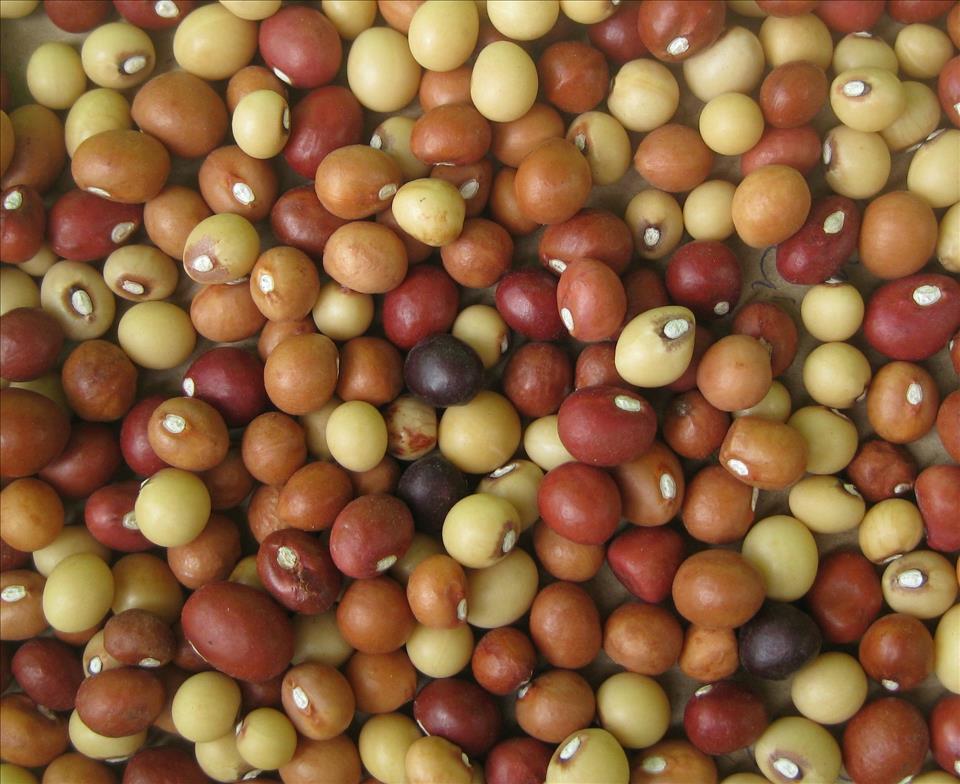
This is a legume indigenous to Africa, from the same plant family as beans and peas. It is not a true nut although its seeds develop in pods underground, much like peanuts. It can be boiled until tender, roasted as a snack or ground into flour for soups, porridges and steamed dishes. Bambara groundnut was widely cultivated in Africa during the 1800s and early 1900s.
We are indigenous crop specialists who, together with Simon Lake, an MSc student in hydrology, tested whether computer simulations of crop growth could tell us exactly where in Eswatini and South Africa bambara groundnut would grow best. It needs enough rain and enough time to mature before frost ends the growing season.
We used computer simulations of bambara groundnut growth over 49 growing seasons – the periods from planting to harvest – to get this information. We were able to determine exactly which month was best to plant bambara groundnut and which land was most suitable to plant it on.
Read more: 60% of Africa's food is based on wheat, rice and maize – the continent's crop treasure trove is being neglected
Our study is the first to use these methods to produce a more accurate map of suitable growing areas.
This knowledge will be especially important as southern Africa is likely to face increased risks of drought in 2026 because of the super El Niño.
Wider cultivation of bambara groundnut in South Africa urgently requires government and agricultural extension services to support farmers, and the private sector to develop reliable markets and value chains.
A crop does not experience an 'average' climateFarmers typically rely on crop suitability maps to show which crops can successfully be grown on their land under rainfed conditions.
But usually, these maps use long-term averages of seasonal rainfall and temperatures to see if a crop can be grown at a particular location. This overlooks an important reality: crop growth is affected by daily weather, not long-term climate averages.
Read more: A Super El Niño is coming: 5 hard-won lessons the world can learn from Africa
Our study used AquaCrop, a crop-growth model developed by the United Nations' Food and Agriculture Organisation, to account for daily changes in weather across the whole six-month growing season for bambara groundnut.
This model had already been set up and tested to see how well bambara would grow in South Africa. This provided a basis for using it to explore how the crop might perform in other regions.
Read more: Africa's smallholder farmers are using bright ideas to adapt to climate change: G20 countries should fund their efforts
We then simulated bambara groundnut production across 5,838 regions covering South Africa and Eswatini, using daily weather data representing up to 50 consecutive growing seasons. This allowed us to ask not only where the crop could potentially grow, but also how its performance could vary from one season to another. We also tested four different planting months.
What we foundThis helped us find out that bambara groundnut can be planted early at some locations, where rain falls soon after the growing season starts, but not in other places where rain comes later.
Our model simulations showed that October was generally the most favourable planting month for rainfed bambara groundnut. Later planting generally meant fewer crops survived because of the increasing risk of frost towards the end of the growing season.
The importance of frost was striking. When frost risk was incorporated into the assessment, the regions considered suitable for bambara groundnut planted in October were reduced by 28%.
Our study also found that some land was unsuitable because it is being used for mining, urban development, commercial forestry, sugarcane and fruit trees. This reduced the land available for bambara groundnut by another 20%.
Read more: Senegal's remote Bassari people talk about climate change, and how their local knowledge is key to coping strategies
By accounting for frost risk, the maps can help farmers avoid planting bambara groundnut in areas where conditions are unsuitable and the crop is more likely to fail. Accounting for existing land use creates more accurate land suitability maps.
This illustrates why a simple map showing“bambara groundnut can grow here” can be misleading. Where a crop can grow and where it can reliably produce a useful harvest are not necessarily the same thing.
What needs to happen nextIf South Africa is to expand the production of indigenous crops, farmers and agricultural planners need information that can translate the potential of these crops into practical production decisions.
Farmers need to have information about where the 13 indigenous, nutritious crops that can tolerate drought and heat stress can be planted and when.
Access to seed, markets, labour, equipment, agricultural extension services, processing facilities and consumer demand are all important.
Going forward, extension officers need to have land suitability maps for indigenous crops available so that they can give advice to smallholder farmers.
Read more: Why the African food basket should be full of beans and other pulses
The South African government also needs to encourage the production and consumption of indigenous crops to help transform South Africa's westernised food system. In July 2025, indigenous crops were formally declared agricultural products under the Marketing of Agricultural Products Act.
This means that small-scale farmers and rural communities who grow these crops could see significant growth in market opportunities and income if the policy leads to greater commercialisation of indigenous crops.
Supporting the growth of indigenous crops also helps create a food system that includes a broader range of nutrient-rich crops that are better adapted to harsh growing conditions than many conventional staple crops.


Legal Disclaimer:
MENAFN provides the
information “as is” without warranty of any kind. We do not accept
any responsibility or liability for the accuracy, content, images,
videos, licenses, completeness, legality, or reliability of the information
contained in this article. If you have any complaints or copyright
issues related to this article, kindly contact the provider above.


Comments
No comment