

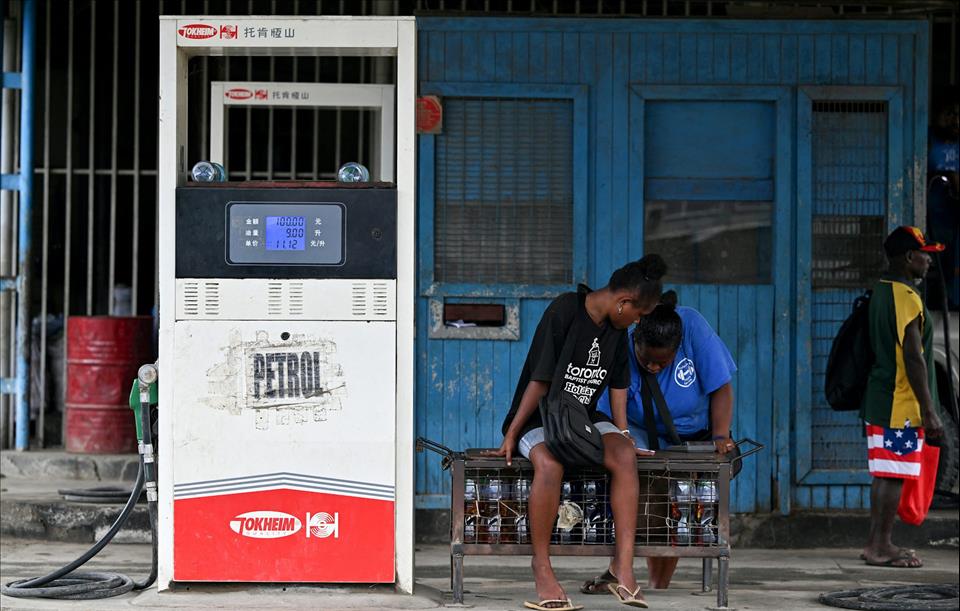
Pacific People Pay Exorbitant Prices For Energy. Rich Countries Should Back Their Renewable Transition


This week, delegates from the pre-COP31 Pacific climate summit, including Australian Prime Minister Anthony Albanese, visited Fiji and Tuvalu to witness the effects of sea level rise first-hand.
Australia announced it would spend a modest A$13 million to help Pacific nations electrify and transition to renewables, including $7.3 million for energy professionals to lead the region's transition, and money for solar-powered schools in Fiji and renewable projects in PNG. While these initiatives are welcome, this is not new money; these projects are funded out of the government's Pacific program, launched at COP29 in 2024.
The Australian government has faced sustained criticism for its fossil fuel exports, and recent approval of a large coal mine expansion. Pacific leaders told this week's summit the world must continue its efforts to limit global heating to 1.5°C, and provide“faster, fairer” access to climate finance for developing countries.
Pacific nations have contributed very little to global emissions, yet face disproportionate climate risks. Improving the Pacific region's energy mix would provide a measure of climate justice. But we must go further – and faster – for meaningful change.
Electrify fastElectricity in the Pacific is currently among the least reliable and most expensive in the world. Improving energy independence, primarily by switching to renewable energy sources, would lead to a host of positive changes.
Most Pacific Island countries have committed to achieving 100% renewable energy by 2030, recognising the central role fossil fuels play in driving climate change. A significant number of these countries have signed or endorsed calls for a fossil fuel non-proliferation treaty. In April this year, several countries also launched the Tassiriki Call for a Fossil Fuel Free Pacific, which outlines immediate steps to transition to 100% renewable Pacific energy economies.
Around 80% of the Pacific's energy supply comes from imported oil products. For some, especially the more geographically remote islands, this figure is much higher, reaching 90–100% of total energy.
The price tag is enormous: Pacific nations spend between 10 and 25% of their GDP on fossil fuel imports, and total costs for Pacific nations sit at more than US$6 billion (A$8.6 billion) a year.
The average Pacific island citizen already pays some of the world's highest electricity prices, almost three times the global average. As fuel prices escalate, transitioning to renewable energy is both an environmental and economic imperative. Most importantly, the transition is a tool to secure energy autonomy.
Tech alone is not enoughShifting to renewables is an impossible task for Pacific countries to achieve alone. Outdated power infrastructure and remote geographies with low populations translate into prohibitive costs.
Developed countries like Australia should support Pacific nations to replace diesel-powered electricity with renewable technology, including decentralised solar energy systems with battery storage.
This would provide immediate access to energy, reduce supply vulnerabilities and reduce costs. Support to expand energy access for all is also desperately needed, and new access must use appropriate renewable energy options, leapfrogging outdated fossil-fuel generation.
This would also enable long-term development, providing benefits such as refrigeration for food and medicine, clean water systems, communications, education and, significantly, economic opportunities.
But delivering technology alone is insufficient. Across the Pacific there are many solar panels delivered with good intentions but not accompanied by the training or financial support to enable communities to maintain and sustain them. Australia knows this: an evaluation of a $9.58 million Australian solar installation project in Tonga found a lack of budget for training and maintenance.
How to transitionAustralia can help by designing renewable energy packages for the Pacific that include three priorities:
Ensure local ownership of the technology. Communities everywhere are more likely to support and protect initiatives they helped create. Australia's international development guidelines include a commitment to locally led development. Installing solar is an opportunity to see this brought to life. Train and support local technicians to maintain, repair and care for renewable energy systems. Not only does this increase local ownership of the project, it provides those trained with transferable skills.Provide sufficient funding for the purchase of replacement parts over the life of the system.
The commitments Australia made this week for renewable energy in the Pacific are welcome. But if Australia is serious about playing its part in securing a sustainable energy transition across the Pacific, it needs to provide support that extends beyond the delivery of technology.
Empowering communities to operate and own their renewable technology is a crucial step.


Legal Disclaimer:
MENAFN provides the
information “as is” without warranty of any kind. We do not accept any
responsibility or liability for the accuracy, content, images, videos,
licenses, completeness, legality, or reliability of the information
contained in this article. If you have any complaints or copyright issues
related to this article, kindly contact the provider above.
Comments
No comment