

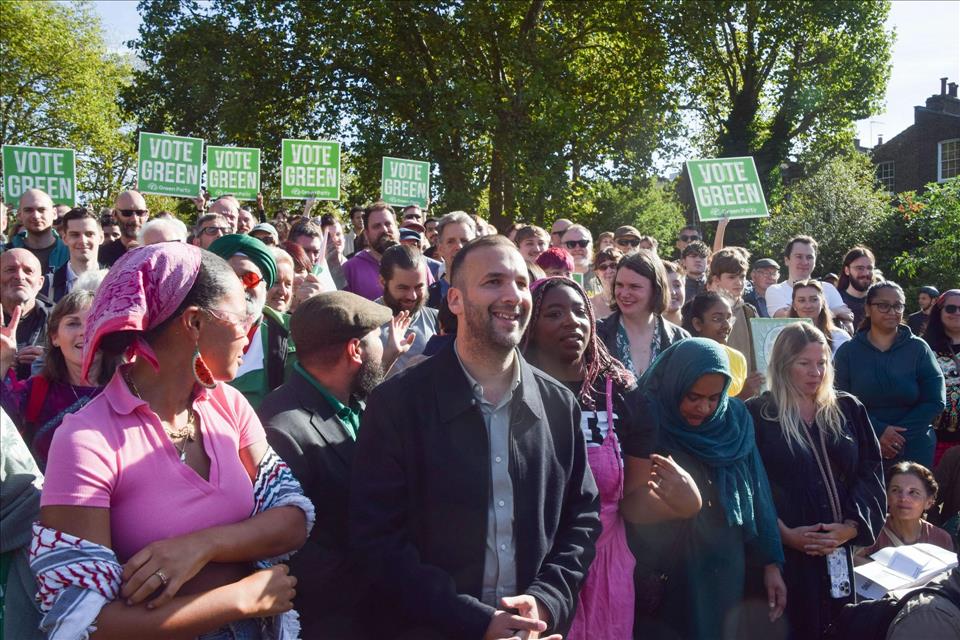
Zack Polanski's Urdu Video: Multilingual Campaigning Is Good For Politics


During his campaign, Polanski addressed voters in English and in Urdu in a social media video. Last year in the US, Zohran Mamdani was elected as the mayor of New York after his campaign showcased his capacity to connect with multiple audiences in their own language.
One of the keys to Mamdani's victory was his skill in reaching out to multilingual communities and voters. Then, as he does now, he targeted voters in languages other than English – including Spanish, Mandarin, Yiddish, Arabic, Hindi and Urdu.
And in the UK, Polanski's multilingual approach has been used by Greens before. Hannah Spencer, who won the Gorton and Denton byelection in February, appeared in a campaign video where she too spoke some basic Urdu.
This push towards multilingualism is clearly an appeal to specific demographics within a wider electoral strategy. It may even have the effect of engaging more voters in the debate and increasing participation – something most politicians would probably argue is a good thing.
But the push towards multilingualism can also attract pushback. London mayor Sadiq Khan addressed Polanski in Urdu during a recent session at the London Assembly, apparently poking fun at his byelection video.
And other politicians – Conservative Katie Lam and Labour's business secretary Jonathan Reynolds – hit out at Polanski's video, arguing that campaigning should be done in English only.
The use of“foreign languages” in UK elections has also sparked more serious responses. Reform UK published a policy called the Election Integrity Bill, in which the party promised to ban“non-native” languages in election materials.
And in the Commons in September, Lam said that campaign materials in other languages were designed to “drum up support” in specific religious communities. Lam went on to say multilingual campaigning could contribute to“group-based grievance politics” and prevents voters from scrutinising candidates' claims.
Language and valuesBut the conflation of linguistic practices, specific communities and particular forms of voting is about much more than language itself.
Language ideology provides insights into the relationship between languages and values. Debates about the use of English, and more specifically other languages, are often about the values tied to the language and the groups who use it.
This may range from accents linked to social class and standing to whether a language even belongs in a country at all. Wider sociopolitical beliefs may be projected on to the users of those languages and these may come to be perceived as common-sense beliefs.
The role of language has also been conflated with other alleged practices, such as“family voting” (a form of electoral fraud where someone tries to influence how a relative votes).
Language ideologies are linked to how the nation is constructed. The shift from tolerance of multilingualism to more monolingual ideologies in the UK has mirrored a shift away from multiculturalism.
The role of language in election campaigning is significant, as it defines the terms on which the nation engages with the electoral process. As such, both language itself and speakers of“foreign languages” can be positioned as oppositional to legitimate voting practices.
At the heart of this debate is a struggle between dominant language (or“monolingualism”) versus multilingualism in shaping electioneering. The Greens' vision of plurality and inclusion can equally be positioned as divisive and exclusionary by those who are against it.
The UK has been shaped by dominant English language ideologies, policies and discourses in other ways over the last 30 years. These range from language testing for citizenship and indefinite leave to remain – a requirement since the Nationality, Immigration and Asylum Act 2002.
It was built on previous language requirements under the British Nationality Act 1981, as well as language proficiency for family visas. And there has also been a sharp decline in the study of modern languages in the UK's schools and universities.
The key now is to examine the extent to which multilingualism is a legitimate part of democratic practices in the UK. This could come to define how users of other languages are considered to be legitimate as voters.


Legal Disclaimer:
MENAFN provides the
information “as is” without warranty of any kind. We do not accept any
responsibility or liability for the accuracy, content, images, videos,
licenses, completeness, legality, or reliability of the information
contained in this article. If you have any complaints or copyright issues
related to this article, kindly contact the provider above.
Comments
No comment