

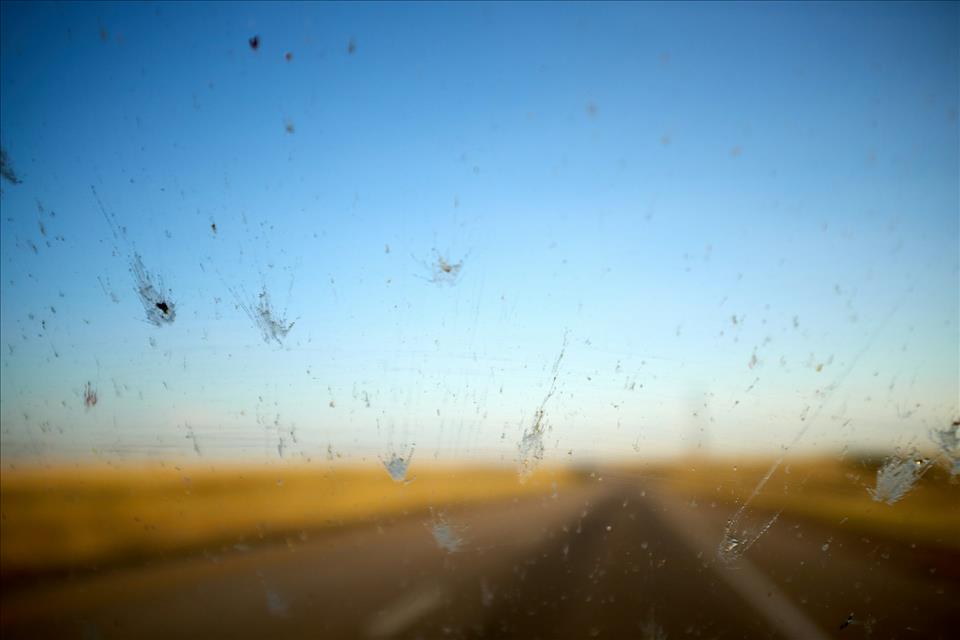
Why Should We Care If There Aren't Any Squished Insects On Our Windscreens?


This is because insects are declining globally at an alarming rate.
One extensive citizen science survey looked at insects numbers over several years by looking at insect deaths on car number plates. They asked people to clean their number plates before a journey and then photograph it afterwards, and count the number of bugs killed.
The survey was conducted from 2021 to 2025. It found the number of flying insects sampled on vehicle number plates across the UK had fallen by 60% in five years. Analysis of records from more than 25,000 journeys showed an annual average decline in bug splats of 19% since the survey began in 2021.
Some people may look at these statistics and wonder why they should care. But the decline of insect life is a significant cause for concern. It's also not just in the UK where we are seeing declines, but also across Europe and in our tropical rainforests, including some of the most biodiverse spots on the planet. Agricultural land is seeing some of the worst effects.
There's an estimated 10 quintillion (10,000,000,000,000,000,000) insects alive on this planet, over a million described species, and estimates of millions more yet to be discovered. But we are losing insects far faster than other animals, and at an unprecedented rate.
A review in 2019 suggested 40% of insect species are thought to be threatened with extinction. Ants, bees and wasps (Hymenoptera) the butterflies and moths (Lepidoptera) and dung beetles are thought to be the most affected. More recent reviews show similar declining trends on a global scale.
Why are insects disappearing?The reasons for losing our insects range from habitat loss, disease pollution and pesticides. Agriculture is a major concern as land is turned over to farming as it may remove existing habitats – essentially removing some insects homes – but agrichemicals such as pesticides, designed to kill agricultural pest outbreaks, are also negatively affecting those non target insects that we want.
Climate change is as a major concern, and one that potentially exacerbates other factors. When it's hotter water availability becomes harder, plants become more stressed and food availability becomes tricky for insects. In the same way that humans struggle in the heat, this is the same case for other animals. Insects can try to cope with extremes in temperature by using water to cool, fanning their wings or simply going somewhere where it is less warm.
The summer of 2026 saw record temperatures and is expected to be the hottest year on record for the UK. Coupled with intense droughts, wildfires and a changing landscape, this is a tricky world for insects to navigate.
This changing climate is affecting whole communities of insects, where they live and what they do.
With places like the UK seeing a shift from its typical cooler climate to a more Mediterranean one, we are seeing species move from southern Europe to northern Europe. We also see insects changing their seasonal life-cycles, with effects on other species that are dependent upon them. They are even carrying diseases to new populations of humans or animals as climates become more amenable to certain species that may carry diseases or other pathogens.
This loss of biodiversity is often referred to as the sixth mass extinction, or the sixth time in history that we know of that we have lost such a vast number of species in rapid succession.
Why should we care?Insects have evolved in large numbers because of the extent of what they do in the natural world.
They keep pests under control, they pollinate our plants by transporting pollen from one flower to another, recycle our waste by feeding on and shredding material and generally keep our planet in a good state.
American naturalist E.O Wilson said:“If insects were to vanish, the environment would collapse into chaos.”
However, insect populations can recover. Appreciating how fundamental they are is the first step in conserving and restoring what we are losing.


Legal Disclaimer:
MENAFN provides the
information “as is” without warranty of any kind. We do not accept any
responsibility or liability for the accuracy, content, images, videos,
licenses, completeness, legality, or reliability of the information
contained in this article. If you have any complaints or copyright issues
related to this article, kindly contact the provider above.
Comments
No comment