





403
Sorry!!
Error! We're sorry, but the page you were looking for doesn't exist.
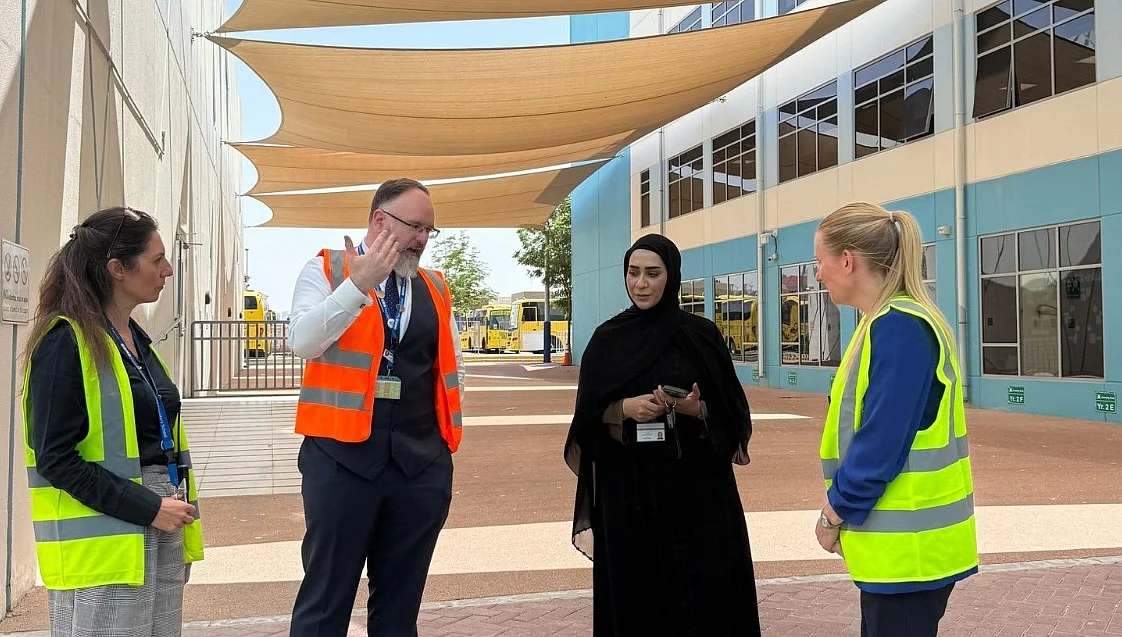
UAE Introduces New 20252026 Inspection Framework For Public Schools
(MENAFN- Khaleej Times) It is built on a broad set of criteria covering administrative practices, academic delivery, student wellbeing, infrastructure, and health and safety standards
- By: Azza Al Ali
The Ministry of Education has introduced a comprehensive inspection framework for public schools for the 2025–2026 academic year, setting out detailed regulations aimed at improving educational quality and ensuring full compliance with national laws, policies, and safety requirements across all aspects of school operations.
According to the official regulatory document published on the Ministry's website, the framework is designed to strengthen oversight of government schools through structured general inspection visits.
Recommended For YouIt is built on a broad set of criteria covering administrative practices, academic delivery, student wellbeing, infrastructure, and health and safety standards.
Stay up to date with the latest news. Follow KT on WhatsApp Channels.
The system is organised into four main pillars: human resources and professional compliance; educational and academic services; school buildings and facilities; and occupational health, safety, and environmental standards.
The first pillar, human resources and professional compliance, emphasises reinforcing national identity within the school environment. Schools are required to ensure that the UAE flag is raised in accordance with official guidelines, that the national anthem is performed during morning assemblies, and that official portraits of the country's leadership are displayed in accordance with approved protocols.
The framework also highlights the importance of promoting Arabic as a core element of school life and of embedding Emirati values and cultural identity across daily educational practice.
In addition, the inspection criteria extend to professional conduct and school governance. Staff are required to adhere to the Ministry's professional and ethical code of conduct, while schools must ensure compliance with policies related to appropriate appearance and behavior in line with local customs and traditions.
The framework also stresses safeguarding students during school hours by ensuring they are never left unsupervised.
This pillar also includes strict requirements for human resources management, such as maintaining accurate staff records, ensuring that school leaders and teachers hold the necessary professional licences issued by the Ministry, and updating employee data in approved electronic systems.
Schools are also required to monitor attendance and ensure adequate staffing levels across teaching, administrative, security, and cleaning roles in line with approved organisational structures.
The second pillar, educational and academic services, focuses on delivering the curriculum and shaping the overall learning experience. Schools are required to fully comply with the approved academic calendar and curriculum plans for public education and to ensure that textbooks and learning materials are available to all students and teachers.
The framework also requires schools to maintain continuity of learning during exceptional circumstances through appropriate planning and preparedness.
A key component of this pillar is student protection and wellbeing. Schools must implement the national child protection policy and establish clear internal procedures for responding to cases of abuse, neglect, or bullying. Staff must be trained on child protection procedures, and students must be provided with a safe and supportive learning environment.
Schools are also required to maintain confidential records related to student welfare cases and ensure proper documentation of psychological and social support needs.
The framework also places significant emphasis on inclusion, particularly for students of determination and those with special educational needs. Schools are required to provide accessible learning environments, qualified staff, individualised education plans, and appropriate support services. The regulations clearly prohibit any policies or practices that could exclude students from enrolment on the basis of disability. Schools must also ensure that assessment arrangements are adapted to meet the needs of these students.
In terms of academic discipline, schools are required to implement approved student behaviour management policies and ensure that students adhere to school rules, including uniform requirements. Schools must also ensure that digital learning platforms are properly activated and used effectively, with students expected to bring necessary electronic devices when required.
The third pillar focuses on school infrastructure and facilities. Inspection criteria cover the suitability and safety of classrooms, laboratories, libraries, and other learning spaces. Schools must ensure that buildings comply with approved architectural plans and are not used for non-educational purposes without prior approval. Cleanliness, maintenance, signage, and overall facility organisation are key evaluation points, along with accessibility for students with disabilities.
The final pillar, occupational health, safety, and environmental standards, includes a wide range of safety requirements. Schools must ensure compliance with fire safety regulations, including the availability of alarms, extinguishers, emergency exits, and evacuation plans. Regular fire drills are mandatory, and schools must hold valid civil defence certifications. Health and safety standards also extend to electrical systems, the storage of hazardous materials, visitor management, and first-aid readiness.
Transport safety is another major component, with schools required to ensure that school buses meet regulatory standards, drivers and supervisors are properly licensed, and student transport is monitored daily. Additional requirements apply to laboratories, where chemical storage and handling must follow strict safety procedures.
The framework also covers school clinics, requiring licensed medical staff, proper record-keeping, and adequate medical supplies. Similarly, school canteens must comply with food safety regulations, maintain hygiene standards, and ensure proper storage and labelling of food items. Sports facilities and swimming pools are also subject to strict safety and supervision requirements.
Overall, the new inspection system reflects a comprehensive and integrated approach to school regulation in the UAE, aiming to enhance educational quality while ensuring student safety, institutional accountability, and alignment with national values and priorities across all public schools.
ALSO READ- Dubai schools say short-notice inspections will show real classroom standards School bus rules in UAE: Full list of safety regulations for parents, drivers, students Why some UAE children struggle when schools switch between in-person, online learning 75-min cap on Abu Dhabi school buses: UAE doctors say long commutes affect learning

Legal Disclaimer:
MENAFN provides the
information “as is” without warranty of any kind. We do not accept
any responsibility or liability for the accuracy, content, images,
videos, licenses, completeness, legality, or reliability of the information
contained in this article. If you have any complaints or copyright
issues related to this article, kindly contact the provider above.
Most popular stories
Market Research

More Story






Comments
No comment