





403
Sorry!!
Error! We're sorry, but the page you were looking for doesn't exist.
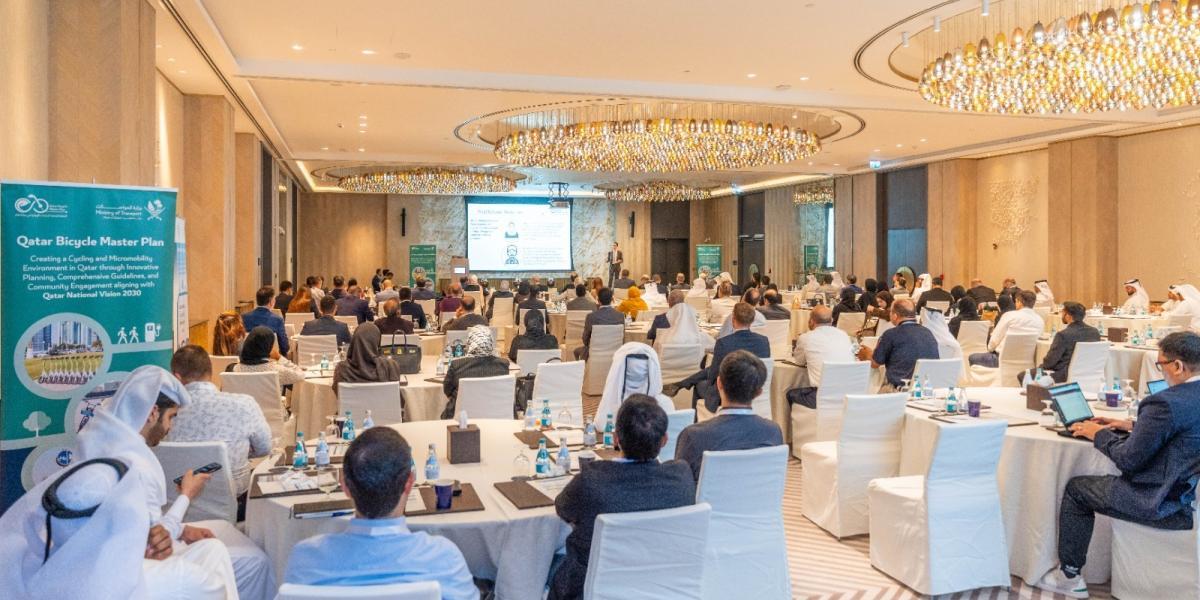
Transportation Ministry Launches Updated Qatar Bicycle Master Plan
(MENAFN- The Peninsula)
Doha, Qatar: The Ministry of Transport has announced the launch of the updated version of the Qatar Bicycle Master Plan - an integrated package of plans, policies, and regulations that will guide the development of cycling and micromobility, aiming at improving safety, enhancing facilities, and creating a sustainable, connected, and integrated transportation system to meet existing and future needs.
The updated QBMP responds to the requirements of accelerating population and urban growth and keeps pace with world developments in modern mobility modes, thereby providing safe, sustainable and efficient mobility options and improving the quality of life.
The completion of the updated version of the QBMP was the result of a collective effort by government entities, the private sector, and academia and research institutions, who comprehensively examined and assessed more than 1500 km of existing bike routes: 937 km of standalone routes and 561 km of routes connected to pedestrian tracks.
They also conducted more than 5000 interview surveys across Qatar on micromobility devices and how to encourage usability, held more than 120 technical meetings with stakeholders, and reviewed more than 60 national and international documents and best international practices.
Status quo analysis shows that 19% of the population owns bicycles or a micromobility device and they use it in less than 1% of their daily trips.
That said, the QBMP focuses on enhancing the using of bicycles in daily movement or as a device for sports or recreation, safely and sustainably, and regulating the use of other innovative micromobility devices by putting together a master plan to develop the necessary infrastructure, facilities, and routes.
The updated QBMP includes adding more than 3800 km of bike routes, constructing more than 110 km of grade-separated crossings, and establishing 7 mega amenity hubs to serve and support bike and e-scooter users.
It also includes launching 17 policies, 18 schemes, 348 supporting measures, a Qatar Bike Infrastructure Planning and Design Guide (QBIG) that provides guidelines for planning and designing safe, sustainable, and efficient bicycle and micromobility networks and facilities, and a GIS comprehensive geodatabase that will include existing inventory, future schemes and maps along with supporting layers recommended for the GIS Portal.
“The QBMP embodies the MOT's commitment to developing an integrated, safe, resilient, and sustainable transportation system that provides easy access to various vital destinations and supports the transition to more efficient and environmentally friendly modes of transportation”, said MOT's Assistant Undersecretary for Land Transport Affairs Eng. Abdullah Seif Al-Sulaiti.
He added that the QBMP is aligned with the MOT's Strategy and the objectives of the Qatar 3rd National Development Strategy (2024-2030) and supports the pillars of Qatar National Vision 2030 by contributing to reducing carbon emissions, improving quality of life and public health, supporting sustainable economic development, and enhancing the efficiency of the transport network.
The Ministry, he said,“is keen to coordinate with partners to activate QBMP's implementation mechanism by preparing an integrated phased program (short, medium, and long term), with clear project priorities and performance indicators to measure progress and impact, ensuring the effective and sustainable implementation of the plan, with continuous monitoring of performance and updating of plans in accordance with future changes.
He emphasized: "We at the Ministry of Transport believe that the success of this plan depends on partnership, concerted efforts, and cooperation between government agencies, the private sector, academic and research institutions, and our partners in various sectors, ensuring its efficient implementation and achieving its goals in establishing a culture of active mobility and enhancing the State of Qatar's position as a leading country in the field of sustainable transportation."
The plan's outputs provide a unified national reference that supports government agencies and the private sector in planning and implementing projects related to active transport and micro-mobility, ensuring higher levels of integration and efficiency in implementation.
It contributes to unifying technical and planning standards, enhancing integration between transport projects and urban planning, supporting data-driven decision-making, and achieving sustainability, safety, and urban connectivity targets.
At the same time, the plan creates an attractive investment environment and expands partnership opportunities with the private sector in developing and operating micro-mobility services and bicycle facilities and services, thereby enhancing its contribution and role as a key partner in supporting the national economy and achieving the transition towards a more sustainable and innovative economy.

Legal Disclaimer:
MENAFN provides the
information “as is” without warranty of any kind. We do not accept
any responsibility or liability for the accuracy, content, images,
videos, licenses, completeness, legality, or reliability of the information
contained in this article. If you have any complaints or copyright
issues related to this article, kindly contact the provider above.
Most popular stories
Market Research

More Story






Comments
No comment