




403
Sorry!!
Error! We're sorry, but the page you were looking for doesn't exist.
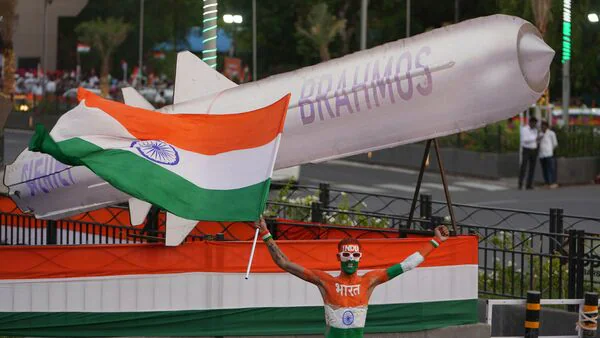
India Signs Brahmos Missile Deal With Vietnam, Nears Pact With Indonesia
(MENAFN- Live Mint) Indian Defence Secretary Rajesh Kumar Singh confirmed on Saturday that an agreement to supply BrahMos cruise missiles to Vietnam has been officially executed, while a parallel defense contract with Indonesia has reached its concluding phases.
Singh shared these updates while attending the Shangri-La Dialogue in Singapore, responding directly to an inquiry regarding prospective international clients for the advanced weapon platform.
"My understanding is that with both Indonesia and with Vietnam, the deal is in the final stages that in fact, for Vietnam, I understand that it has already been signed, probably not publicly announced, but it's already been signed," Singh said.
Also Read | Pentagon eyes new warship-killing bombs, sea mines to counter China over TaiwanThe Philippines, which secured a purchase agreement valued at approximately USD 375 million in 2022, holds the distinction of being the maiden international customer for India's BrahMos missile technology.
Separately, Indonesian authorities disclosed in March that they had finalized a preliminary framework with New Delhi to purchase the supersonic missile infrastructure.
Additionally, media speculation circulating earlier this month indicated that Hanoi was on the verge of completing a BrahMos acquisition from India. However, Singh's remarks on Saturday serve as the definitive public confirmation of the finalized transaction from government channels.
Despite the breakthrough, the exact financial valuations for both the Vietnamese and Indonesian military procurement packages remain confidential.
Addressing the broader dynamics of transferring sophisticated military hardware, Singh observed that sovereign states typically reserve high-tier weaponry and platforms for nations they consider trusted strategic allies.
He emphasized that New Delhi maintains a deep-rooted dedication to ASEAN partners, stating, "and we treat all of you as 'friendly foreign countries' with whom we can share advanced defence technologies."
"Obviously you share technology with people you trust," he said.
The Association of Southeast Asian Nations (ASEAN) encompasses 11 sovereign states-Brunei Darussalam, Cambodia, Indonesia, Laos, Malaysia, Myanmar, the Philippines, Singapore, Thailand, Timor-Leste, and Vietnam.
A number of ASEAN member nations, most notably the Philippines and Vietnam, maintain conflicting maritime boundaries with Beijing in the South China Sea-a vital global shipping channel. Consequently, India's BrahMos sales to regional actors have garnered international attention as New Delhi steadily intensifies its defense diplomacy across Southeast Asia.
Singh informed attendees at the security forum that India stands prepared to collaborate with regional and global allies to cultivate durable supply networks, reliable security alliances, protected maritime domains, and shared innovation frameworks.
"Today, resilience has become one of the defining strategic requirements of our time," Singh said.
Highlighting current macroeconomic and geopolitical friction-such as conflicts spanning Europe and the Middle East, shipping route vulnerabilities, fragile supply chains, disruptive technologies, and intensifying great-power rivalry-Singh noted that these pressures are fundamentally reshaping global defense dynamics.
For New Delhi, achieving systemic resilience goes beyond domestic self-sufficiency to embrace the cultivation of reliable alliances, decentralized production networks, research ecosystems, and protected logistical pipelines that foster regional and international balance, he explained.
The defense secretary further outlined that India has executed sweeping overhauls of its military production, research pipelines, and export frameworks over the preceding ten years. The administration has unlocked the defense market to robust private-sector engagement, incentivized aerospace startups and small firms, maximized domestic engineering, and broadened integration with international defense companies, he detailed.
Also Read | US-Iran News LIVE: Ships going dark, sailing in groups to slip through HormuzIndia is concurrently updating its domestic military capabilities while transforming into a dependable regional center for defense manufacturing and maintenance operations, Singh remarked.
He pointed out that state-run enterprises currently command roughly 72 percent of India's aggregate defense manufacturing, with private corporations filling out the remaining balance. Notably, three Indian state-owned defense operations place among the top 100 global arms manufacturers.
The domestic defense ecosystem has established high proficiency in fabricating missile arrays, tactical fighter aircraft, and heavy armored vehicles, while targeted development is currently underway to close technology gaps in land, air, and marine propulsion systems, he concluded.

Legal Disclaimer:
MENAFN provides the
information “as is” without warranty of any kind. We do not accept
any responsibility or liability for the accuracy, content, images,
videos, licenses, completeness, legality, or reliability of the information
contained in this article. If you have any complaints or copyright
issues related to this article, kindly contact the provider above.
Most popular stories
Market Research

More Story






Comments
No comment