




403
Sorry!!
Error! We're sorry, but the page you were looking for doesn't exist.
Why Are Retail Power Prices Finally Falling?
Author: Tony Wood
(MENAFN- The Conversation) Renewables and energy storage were pitched as a way to drive down power prices. But the hidden costs of the clean energy transition mean lower prices haven't fully eventuated.

That's why this week's news power prices will fall by up to 10% have been gratefully received by the government – and consumers. The falls are real, though they do not apply everywhere.
There are important caveats. The cheaper power will directly apply to customers on the default market offer, the safety net power plan overseen by the Australian Energy Regulator. Fewer than 10% of consumers are on this offer.
Despite this, the decision by the Australian Energy Regulator will be influential. Just as banks tend to follow a Reserve Bank decision on interest rates, energy retailers tend to be guided by the prices set under the default market offer.
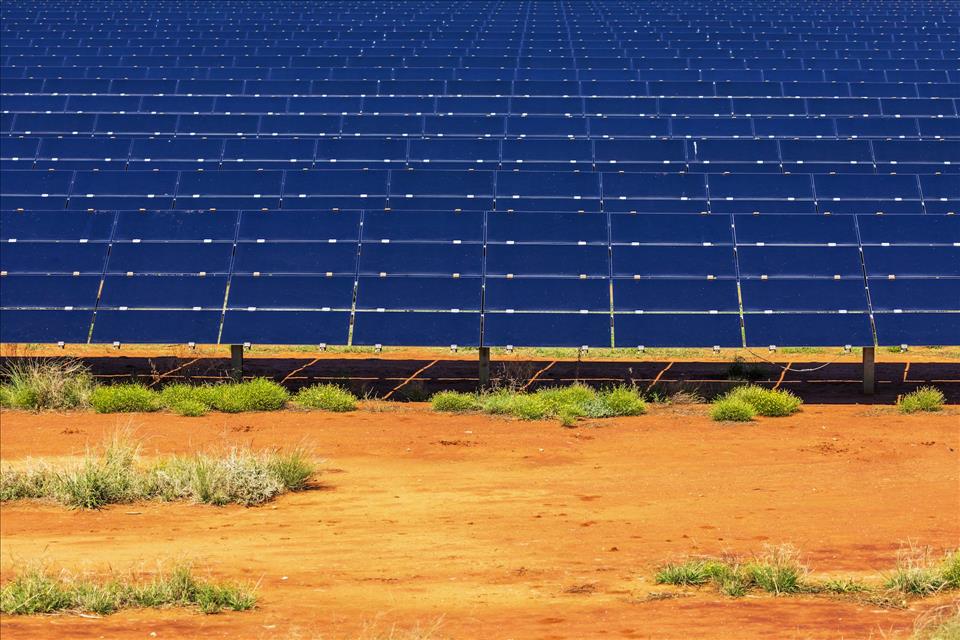
Why are prices falling? Solar, wind and batteries can provide power more cheaply than fossil fuels, and renewables have reached as high as 50% in Australia's main grid. They could have driven retail prices down further if not offset by the rising costs of new transmission lines.
What drives power prices?The power savings are uneven. In South East Queensland, retail power prices will fall by 10.7% and in New South Wales by up to 7.7%. In South Australia, some customers will have a small price rise of 1.4%. Small businesses will see larger falls – as much as 20.9% in NSW.
In Victoria, which has its own separate default offer, retail prices will fall 5%.
The average power bill for an Australian household is around A$2,000 a year. The actual cost of wholesale power accounts for 30–40% of the bill. Network costs – the cost of getting the power to the consumer – make up another 40%. The remaining amount is due to environmental and retailer costs.
In recent years, the cost of producing wholesale power has dropped. This is because more wind and solar farms have come online, while grid-scale batteries are pushing gas power out of the grid at times.
This means there's less reliance on coal and gas. The role of gas is key, as this fossil fuel has become more expensive. It tends to be used only when demand is very high. At these times, gas acts as a price-setter for the energy market and the price it sets is high. So, other things being equal, less reliance on gas means lower prices.
Network costs have mostly increased, in a range of 5–10%. The key contributor has been the cost of building new transmission lines, and damage from extreme weather has also added costs in Queensland. Inflation adds extra cost to big projects.
What's next?This dynamic is likely to continue for some time. We can expect wholesale prices to keep falling, or at least not rise. We may also see network prices rising more sharply, given community pushback against some new transmission projects and slow progress. Without new transmission lines, many renewable projects won't be viable.
In the next few years, more Australian households will have smart meters installed. In NSW, SA, the Australian Capital Territory and Queensland, rollout is meant to be complete by 2030. Western Australia and Tasmania have their own programs and Victoria's rollout was completed more than a decade ago.
Smart meters make it possible for power retailers to charge customers different rates at different times. This encourages people to use more power when it's cheap to produce, and less during peak times such as evenings.
These time-of-use tariffs will become increasingly important. For the first time, the energy regulator included both flat tariffs and time-of-use tariffs in its default market offer. Over time, and with further market reforms, we can expect to see more people take up time-of-use tariffs.
We can also expect big batteries to flex their muscle in the grid, outcompeting gas peaking plants and keeping wholesale prices lower. The influence of these batteries is beginning to show, and it is accelerating.
Household batteries, too, may play a role. The government's hugely popular household battery incentive scheme will let people with solar store power at home, and use it during peak times instead of relying on expensive grid power.
In the messy middleWe are in the middle of reshaping the electricity grid.
The 20th-century model was built around peak demand – the handful of times a year when huge demand required standby plants to fire up and produce power at high cost. That's now changing. Gas will go from providing perhaps 20% of Australia's electricity to as low as 5%. It will be needed as a backup during low wind or sun days for some time.
But the big unknown is new transmission – the missing piece of the clean energy transition. Until this is done, we will keep seeing lower wholesale costs offset by higher network costs. But when it is complete, network costs, too, should fall.
Institution:Grattan Institute

Legal Disclaimer:
MENAFN provides the
information “as is” without warranty of any kind. We do not accept
any responsibility or liability for the accuracy, content, images,
videos, licenses, completeness, legality, or reliability of the information
contained in this article. If you have any complaints or copyright
issues related to this article, kindly contact the provider above.
Most popular stories
Market Research

More Story






Comments
No comment