




403
Sorry!!
Error! We're sorry, but the page you were looking for doesn't exist.
Canned Pineapple Market Size, Growth & Demand Analysis By 2033
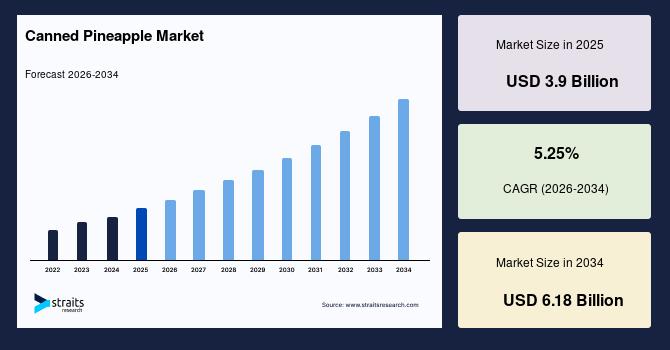
| Market Metric | Details & Data (2025-2034) |
|---|---|
| 2025 Market Valuation | USD 3.9 Billion |
| Estimated 2026 Value | USD 4.1 Billion |
| Projected 2034 Value | USD 6.18 Billion |
| CAGR (2026-2034) | 5.25% |
| Study Period | 2022-2034 |
| Dominant Region | North America |
| Fastest Growing Region | Asia Pacific |
| Key Market Players | Dole, Kraft Heinz, Pineapple India, V&K Pineapple Canning, Fresh Food Co., Ltd |
Download Free Sample Report to Get Detailed Insights.
Canned Pineapple Market Growth Factors Innovation in PackagingAdvancements in packaging technology are playing a crucial role in the canned pineapple market. Manufacturers focus on eco-friendly and recyclable packaging options to meet the growing consumer demand for sustainable products. Innovative packaging solutions extend the shelf life of canned pineapples and enhance their safety and quality by preventing contamination. Smart packaging, such as vacuum-sealed cans and aseptic packaging, ensures product freshness and maintains the fruit's natural taste and nutritional value.
-
For instance, in March 2024, Dole Packaged Foods introduced BPA-free, 100% recyclable cans across its canned fruit range, responding to consumer concerns about sustainability.
Furthermore, resealable canned packaging is now being introduced, allowing consumers to conveniently store unused portions and minimize food waste.
Health and Wellness TrendsAs global awareness of health and wellness increases, consumers are incorporating more fruits into their diets. Canned pineapples, rich in vitamin C, manganese, and dietary fiber, align with these health-conscious preferences, especially when offered without added sugars or preservatives. The perception of canned pineapples as a nutritious and convenient option has bolstered their demand, particularly among fitness enthusiasts and health-conscious consumers who seek easy ways to consume fruit daily.
-
For instance, in early 2024, Dole Japan launched a sugar-free canned pineapple line. In the US, Dole Packaged Foods also reinforced its commitment to better-for-you snacking, showcasing healthier options at Natural Products Expo West, including canned pineapple with no added sugar.
The canned pineapple market faces competition from fresh and frozen pineapples, as consumers increasingly prefer natural and minimally processed foods. Fresh pineapples are often favored for their taste, texture, and nutrient retention, while frozen options provide convenience and a longer shelf life without additives. This shift in preference poses challenges for canned pineapple manufacturers, compelling them to differentiate their products through improved quality, innovation, and added value.
For instance, premium fresh pineapples from Costa Rica and Hawaii are gaining market share in high-end supermarkets and specialty stores. The increasing popularity of freeze-dried pineapple snacks, which retain flavor and nutrients without preservatives, is another emerging challenge for canned pineapple producers.
Market Opportunity Increasing Demand for Versatile Food ProductsThe global canned pineapple market is poised for significant growth, driven by the increasing demand for convenient, healthy, and versatile food products. As consumers' lifestyles become more fast-paced, there is a heightened preference for ready-to-eat options that offer both nutrition and ease of preparation. Canned pineapples, with their extended shelf life and year-round availability, cater perfectly to this demand.
-
For instance, in June 2024, Dole launched the "Can It Pineapple Snack Hackathon," a nationwide contest encouraging consumers to create innovative snack recipes using Dole's canned pineapple products. This initiative highlighted the versatility of canned pineapples and engaged a broad audience in exploring new culinary applications, thereby boosting product appeal.
These developments present substantial opportunities for market players to innovate and expand. By introducing new product varieties, exploring creative marketing strategies, and investing in sustainable practices, companies can effectively tap into the evolving consumer preferences and drive the canned pineapple market forward.
Regional Insights North America: Region with 25.2% Market ShareNorth America holds a significant share of the global canned pineapple market, primarily led by the U.S. and Canada. The region's strong preference for convenience foods and healthy eating habits has driven the growth in canned pineapple consumption. The dominance of tropical flavors in refreshing beverages and snack items has expanded the market. Pineapple is a key ingredient in cocktails, fruit-based snacks, and desserts, making it a staple in the food service and retail sectors.
Furthermore, a crucial trend boosting sales in North America is the rise of online grocery shopping. Platforms like Amazon Fresh and Walmart Grocery make it easier for consumers to access packaged pineapple products. As sugar-free and preservative-free options gain popularity with wellness and clean-label food trends, canned pineapple manufacturers adjust their offerings to cater to these preferences.
Asia Pacific: Fastest-Growing RegionAsia-Pacific is the largest and fastest-growing market for canned pineapple, with a significant share held by Thailand, the Philippines, and Indonesia the world's leading producers and exporters of canned pineapples. The market's rapid expansion is driven by high domestic consumption in countries like China, India, and Japan, where demand for convenient, processed fruit products is rising. Rapid urbanization, increasing disposable income, and changing dietary habits increase demand. Since fresh pineapples are not available year-round in all regions, canned pineapples serve as an ideal alternative. Their affordability, extended shelf life, and ease of storage make them popular among urban consumers and food manufacturers.
Country InsightsThe canned pineapple market is growing significantly across some key countries because of local production capabilities, increasing demand for convenient and healthy foods, and growing consumer interest in tropical flavors.
Below is the analysis of key countries impacting the market
-
Thailand: Thailand is one of the largest producers and exporters of canned pineapples globally. Its ideal climatic conditions and well-established agricultural industry make it a dominant force in pineapple production. The country's advanced processing infrastructure allows for high-quality exports, particularly to North America and Europe, where demand for tropical fruits continues to rise.
Philippines: The Philippines is another major pineapple producer and exporter, with leading companies such as Del Monte and Dole playing a crucial role in market expansion. The country benefits from low production costs, favorable growing conditions, and strong government support for the agricultural sector. The increasing global demand for processed tropical fruits is expected to strengthen the country's canned pineapple market further.
China: China's canned pineapple industry is rapidly expanding, with rising demand from domestic consumers and importers. Urbanization, increasing disposable income, and a shift toward convenient, ready-to-eat foods are key drivers. Pineapple-based drinks and snacks are growing in popularity, with consumers showing greater interest in global flavors and health-conscious fruit products.
India: India is experiencing strong market growth, driven by increasing demand for processed foods, urbanization, and changing eating habits. While fresh fruit consumption is predominant, the market for canned goods is rising, particularly in metro cities where busy lifestyles fuel the preference for convenient, ready-to-eat options. The younger, health-conscious demographic is a significant consumer base for canned pineapple products.
United States: The U.S. is one of the largest importers of canned pineapples, driven by a well-established demand for tropical fruit-based products in the food service and retail sectors. Pineapple is a key ingredient in cocktails, fruit snacks, desserts, and beverages, maintaining consistent demand throughout the year. The rise of online grocery shopping and consumer interest in natural, additive-free fruit products further support market growth.
The canned pineapple chunks segment dominates the market due to its versatility, year-round availability, and convenience. The demand for these pre-cut, preserved pineapple chunks has surged among consumers looking for quick and hassle-free meal solutions. Unlike fresh pineapples, which require peeling, chopping, and proper storage, canned chunks save time while ensuring consistency in taste and quality. Furthermore, food service providers, such as restaurants, bakeries, and beverage manufacturers, widely use canned pineapple chunks in recipes ranging from salads and desserts to smoothies and cocktails.
By ApplicationThe beverages and drinks segment accounts for the largest share. The increasing popularity of tropical flavors in the global beverage industry has been a key driver for market expansion. Pineapple is a core ingredient in both alcoholic cocktails like piña coladas and non-alcoholic drinks such as juices, flavored waters, and smoothies. Its natural balance of sweet and tangy flavors makes it a versatile ingredient that enhances taste and presentation. As demand for healthier, fruit-based beverages rises, the use of canned pineapple in drink formulations is expected to increase.
By Distribution ChannelThe B2C (Business-to-Consumer) segment leads the market due to the growing preference for ready-to-eat, nutritious, and shelf-stable foods. Consumers seeking healthy, convenient options increasingly purchase canned pineapple through retail outlets such as supermarkets, convenience stores, and online platforms. The rapid growth of e-commerce has further propelled B2C sales. Online grocery shopping platforms such as Amazon, Walmart, and other regional online supermarkets have simplified access to canned pineapple products, allowing consumers to purchase them easily.
Company Market ShareInnovation in product offerings in the diversified canned pineapple market includes organic, sugar-free, and preservative-free options and eco-friendly packaging initiatives. As more consumers prefer convenient, sustainable, healthy food options, they can tap into the growing demand in home and foreign markets.
Dole: An emerging player in the market
Dole has the most significant market share in the canned pineapple business and is one of the best brands in the world due to its large-scale production and distribution networks. It is one of the biggest companies in North America, Europe, and Asia, known for high-quality tropical fruit products, including canned pineapples.
Recent developments at Dole include
-
In March 2024, As the demand for "Dole-icious," healthier snacks and beverages from America grows, Dole Packaged Foods, LLC announced its intent to reaffirm the commitments contained in The Dole Promise at Natural Products Expo West, held in Anaheim, California, from March 12–16, 2024. As an award-winning innovator and a leader in innovation, Dole remains committed to its vision of cutting out processed sugar and enhancing nutrition for more than 1 billion people by delivering consumers new ways to make fruit part of their lives.
-
Dole
Kraft Heinz
Pineapple India
V&K Pineapple Canning
Fresh Food Co., Ltd
Siam Pineapple
Jal Pan Foods
Winzintl
Annie's Farm Company
Sure Harvest Foodstuff
-
September 2024- Kraft Heinz's Golden Circle calls upon the hospitality industry and food service distributors to go for the wholeness of service for Australian-grown pineapples. 'Calling All Platriots' focuses on Australian pineapples' second-to-none taste and quality in promoting their cause "on menus and plates across the country."
As per our analyst, the global canned pineapple market is experiencing steady growth, driven by rising consumer demand for convenience, health-conscious eating habits, and expanding international trade. The shift toward ready-to-eat and shelf-stable food products has made canned pineapples a preferred choice, particularly in urban areas where time efficiency is crucial. Health and wellness trends shape market dynamics, with consumers seeking nutrient-rich, preservative-free options. Leading brands are responding with organic, non-GMO, and sugar-free canned pineapple variants.
Furthermore, innovation in packaging such as BPA-free and recyclable materials is attracting environmentally conscious buyers. The market is poised for sustained growth, with key players like Dole and Del Monte expanding production and export capabilities, especially in Thailand and the Philippines. Overall, increasing global accessibility and evolving consumer preferences present substantial opportunities for industry expansion.
Report Scope| Report Metric | Details |
|---|---|
| Market Size in 2025 | USD 3.9 Billion |
| Market Size in 2026 | USD 4.1 Billion |
| Market Size in 2034 | USD 6.18 Billion |
| CAGR | 5.25% (2026-2034) |
| Base Year for Estimation | 2025 |
| Historical Data | 2022-2024 |
| Forecast Period | 2026-2034 |
| Report Coverage | Revenue Forecast, Competitive Landscape, Growth Factors, Environment & Regulatory Landscape and Trends |
| Segments Covered | By Product, By Application, By Distribution Channel |
| Geographies Covered | North America, Europe, APAC, Middle East and Africa, LATAM |
| Countries Covered | US, Canada, UK, Germany, France, Spain, Italy, Russia, Nordic, Benelux, China, Korea, Japan, India, Australia, Taiwan, South East Asia, UAE, Turkey, Saudi Arabia, South Africa, Egypt, Nigeria, Brazil, Mexico, Argentina, Chile, Colombia |
Download Free Sample Report to Get Detailed Insights.
Canned Pineapple Market Segments By Product-
Chunks
Slices
Tidbits
-
Beverages & Drinks
Bakery & Snacks
Others
-
B2B
B2C
Hypermarkets & Supermarkets
Convenience Stores
Online
Others
-
North America
Europe
APAC
Middle East and Africa
LATAM

Legal Disclaimer:
MENAFN provides the
information “as is” without warranty of any kind. We do not accept
any responsibility or liability for the accuracy, content, images,
videos, licenses, completeness, legality, or reliability of the information
contained in this article. If you have any complaints or copyright
issues related to this article, kindly contact the provider above.
Most popular stories
Market Research

More Story








Comments
No comment