




403
Sorry!!
Error! We're sorry, but the page you were looking for doesn't exist.
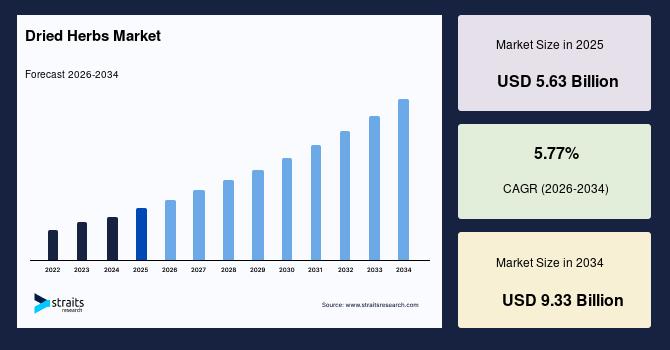
Dried Herbs Market Size And Growth Industry Report By 2033
| Market Metric | Details & Data (2025-2034) |
|---|---|
| 2025 Market Valuation | USD 5.63 Billion |
| Estimated 2026 Value | USD 5.95 Billion |
| Projected 2034 Value | USD 9.33 Billion |
| CAGR (2026-2034) | 5.77% |
| Study Period | 2022-2034 |
| Dominant Region | Europe |
| Fastest Growing Region | Asia Pacific |
| Key Market Players | Archer Daniels Midland Company, Firmenich SA, McCormick & Company, Inc., Dohler GmbH, Kraft Heinz Company |
Download Free Sample Report to Get Detailed Insights.
dried Herbs Market Growth Factors growing Demand for Dried Herbs in Food Processing IndustryAccording to this report, the use of dried herbs is increasing in the food processing industry on account of the surging demand for ready-to-eat meals and other ready-to-eat food items. Moreover, the usage of dried herbs is increasing in culinary for salad making and dressing.
Several herbs are used in making different types of drinks, such as infused drinks, herbal drinks, and other beverages. The increasing demand for processed foods, such as pickles, snacks, beverages, and others, has surged the demand for dried herbs as these herbs are exceptional at enhancing flavor and aroma.
growing Demand for Natural flavouringsHoReCa and the food processing industry are gradually inclining towards natural flavoring and avoiding the use of synthetic flavors. The growing health-conscious population is demanding healthy food with natural flavorings and clean label products. By considering this, food manufacturers are incorporating dried herbs as natural flavors in their food products and cuisines.
Moreover, the increasing consumption of processed pre-cooked meals and foods provides an impetus to the market growth. Processed food manufacturers are adding a variety of herbs to their food products to give the food a distinct flavor.
market restraints incorporation of Chemicals to Increase Longevity of Dried HerbsRising issues about the contamination of spices and herbs with adulterants and other hazardous chemical substances to increase their shelf life past their expiration date are expected to pose as a threat to the dried herbs market during the forecast period.
For instance in 2024, regulatory and health authorities globally began minutely scrutinising Indian brands selling dried herbs and spices after Hong Kong's regulatory agency detected the presence of carcinogenic ethylene oxide in them. Taking cognisance of this recall of products back to India was seen resulting in the FSSAI launching a nationwide sampling campaign to test adulteration in dried herbs.
In order to curb the addition of these substances, regulatory agencies are enforcing strict rules and regulations to stop manufacturers from mixing dried herbs with chemicals.
market opportunityHowever, as consumer awareness of organic and clean label products has grown, food manufacturers have been forced to remove harmful synthetic ingredients from their products and replace them with natural alternatives.
The growing clean label and organic trends are having a significant impact on a variety of industries in the food and beverage sector. To meet the preferences and demands of consumers, manufacturers are incorporating organic dried herbs into their formulations and products.
For instance in 2024, Nerida Tea a third-generation Australian tea company has pivoted toward organic herbal teas such as chamomile, peppermint, and raspberry leaf are now responding to consumer demand for natural, healthy beverages. Their organic herbal tea range saw a 6% increase in sales in the same year, while traditional black tea“cuppa” declined.
The rise in demand for natural flavorings represents a business opportunity for dried herb manufacturers who are looking to increase their dwindling sales.
Regional AnalysisEurope dominates the dried herbs market on account of the increasing demand for dried herbs in the culinary and food processing industry. Europe has the largest food industry in the world. This industry employs a significant percentage of the population in the region. The key application of dried herbs is in the food and beverage industry.
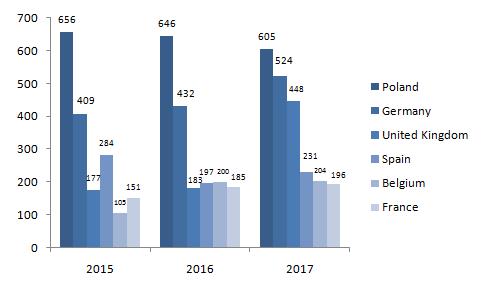
Europe imports various types of dried herbs from developing and developed countries. As per the data published by the CBI (Ministry of Foreign Affairs), Poland and Germany are the top importers of bay leaves in Europe. In 2017, Germany and Poland together represented around 36% of the European bay leaves market.
Apart from this, the presence of a large health-conscious population is another factor driving the regional market growth. The herbs based medicines and dietary supplement are in high demand in the European region. People in Europe mostly opt for natural and healthy products.
Asia-Pacific's:- Market GrowthAsia-Pacific is expected to be the fastest-growing market for dried herbs on account of the increasing manufacturing facilities, growing pharmaceutical industry, and rising demand for processed food. India and China are expected to drive the market growth in the region. India has a strong Ayurveda medicines market, which uses dried herbs for different medicines formulations. Pakistan and China are the largest users of Unani medicines, which also uses more than 90% herbal medicines. In addition, the increasing organic market in the region is expected to drive the market. In 2016, according to FiBL, India had the largest number of organic producers in the world.
Fig 5: Key European Importers of Bay Leaves
Source: Eurostat
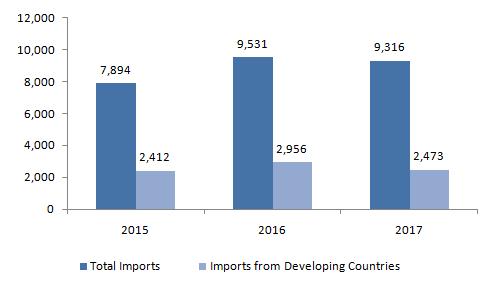
Fig 6: European Imports of Thyme 2015–2017 (Metric Tons)
Source: Eurostat
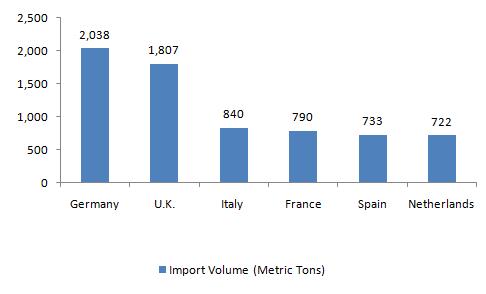
Market Segmentation The U.k., Germany, and Italy: Largest Importers of ThymeThe demand for thyme and bay leaves is high in the European food industry. According to CBI (Ministry of Foreign Affairs), the imports of thyme are increasing significantly from developing countries. Among the EU, Germany is the top importer of thyme followed by the U.K. and Italy. The U.K., Germany, and Italy together accounted for approximately 50% of the European imports of thyme. Other important European markets for thyme include France, Spain, and the Netherlands, which held a market share of 8%, 7%, and 8%, respectively.
Fig 2: Key Importers of Thyme in Europe (2017)
Source: Eurostat
Similarly, imports of bay leaves are steadily growing in Europe as bay leaves are extensively used in European countries in the culinary and food processing industries. The prime importers of bay leaves in Europe include the U.K., Spain, Belgium, and France. As per the Eurostat, these four countries together accounted for around 34% of the total European bay leaves the market in 2017.
Shifting Consumer Inclination towards Organic Products Drives the Segment GrowthOrganic herbs are expected to be the fastest-growing segment, owing to the consumers increasing demand for organic products. According to Eurostat, in Europe, the share of the organic area in total agriculture area is 7.5%. The total organic area in Europe continues to increase. In 2018 over 13.4 million hectares of land was organic land. Also, according to“The World Counts”, the global sales of organic food products have reached USD 95 billion.
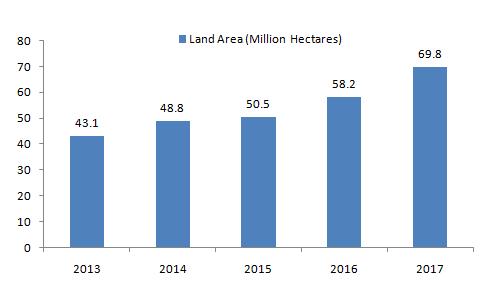
Fig 3: Growth of Global Organic Agricultural Land from 2013–2017
Source: FiBL
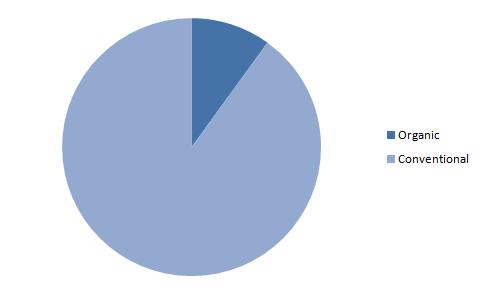
The above chart represents the growth of agricultural land globally. The organic land area in 2013 was only 43.1 million hectares, in 2017 the organic agricultural land area increased to 69.8 million hectares globally. This growth in the organic industry fuels the demand for organic dried herbs. The conventional dried herbs account for a significant share of the market. The conventional segment holds more than 90% of the global dried herbs market in 2019.
Fig 4: Global Dried Herbs Market Share (%), By Nature, 2019
Source: RM Analysis
List of Key and Emerging Players in Dried Herbs Market-
Archer Daniels Midland Company
Firmenich SA
McCormick & Company, Inc.
Dohler GmbH
Kraft Heinz Company
Mountain Rose Herbs
Pacific Botanicals
Van Drunen Farms
Pacific Botanicals
Catz International B.V,
British Pepper & Spice Company
Robertet SA
Synthite Industries Ltd
International Taste Solutions Ltd
Cherry Valley Organics
-
Sep 2025: ADM announced plans and further actions to target additional cost reductions ($200–$300M) as part of wider efficiency measures in 2025 part of a continuing program to streamline operations and improve margins. (news coverage summarizing ADM's cost-cutting moves).
Aug 2025: dsm-firmenich announced major plant investments (seasonings capacity expansion in Kerala, India) to accelerate clean-label, EtO-free seasoning production and faster speed-to-market for Asia / Middle East a development that touches seasoning & seasoning-herb supply chains.
Aug 2025: McCormick disclosed regional expansion activity signing an agreement to expand presence / investments in Mexico (move to increase footprint in condiments & sauces market there), demonstrating continued geographic growth for its flavor portfolio (relevant to dried-herb blends used in sauces & condiments).
Jul 2025: dsm-firmenich (the merged Firmenich/DSM flavors & ingredients business) published its H1 2025 results reporting good organic sales and earnings growth and progress on its strategic plan (includes statements on seasoning/seasonal flavor business performance). This is relevant because dsm-firmenich is a major player in seasonings, savory systems and natural flavor ingredients used alongside dried herb applications.
May 2025: dsm-firmenich opened / announced a new Princeton Baking Innovation Center (trade/innovation facility) and has been active launching formulation and seasoning solutions an investment that strengthens its capabilities to deliver savory/seasoning systems (which often use dried-herb components) to food manufacturers.
May 2025: McCormick added two new permanent crushed-pepper offerings (Crushed Hatch Chile Pepper and Crushed Thai Style Chili Pepper) to its spice line a product-line expansion that complements dried-herb and spice categories and indicates McCormick investment in expanding retail/formulation SKUs.
May 2025: Döhler participated in Vitafoods Europe 2025 (May) with new functional ingredient solutions showcasing natural/plant-based ingredient systems and functional extracts (many Döhler ingredient solutions intersect with herb extracts, botanicals and dry herb derivatives used by beverage/food makers).
Mar 2025: Mountain Rose Herbs announced it became licensed with the Regenerative Organic Alliance (ROA) (enabling direct work with regenerative organic certified farms) a sustainability/certification move that strengthens traceable, organic/regenerative sourcing for herbs and botanicals. This is important for buyers focused on organic/regenerative dried-herb sourcing.
Feb 2025: McCormick announced its 2025“Flavor of the Year” Aji Amarillo Seasoning as part of its Flavor Forecast (a notable product/marketing development showing where consumer flavor demand is headed; dried spices/herb blends are core to McCormick's portfolio).
| Report Metric | Details |
|---|---|
| Market Size in 2025 | USD 5.63 Billion |
| Market Size in 2026 | USD 5.95 Billion |
| Market Size in 2034 | USD 9.33 Billion |
| CAGR | 5.77% (2026-2034) |
| Base Year for Estimation | 2025 |
| Historical Data | 2022-2024 |
| Forecast Period | 2026-2034 |
| Report Coverage | Revenue Forecast, Competitive Landscape, Growth Factors, Environment & Regulatory Landscape and Trends |
| Segments Covered | By Product Type, By Form, By Nature, By Drying Method |
| Geographies Covered | North America, Europe, APAC, Middle East and Africa, LATAM |
| Countries Covered | US, Canada, UK, Germany, France, Spain, Italy, Russia, Nordic, Benelux, China, Korea, Japan, India, Australia, Taiwan, South East Asia, UAE, Turkey, Saudi Arabia, South Africa, Egypt, Nigeria, Brazil, Mexico, Argentina, Chile, Colombia |
Download Free Sample Report to Get Detailed Insights.
Dried Herbs Market Segments By Product Type-
Oregano
Rosemary
Sage
Mint
Thyme
Bay Leaves
-
Powdered Herb
Whole Herb
-
Organic
Conventional
-
Air Drying
Vacuum Drying
Microwave Drying
-
North America
Europe
APAC
Middle East and Africa
LATAM

Legal Disclaimer:
MENAFN provides the
information “as is” without warranty of any kind. We do not accept
any responsibility or liability for the accuracy, content, images,
videos, licenses, completeness, legality, or reliability of the information
contained in this article. If you have any complaints or copyright
issues related to this article, kindly contact the provider above.
Most popular stories
Market Research

More Story








Comments
No comment