




403
Sorry!!
Error! We're sorry, but the page you were looking for doesn't exist.
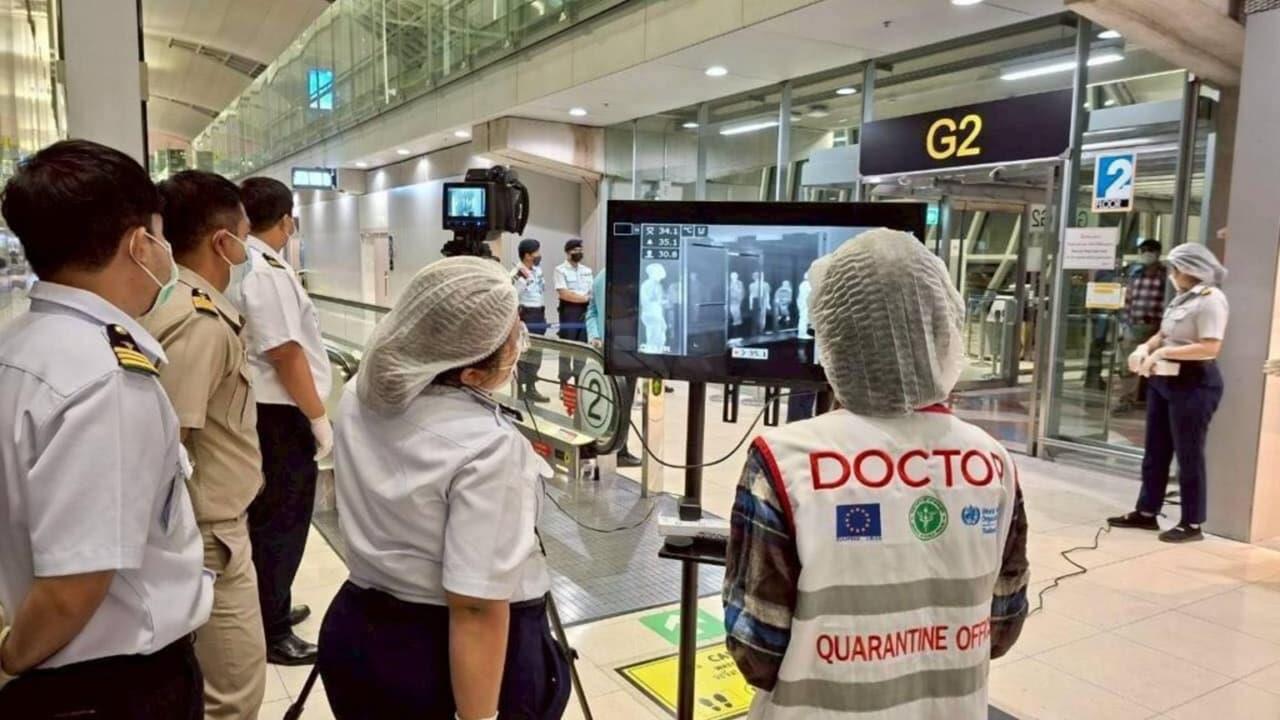
India Tightens Ebola Surveillance: What Are DGCA's New Passenger Screening Sops For Airlines?
(MENAFN- AsiaNet News) ![]()
![]()
![]()
![]()
![]()
![]()
Aviation regulator DGCA has issued a strict Ebola preparedness SOP for airlines operating flights linked to Congo and Uganda. Airlines must collect self-declaration forms, make health announcements and report suspected Ebola symptoms immediately
India's aviation regulator, the Directorate General of Civil Aviation, has issued a detailed Standard Operating Procedure (SOP) to strengthen the country's preparedness against Ebola disease. The new guidelines focus on passenger screening, in-flight monitoring and emergency response measures for international travellers arriving from Ebola-affected countries.
The advisory was issued on May 22 and applies to airlines carrying passengers from countries such as Congo and Uganda, where Ebola concerns have been reported.
The move comes as Indian authorities step up surveillance at airports to prevent any possible spread of the deadly virus through international travel. So far, no Ebola case has been reported in India.
Under the new SOP, airlines have been directed to ensure mandatory filing and collection of Self-Declaration Forms (SDF) from all passengers arriving from or transiting through Ebola-affected nations before they leave the aircraft.
The forms will be collected at immigration or designated health counters after passengers arrive in India. The rule applies to all travellers, including passengers and crew members, regardless of nationality.
The DGCA said the measure is important to improve early detection and contact tracing if a suspected case is identified later.
Airlines have also been ordered to make special in-flight announcements during journeys connected to Ebola-affected regions.
Passengers must be informed that anyone suffering from symptoms such as fever, weakness, muscle pain, headache, sore throat, vomiting, diarrhoea, rash or bleeding should immediately report the matter to cabin crew members and later to immigration or medical teams after landing.
The announcements must also inform travellers that all passengers and crew will need to submit self-declaration forms on arrival in India.
According to the SOP, airlines should further advise passengers to seek medical help immediately if Ebola-like symptoms appear within 21 days after reaching India. Travellers have also been asked to contact airport health authorities and visit designated hospitals in such situations.
Several Indian and international airlines have been included in the DGCA advisory.
Among the 13 carriers carrying passengers from Congo mentioned by the regulator are Air India, IndiGo, Akasa Air, Emirates, Air France, Etihad Airways and Egyptair.
The list of 17 airlines carrying passengers from Uganda also includes Air India, IndiGo and KLM.
The regulator has asked all these airlines to remain alert and fully prepared for any possible suspected case onboard.
The DGCA has also laid down strict in-flight and arrival procedures for suspected Ebola patients travelling on aircraft.
If a passenger shows symptoms during a flight, the person should be moved to the rear section of the aircraft whenever possible. The SOP also says that at least three rows in front of the suspected passenger, along with side rows, should be kept empty to reduce the risk of infection.
After landing, the aircraft must be parked in a separate designated bay so health authorities can safely manage the situation without exposing other travellers.
Airlines have also been told to maintain adequate supplies of triple-layer masks, disposable gloves, PPE kits, hand sanitisers and bio-hazard disposal bags. These items are meant for symptomatic passengers and anyone who may have come into close contact with them.
On Monday, Union Health Minister J. P. Nadda reviewed India's preparedness and surveillance systems related to Ebola prevention.
The minister stated that no Ebola case has been detected in the country so far. However, health authorities are continuing to monitor the situation closely and improve airport surveillance systems as a precautionary step.
Officials said the latest measures are aimed at improving early detection, preventing transmission and ensuring quick medical response if any suspected Ebola case is reported in India.

Legal Disclaimer:
MENAFN provides the
information “as is” without warranty of any kind. We do not accept
any responsibility or liability for the accuracy, content, images,
videos, licenses, completeness, legality, or reliability of the information
contained in this article. If you have any complaints or copyright
issues related to this article, kindly contact the provider above.
Most popular stories
Market Research

More Story






Comments
No comment