




403
Sorry!!
Error! We're sorry, but the page you were looking for doesn't exist.
From Coal Dust To Green Canopy: How Dara Adam Khel Is Reclaiming Its Landscape
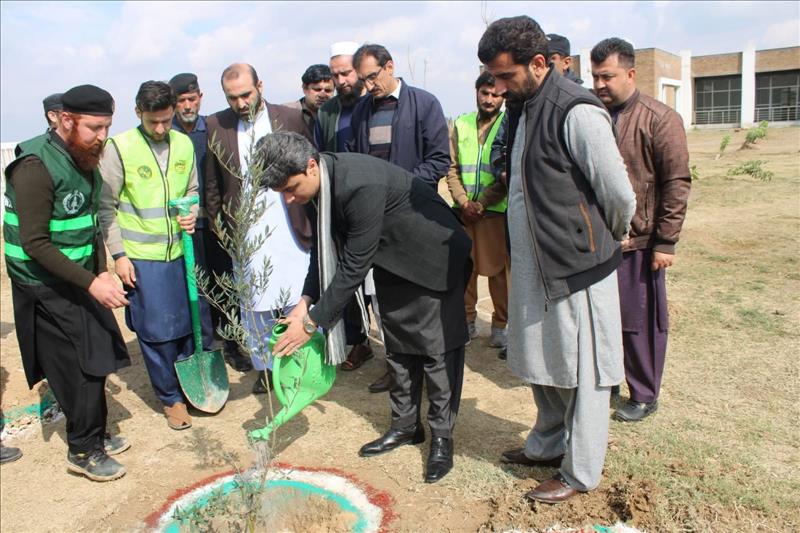
(MENAFN- Tribal News Network) Dara Adam Khel, nestled in the rugged hills of Khyber Pakhtunkhwa, has long been identified with two industries: gun manufacturing and coal extraction. In recent years, a reforestation drive has taken shape there, with more than fifteen thousand trees planted across the town's ridgelines and roadsides. The initiative was organized by a coalition of students, local leaders, and a coal company, and it has drawn attention as a community-led environmental response to industrial pollution.
The origins of the drive lie in a health hazard documented by the forest department, which identified Sulphur emissions from Dara Adam Khel's coal mines as a measurable risk to residents. The department's recommendation was specific: six hundred plants per mine, established across the surrounding terrain as a biological buffer against contamination.
Local organizers have been candid that the plantation cannot undo decades of environmental damage, but they argue it can reduce some of its worst effects, filtering air, stabilizing soil, and beginning the restoration of a degraded landscape. That framing is pragmatic. Whether it is sufficient is a question the community continues to live with.
The plantation was distributed deliberately across several locations rather than concentrated in one showpiece site. The primary zones are Akhurwal and Tora Chena, where trees now line roadsides and fill community gardens that were previously bare. The drive extended further toward Orakzai, into Bolander and Khelwani Camp, a boundary settlement between Orakzai and Dara Adam Khel, and into Ali Taak Camp.
The Shaheeda area on the left side of the road has seen the densest growth, transforming into a sprawling green belt dense enough that those who knew the terrain before scarcely recognize it. Together, these sites trace a corridor of green through some of the most industrially stressed land in the district.
Also Read: From Business Hub to Broken Streets: Bara and Tirah Call for Government Action
The drive's core organizer is the Green Youth Movement, a student club at FATA University. Naseem Iqbal of the BBA department led field operations; Owais Khan Afridi of the English department managed communications, ensuring the work was documented and understood by the wider community. Zulfiqar Afridi, who holds an MPhil in English and has ties to the forest department, contributed technical expertise, while Zubair from the Political Science department served as the group's spokesperson.
Institutional oversight came from Dr. Alamzeb Amir, Pro Vice Chancellor of FATA University and the movement's chairperson. Community members took on the equally essential work of daily maintenance, watering the plants, monitoring their health, and ensuring that what was planted did not wither for want of care.
FATA University is a young institution in a region with limited access to higher education. That its students are driving environmental campaigns in surrounding communities is a signal worth registering: a locally educated civil society is beginning to act on public problems that the state has long left unaddressed.
The funding architecture of the project is among its most consequential features. Every rupee of financial support came from the Akhurwal Coal Company, no government grants were sought, no NGOs enlisted. The company not only provided funds but assigned its own personnel, headed by Majid Afridi as irrigation lead, to manage ongoing watering and maintain a reserve of replacement plants.
The species selected reflect both ecological intelligence and economic foresight: orange and olive trees planted alongside other varieties mean the green belt is also, in time, a productive one. That a company responsible for much of the area's industrial pollution has chosen to fund the mitigation of its own environmental impact, without external compulsion, is a model that invites scrutiny as much as admiration. Self-regulation without enforceable accountability is always a fragile arrangement, but in a context where state oversight is limited and community needs are urgent, it represents a form of responsibility that is real and ongoing.
By any measure, what has been achieved is a significant success. Thousands of trees are taking hold across terrain that was, not long ago, bare and Sulphur-stressed. The planted areas are cooler, the air marginally cleaner, and the landscape visibly transformed. Animals find shade and forage where there was none. The olive orchards, as they mature, will produce oil that commands a premium in Pakistani markets; the fruit trees will provide both food and income.
Trees here are not merely an environmental asset, they are an economic one, capable of diversifying livelihoods in a town whose economy has long been narrowly dependent on coal and arms. The interior plantation sites, served by community-managed irrigation, have fared particularly well, and the Akhurwal Coal Company's practice of maintaining replacement stock has ensured that gaps in the canopy are filled as they appear. What has been built is a functioning, living landscape intervention, and its scale places it among the more substantive community-led environmental efforts anywhere in the region.
And yet the question of what comes next deserves honest engagement. The initiative's entire financial architecture rests on the continued commitment of a single private company. There is no government line item, no endowment, no diversified funding base.
If the Akhurwal Coal Company were to withdraw, whether through financial pressure, a change in management, the exhaustion of the mines, or a simple reassessment of its interests, the plantation has no fallback. The organizing committee has not publicly described contingency arrangements, and that silence is a structural vulnerability, not a minor administrative gap.
Leadership succession poses an equally serious challenge. The drive's operational energy comes from a cohort of university students who will, within a few years, graduate. Student-led initiatives of this kind face a predictable turnover problem: the people who built the relationships, norms, and systems that sustain the work will leave, and their replacements, if recruited at all, must rebuild those capacities from scratch. The initiative has not yet described how it plans to manage this transition, and without deliberate planning, the risk of institutional drift is real.
Water infrastructure remains unresolved. Roadside trees, the most visible portion of the plantation, depend on manual watering because no dedicated irrigation pipeline yet exists along the road corridors.
The organizing committee has appealed for external support to fund this infrastructure, an appeal that has gone unanswered. In the interim, these trees remain the most vulnerable section of the plantation, exposed to full sun and cut off from the community-managed systems that have kept the interior sites healthy.
There is also the question of land. Several landowners in the target areas declined to permit plantation on their properties, motivated by concerns about future encroachment on their land rights and uncertainty about long-term stewardship obligations.
These concerns are legitimate rather than obstructive. In communities where land is both scarce and deeply contested, the absence of documented agreements about what is planted, by whom, and on what terms is not a minor oversight, it is a governance gap that could generate disputes as the trees mature and the orchards begin to produce.
What Dara Adam Khel has demonstrated is that communities in ecologically stressed, politically marginal areas are not passive recipients of environmental harm. Given the right coalition, the right leadership, and the right conditions, they are entirely capable of taking the landscape into their own hands.
The mountains are getting greener. The people there made it happen. Whether that transformation endures will depend not only on the trees already planted but, on the decisions, about funding, succession, water, and land, that still need to be made.

Legal Disclaimer:
MENAFN provides the
information “as is” without warranty of any kind. We do not accept
any responsibility or liability for the accuracy, content, images,
videos, licenses, completeness, legality, or reliability of the information
contained in this article. If you have any complaints or copyright
issues related to this article, kindly contact the provider above.
Most popular stories
Market Research

More Story




Comments
No comment