




403
Sorry!!
Error! We're sorry, but the page you were looking for doesn't exist.
Long-Lost 17Th-Century Altarpiece Paintings Recovered After Nearly 100 Years
(MENAFN- USA Art News)
Seville Church Paintings by Lucas Valdés Return After Decades Missing
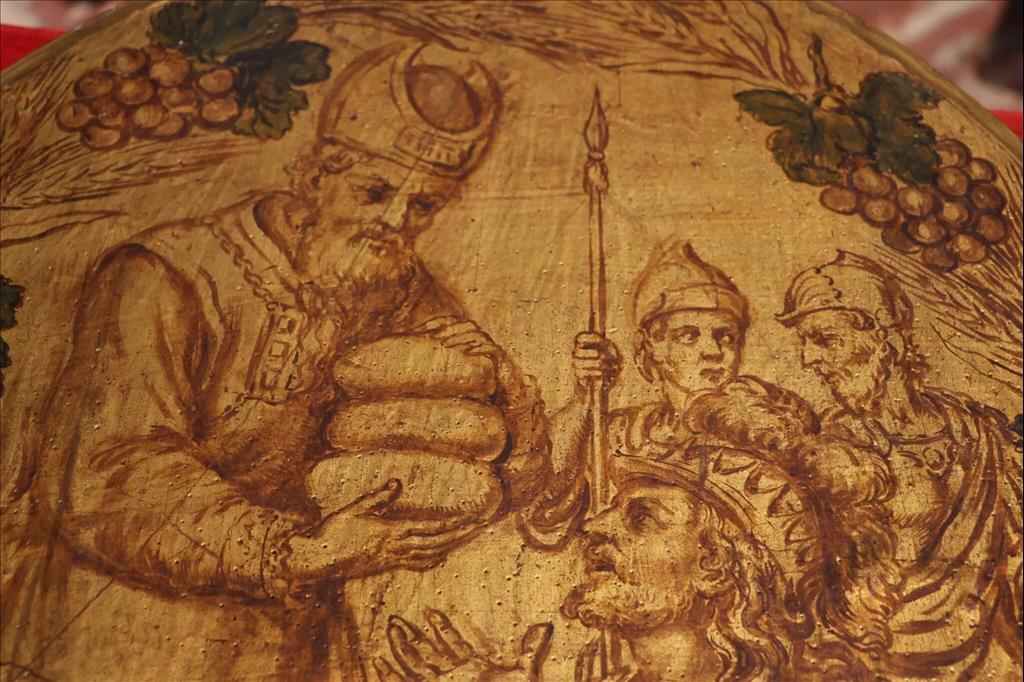
Two small Baroque paintings that disappeared from a Seville church more than a century ago have been recovered and returned to their original home. The works, identified by Spanish authorities as paintings by Spanish Baroque artist Lucas Valdés (c. 1661–1725), were handed back on May 20 to the Hospital of the Venerable Priests in Seville after police seized them shortly before an auction.
The case began in September 2025, when the Archdiocese of Seville alerted Spanish police to two paintings listed in an auction catalog that were believed to have once belonged to the chapel in the city's historic center. Investigators from the Spanish Historical Heritage Brigade confirmed that the oval pine board oil paintings were indeed by Valdés, who supplied altarpiece works for the church in the final years of the 17th century.
Each painting measures 23-by-24 inches. One depicts Samson removing a honeycomb from the mouth of a lion he had killed; the other shows David receiving sacred loaves from Ahimelech, a priest in Nob, while fleeing. Both were part of the main altarpiece created by Seville sculptor and architect Francisco de Barahona, active around the turn of the 18th century.
The works remained in place until 1889, when they were moved to a room adjoining the main church during renovations. Diego Angulo Íñiguez, the Baroque specialist and former director of Madrid's Prado Museum, documented them in the sacristy in the early 1920s. After being shown at the 1929 Ibero-American Exhibition of Seville, they vanished from public view and appear to have entered private hands.
Once authenticated, the paintings were seized by police just days before they were due to be auctioned. Authorities said mediation with the consignors led to their return. In a statement, the Archdiocese of Seville said the Lucas Valdés works had come back thanks to the efforts of the church, their last owners, and the police, adding that they can once again be seen by the faithful and visitors to Seville.
The recovery offers a rare, tangible reversal for a work of church heritage that had spent generations out of sight, and it underscores how auction catalogs can still surface objects long thought lost.

Legal Disclaimer:
MENAFN provides the
information “as is” without warranty of any kind. We do not accept
any responsibility or liability for the accuracy, content, images,
videos, licenses, completeness, legality, or reliability of the information
contained in this article. If you have any complaints or copyright
issues related to this article, kindly contact the provider above.
Most popular stories
Market Research

More Story







Comments
No comment